AOL, Yahoo Vie For Madison Avenue's Attention
Story from the Wall Street Journal

The rivalry between AOL and Yahoo is on prominent display this week, as the two struggling Internet companies compete for advertising dollars on Madison Avenue.

They are pouring on the glitz as they vie for the attention of thousands of ad-industry professionals at the Advertising Week conference in New York.

Marketers typically don't negotiate specific deals to buy ad space or time during the annual event. But media companies use it to tout themselves to the many ad agencies and advertisers in attendance, including Coca-Cola, Procter & Gamble, Verizon Communications, Bank of America and MasterCard Worldwide. The aim is to establish relationships and secure business down the road.

"It's a fevered pitch," says Quentin George, chief digital officer of Mediabrands, a media-buying unit of Interpublic Group, whose major clients include General Motors, Microsoft and Johnson & Johnson. "Both Yahoo and AOL are in some kind of a turnaround, and what we are seeing is efforts on both sides to get a clear and compelling value proposition for agencies."

The stakes are high for the two companies. Their ad revenues have suffered steep declines during the recession, hurt by a pullback in ad spending and stiff competition from established rivals like Microsoft and Google, as well as social-networking upstarts like Facebook.

Both AOL and Yahoo are setting their sights on the hard-hit $20.8 billion-a-year market for online display ads -- those that include text and images and appear on Web pages. This year, they both hired new chief executives, who are scrambling to revive their businesses.

Early in the week, the two companies laid out the details of their business strategies. AOL Chief Executive Tim Armstrong, a former Google ad-sales executive, pitched the company's efforts to become a top provider of online news and entertainment. Yahoo chief Carol Bartz, the former CEO of software maker Autodesk, unveiled a $100 million global ad campaign to spur interest in the company's Web site.

But winning ad dollars is also about getting face time with Madison Avenue's heavy hitters, which means gimmicks and parties.

AOL, which is being spun off by Time Warner this year, spent more than $250,000 to be a top sponsor for the conference and host the opening-night gala Monday in a tent in Times Square, according to a person familiar with the matter. The bright-yellow AOL running-man mascot popped up at several events during the week, and it won a vote to be inducted into the Advertising Walk of Fame, beating out 25 rivals, including Ronald McDonald and the Vlasic Stork.

Yahoo took more of a stealth approach, forgoing the traditional Advertising Week sponsorship for marketing stunts. It hired drivers in skinny purple Yahoo neckties to take attendees home from parties in Chrysler 300 sedans with purple stripes, and it sent teams into the streets in Yahoo T-shirts.

At AOL's gala, Yahoo ad-sales executive Joanne Bradford was overheard reminding people to join her at a private Yahoo cocktail party at Jean Georges, a tony Manhattan restaurant. Several ad executives say they had drinks and hors d'oeuvres at the Yahoo event, attended by Ms. Bartz, and then left to join Mr. Armstrong and his ad team for a private dinner, where singer Harry Connick Jr. gave a surprise performance.


Mr. Armstrong sent a personal email invitation to Curt Hecht, president of Vivaki Nerve Center, a unit of Publicis Groupe that buys hundreds of millions of dollars of online advertising a year for companies such as P&G and Wal-Mart Stores. Mr. Hecht says Mr. Armstrong spent an hour with him before the dinner started, asking about the agency business and his clients. Although no checks changed hands, Mr. Hecht says, "I'm going to invest back in that."

Some industry executives say the market for display ads is still up for grabs. "It's been a while since there has been a default 'must buy' property," says Jeff Lanctot, chief strategy officer at Razorfish, the digital-ad agency Publicis is buying from Microsoft.

Yahoo may be under extra pressure to dazzle executives, as some of them say AOL has started to resurrect its relationships with marketers and their agencies. Still, Yahoo draws more traffic to its sites

"Yahoo's a safe bet, for advertisers because it has such a massive audience," says Tom Bedecarre, chief executive of AKQA, an independent digital marketing agency whose major clients include Coke and Visa.

But with ad spending on traditional media like print and TV in decline, both AOL and Yahoo could be winners if they do a good enough job, ad executives say.

"In order for either or both of th em to prosper, particularly AOL, they have got to do more than play an intrachannel share game," says Rob Norman, CEO of WPP-owned digital-media firm GroupM Interaction. He said the traditional-media business might need to up its ante. "It's Advertising Week. Where is the TV business? Where is the magazine business?"


Google Turns 11 With An Eye On Microsoft
Story from SF Gate

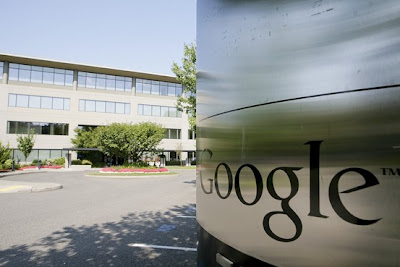
Eleven years ago, Larry Page and Sergey Brin founded Google Inc. with a search engine and a plan. Now their company has grown into an online behemoth battling head-to-head with industry giant Microsoft Corp. while the term Google is a verb that means Internet search.

Obviously, a lot has changed for the company and its founders since Sept. 27, 1998.

Google celebrated its anniversary this year quietly, doing little more than changing the famed doodle on its search page from the usual Google to Goog11e .

But whether it celebrates its birthday or not, Google is one of the great Internet success stories to date. The company not only owns the search market with a share of more than 64%, it has branched out over the years with its hosted Google Apps applications like Gmail along with Google Maps , Google Earth and other products.

More recently, Google has moved to take on Microsoft and its widely-used Internet Explorer in the browser business, and even disclosed plans this summer to develop an alternative to the Windows operating system. Just yesterday, Google announced plans to release an early version of its Google Wave collaboration tool to 100,000 users and developers for testing.

"I would say Google is the most influential Web company out there," said Ezra Gottheil, an analyst with Technology Business Research Inc. "It's rare to have a company grow like that, but we've seen others. It's just that the others either flamed out, were acquired or haven't yet reached a sustainable state. Look at Netscape, MySpace, Twitter, Youtube and Facebook."

Caroline Dangson, an analyst with IDC, noted that in a survey undertaken by the research firm last year, Google was easily the top consumer brand.

"We have found that with consumer surveys, [Google] is the number one consumer brand," she added. "We conducted a survey including Yahoo, MSN, eBay, Amazon ... different consumer Web properties. Google was number one for all of our questions, from 'How much do you like the brand?' to 'How much do you use the brand?' to 'How much do you trust the brand?' There are few companies that are able to grow and dominate in this way."

Google has grown to the point where it's become a threat to Microsoft , which has had a long and storied history of high-tech industry dominance. There was a time not so long ago when few believed that any company could rattle Microsoft, let alone a Web company like Google .

But Google's vice-like grip on the lucrative search market forced Microsoft to spend massive amounts of money to overhaul its old and unexciting Live Search engine to create Bing , which was unveiled this summer. Microsoft went a step further by signing an agreement that calls for Internet pioneer Yahoo Inc. to use Bing as the primary search engine on its various sites.

At the same time, Google was developing its Chrome browser to take on IE, and was looking to develop an operating system to compete with Windows.

The Chrome browser , unveiled about a year ago, hasn't hurt Microsoft yet, but the company isn't giving up. Last week, for example, Google released a plug-in called Chrome Frame that lets users embed the Chrome browser into IE. The plug in, which is said to boost IE's browser's notoriously slow JavaScript speed, drew a quick response from Microsoft , which warned that it could cause security problems for users.

Google in July announced plans to take on Windows with an open-source operating system, also called Chrome, that could run Internet-centric computers like netbooks as early as the second half of next year. Many other companies have tried and failed to take on Microsoft in the operating systems business, but analysts say that Google has the financial muscle, the engineering might and the industry clout to actually put up a realistic fight for market share.

Google also moved this summer to make its hosted applications suite more attractive to large government users by announcing plans to tailor its cloud computing services for various federal agencies.

"In Microsoft's mind, Google is probably the biggest threat to their bread-and-butter operating system and desktop application businesses," said Dan Olds, an analyst with The Gabriel Consulting Group. "Google's dominance of the search business is also Microsoft's biggest opportunity in terms of new revenue and revenue growth. So to a large extent, the two companies are going to do battle on several fronts, which is good for consumers as it keeps innovation high and prices low, and it's also fun to observe."

Google, with a focus on its core business along with an ingrained innovative track, is also influencing a whole lot of up-and-coming Web 2.0 businesses, according to Olds.

"The Google model of developing a killer application, optimizing it to provide high user value and gain user loyalty, and then monetizing it has been the model of choice for social networking companies. Take a look at Twitter," he said. "Google has gone from zero to industry giant in a record amount of time, starting with just a bunch of guys with a search engine to a company with a $156 billion capitalization in just over a decade. It's a company worth emulating."


Cable Clicks on Interactive Ads Again
Story from the Wall Street Journal

The traditional TV ad is losing luster as viewers get savvier about skipping commercials and some advertisers shift to the Internet to save money and target specific audiences.

Cable providers have helped undermine the 30-second spot by supplying digital video recorders to their subscribers and offering ad-free video-on-demand services.

Now they are promising to help marketers reach TV watchers with new interactive advertising that seeks to engage viewers and borrows techniques from the Internet.

"It's about making the TV a more lean-forward medium than a strictly lean-back medium," said Bob Ivins, vice president of research and data products with Comcast Corp.

It's a goal that has long eluded the industry. While the Internet has blossomed as a medium that can deliver targeted audiences and accountable results, the cable industry has promised interactive advertising for years only to leave advertisers and investors disappointed with the progress.

Cablevision Systems Inc. plans to roll out an interactive service next month that will allow viewers to respond to a banner or pop-up on their screen during a commercial, and automatically order a coupon or product sample by pressing a button on their remote control.

"It allows us to combine the power of the Internet -- with its engagement, targeting and accountability -- with the power of the big screen," said David Kline, Cablevision's president of ad sales.

Cablevision said it expects to have several major brands involved this fall including Benjamin Moore, which will send coupons for free paint samples to viewers that respond to its ads with their remote.

Cablevision said it would charge advertisers a premium to participate, but it declined to provide pricing details.

Other major cable operators, like Comcast and Time Warner Cable Inc., have also added interactive advertising to their systems. And while the traditional TV ad is typically sold based on estimated audience size, many of these new ads are sold on a pay-for-performance basis more similar to Internet advertising.

Time Warner in January rolled out a "promotions on-demand" offering in its Los Angeles market. The ads direct viewers to interactive channels fully dedicated to marketing materials from an advertiser.

By July, there were 22 advertisers participating, including CKE Restaurants Inc.'s Carl's Jr. and Big O Tires LLC. On top of regular ad spots and a set-up fee, Time Warner Cable collects a fee each time a consumer clicks to the on-demand channel.

"Interactivity through the remote control seems to drive a higher response rate than driving audiences to get on the Internet or make a phone call," said Joan Gillman, president of media sales for Time Warner Cable.

Cablevision also provides interactive channels to advertisers, like Walt Disney Co., Mattel Inc. and the U.S. Navy. Once viewers are directed to the channels through an ad, they can use their remote to choose from a variety of marketing videos and they can opt to receive coupons in the mail or request a call from a salesperson.

"Using interactive techniques, we can get a targeted consumer to engage with a brand on TV for a much longer period of time than just a 30-second commercial," said Jacqueline Corbelli, chief executive of media agency BrightLine iTV.

The New York-based agency recently worked for Axe, a brand owned by Unilever PLC, on a campaign reaching 70 million homes on cable, satellite and other pay-TV systems for its Axe Dark Temptations, a chocolate-themed deodorant and body wash.

The ads appeared on RipeTV, an on-demand network targeting males 18-24 with extreme sports and other programming. Using pre-roll spots and pop-up banners, the ads prompted viewers to press a button on their remote to do things like enter a sweepstakes or play a game.

Kevin George, an ad executive at Unilever who oversaw the campaign, said "the response was great" because it reached its targeted audience "without interrupting them," in part because Unilever reached its targeted audience "in a place where they're comfortable, giving them the option to participate without interrupting them."


Yahoo Sells Stake In Alibaba.com
Story from Bloomberg


Yahoo! Inc. is selling its stake in Alibaba.com Ltd., operator of China’s biggest trading Web site, for as much as HK$1.17 billion ($151 million), after the stock almost quadrupled in Hong Kong trading this year.

UBS AG, the sole bookrunner, is placing 57.5 million shares, equivalent to a 1.1 percent stake, at an indicated price range of HK$19.80 to HK$20.30 each, according to terms of the sale obtained by Bloomberg News. That’s as much as 6.4 percent lower than Alibaba’s closing price in Hong Kong today.

The sale by Yahoo, owner of the second most popular U.S. Internet search engine, follows a placement by Alibaba Chairman Jack Ma last week that raised HK$273 million. Sunnyvale, California-based Yahoo is still the biggest shareholder of Alibaba Group Holding Ltd., the parent of Hong Kong-listed Alibaba.com.

“Yahoo regards its investment in Alibaba as long-term, so the decision is quite negative for the stock, especially as it came after Jack Ma’s sale,” said Steven Liu, an analyst who rates Alibaba.com “sell” at DBS Vickers Ltd. in Hong Kong. “The stock is quite expensive now after the rally this year.”

Alibaba rose 3.7 percent to HK$21.15 in Hong Kong today. The stock has almost quadrupled this year, compared with the 45 percent gain in the city’s benchmark Hang Seng Index. Yahoo fell 16 cents to $15.43 at 10:19 a.m. New York time in Nasdaq Stock Market trading.

In 2005, Yahoo paid $1 billion and swapped its Chinese operations for a 40 percent stake in closely held Alibaba Group. In 2007, the U.S. company was one of eight “cornerstone” investors which subscribed to the $1.7 billion initial public offering of Alibaba.com, the biggest first-time share sale by an Internet company since Google Inc.’s IPO in 2004.

Boost Liquidity

Alibaba.com said in June that Yahoo, Cisco Systems Inc.,American International Group Inc. and other cornerstone investors would be allowed to sell their stakes immediately, five months before the expiry of a previously agreed lock-up agreement. The move was designed to boost liquidity of its shares, the Chinese company said at the time.

“We are pleased to learn of the Yahoo decision,” Alibaba spokesman John Spelich said in an e-mail today. The sale will help the company achieve broader ownership of its stock, he said.

Jeremy Seow, a Singapore-based spokesman at Yahoo, said he couldn’t immediately comment on the sale.