Organic SEO Blog

231-922-9460 • Contact Us • Free SEO Site Audit

Thursday, October 30, 2008

Microsoft Hopes to Learn From Vista's Mistakes

LOS ANGELES -- Microsoft Corp. gave the first extensive public demonstration of the next release of its Windows operating system as it seeks to avoid some of the stumbles that occurred with the last version, Windows Vista.

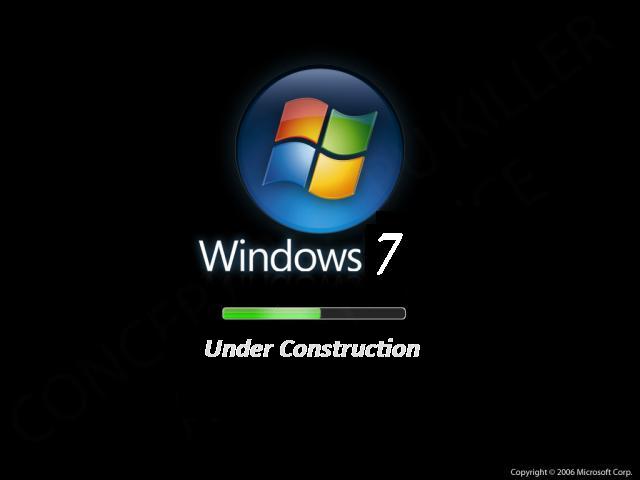
At a technical conference here, the Redmond, Wash., company also provided programmers with a test version of the software, dubbed Windows 7. The move is an important step to drum up support among independent developers.

Microsoft said it would also further embrace a growing shift towards online software by making a future Web-based version of its Office suite of productivity applications available free. It is a move to counter efforts by Google Inc. and others to encroach on Microsoft's turf with free word processing, spreadsheet and other programs.

Microsoft's Windows Vista received a critical drubbing when it was released nearly two years ago. Vista was criticized for the sluggish performance of the software and initial incompatibilities with digital cameras and some other devices. Microsoft says the incompatibilities have largely been corrected with updates to Windows Vista.

At the same time, Windows Vista endured attacks from rival Apple Inc. in a long-running advertising campaign for Apple's Macintosh computers. Microsoft recently began an ad campaign for Windows, partly to correct the negative perception of the software.

Microsoft said Windows 7 will come with improvements including a feature called "libraries" that will give consumers a way to easily access music, videos, photos and other documents that are located on many different storage devices, whether other PCs are connected to a home network or removable drives.

Another feature called "homegroup" will make it easier for users with, say, a laptop to move their machine between office, home and other locations. The feature will automatically configure the laptop, for example, to work with a local printer so users don't have to manually adjust their printer settings.

Microsoft executives said they are designing Windows 7 to run more speedily than Vista. They're working closely with hardware makers to ensure the software has no trouble recognizing and working with devices like printers, cameras and other products. "That's critical for us," said Bill Veghte, senior vice president for Microsoft's Windows business.

Microsoft has said it expects to ship Windows 7 for consumers by January 2010.

Microsoft's move to make Web-versions of its Office suite, including Word, Excel and PowerPoint, for free online represents a gamble that it can expand its audience for the software without cannibalizing one of the company's biggest cash cows.

Microsoft Senior Vice President Chris Capossela said he doesn't believe people will choose to use the free online version of the software instead of buying the software and installing it on their PCs. That's in part because the online versions won't be as responsive for large, complex files -- for example, Word documents with lots of pages of text and photos.

Instead, Mr. Capossela says Microsoft sees the Office Web applications as an opportunity to make at least some revenue through advertising from consumers who wouldn't otherwise purchase the software.

Earlier this year, Microsoft made an online version of Office available, but it only allowed users to view Office files. The new version will also allow users to edit and compose files.
Google co-founders work to
defeat Prop. 8


Silicon Valley hasn't been a prominent player in the pitched fundraising battle over whether to ban same-sex marriage in California — until now.

Google co-founder and president Sergey Brin this week donated $100,000 to the No on 8 campaign, while co-founder Larry Page added a $40,000 donation, a Mercury News analysis of state campaign finance records show. With the contribution, Brin matches talk show host Ellen DeGeneres for the largest individual donation during the campaign's final weeks to oppose a proposed constitutional ban on same-sex marriage.

Google did not respond to initial requests for comment Thursday on the donations by Brin and Page, but the Mountain View Internet search giant is one of a very few Silicon Valley corporations officially on record opposing Prop. 8.

"While there are many objections to this proposition — further government encroachment on personal lives, ambiguously written text — it is the chilling and discriminatory effect of the proposition on many of our employees that brings Google to publicly oppose Proposition 8," Brin wrote in an item he posted Sept. 26 on the official Google blog. "While we respect the strongly held beliefs that people have on both sides of this argument, we see this fundamentally as an issue of equality."

The six-figure donations by DeGeneres and Brin were among a group of large donations from celebrities and other prominent figures that recently have flowed into Equality California, the lead organization battling Prop. 8. Marin County resident and "Indiana Jones" filmmaker George Lucas gave $50,000, while Lucasfilm donated an additional $50,000, both this week.

Actor T.R. Knight of "Grey's Anatomy" gave two $50,000 donations, while Monica Rosenthal, an actress in the comedy series "Everybody Loves Raymond" and the wife of series writer and executive producer Phil Rosenthal, gave $25,000.

Those large donations are among $9.2 million in large donations received by Equality California ( www.noonprop8.com ) since Oct. 6, when the dueling Prop. 8 campaigns last filed their extensive fundraising reports, according to records filed with the California Secretary of State.

ProtectMarriage.com, the lead political organization supporting a ban on same-sex marriage, has raised about $1.7 million in large donations since Oct. 6, state records show.

Microsoft Moving Fast on Cloud Computing

LOS ANGELES — After more than two years as Microsoft's low-profile chief software architect, Ray Ozzie finally has something to say: Windows Azure.

The man who replaced Bill Gates as Microsoft's top technical thinker said today that Microsoft will compete with Amazon.com, IBM and other rivals in selling information storage space and computing power "in the cloud," distributed across massive data centers worldwide. The system, Windows Azure, will let companies and hobbyists alike build Web-based programs without having to invest in their own server farms.

Ozzie's remarks at a Los Angeles conference for software developers indicated that after several years of disparate experiments, Microsoft is closer to a companywide strategy for coping with an upheaval in the software industry — the shift from powerful desktop programs to more lightweight, inexpensive ones that run over the Internet.

Nimbler Web companies like Google have moved quickly to make programs that do much of the work of Microsoft's cash-cow Office suite — but they do it over the Internet at little or no cost to the user, and can be updated frequently with new features and bug fixes.

Microsoft has largely fumbled this transition. In its "cloud" products before now, Microsoft has offered some of its business server software on a subscription basis and has cobbled together consumer Web services like e-mail and messaging under the "Live" brand.

Windows Azure is meant to be a broader "platform" for the cloud, much like Vista for PCs and Windows Mobile for phones and other devices. Microsoft's own programs will run on it, as will those made by outside companies.

Ozzie said Microsoft has learned enough managing its own Web sites and programs, anticipating Web traffic spikes and lulls and ramping up or dialing down capacity, that it's ready to market this expertise to others.

From the perspective of an average computer user, Ozzie said in an interview, Azure is another step toward solving the modern headache of accessing files from many different devices — for instance, home, work and portable computers and mobile phones.

Microsoft is letting software developers test Azure, but Ozzie emphasized that the system will change as more people kick the tires through 2009. He did not say when Microsoft will start selling access to Azure or how much it will cost.

Ozzie, 52, came on board in 2005 as a chief technical officer when Microsoft bought his collaboration software company, Groove Networks. Already respected for his work with Web computing, Ozzie was asked to figure out how Microsoft could survive the sea change toward software being delivered online.

In the 1980s, Ozzie worked at Lotus Development Corp., where he led work on Lotus Symphony, a precursor to Microsoft's Office package, and Lotus Notes, which let people form groups to share documents and e-mail. Notes' success prompted IBM to buy Lotus for $3.5 billion in 1995.

Ozzie then started Groove to refine his idea of "groupware" that lets multiple people collaborate. Groove made it possible for people work together on the same virtual sketchpad, view the same video or edit documents simultaneously, all while chatting by text or voice.

This expertise made Ozzie a natural replacement for Gates as the mastermind of Microsoft's broad software strategy. Shortly after joining the company in 2005, Ozzie wrote an influential memo advocating a shift away from some of Microsoft's traditional reliance on selling desktop software and toward Web-based and sometimes ad-supported software. He urged Microsoft's product groups to make software that can run on a computer desktop, in a Web browser, on mobile devices and in game consoles, and to give users "seamless" access to their files no matter where they log on.

But while Microsoft watchers have clamored for a concrete plan from Ozzie, Microsoft's efforts have come off as scattered.

Ray Valdes, an analyst at the research group Gartner, said today that Microsoft's Web services strategy still isn't cohesive. Microsoft is "taking every major asset of intellectual property and cloud-enabling it to some degree," the analyst said.

Web startups have flocked to Amazon Web Services, but few big corporations have taken the plunge. Azure is "a defensive maneuver" to make sure those corporations that already rely on Microsoft's servers and other technology don't defect to Amazon or others, Valdes said.

Today's announcement was aimed at programmers who wanted to know that their software skills will still be relevant as Microsoft shifts into this new phase. On Tuesday, the company is set to discuss changes for average PC users, with top Office and Windows executives slated to speak.
New Yahoo Data Center in Nebraska.  Yahoo Search Databases expand in Americas heartland.Yahoo plans new data center in Nebraska

LA VISTA, Neb. — Yahoo says it will invest at least $100 million in a new data center in Nebraska, creating at least 100 jobs.

The announcement today from the Internet company and Nebraska officials comes just days after Yahoo said it would cut at least 1,500 workers as it deals with the economic downturn.

Earlier this year, Sunnyval.-based Yahoo applied for the biggest slate of state tax breaks available in Nebraska to help set up some operations in La Vista. Its plans include a customer service center in Omaha.

If the company goes ahead with the project, within four years it would have to invest at least $100 million and create at least 100 jobs with a minimum average salary of $68,700.

Yahoo shares were down nearly 5.5 percent in morning trading.

Windows 7: A better Vista?

LOS ANGELES--Microsoft on Tuesday offered up far more details on Windows 7, successor to the company's oft-maligned Windows Vista.

In particular, Microsoft is focused on improving the time it takes for Windows to start up and shut down. In addition to its own work, Microsoft has been working directly with computer makers to address all of the factors that affect system performance.

As far as other features, Windows 7 features support for multitouch input and a new taskbar that makes it easier to manage multiple open Windows.
Click for gallery

"The focus is on making sure the things you do (today) are easier and that the things you always wanted to do are possible," Corporate Vice President Mike Nash said in an interview Monday. "There's a lot of work we've done to just make things easier and faster.

The early, prebeta version being handed out to developers at the Professional Developer Conference here has all of the programming interfaces that will be in the final version but only some of the planned features.

Several enthusiasts who have been checking out the new code for the past couple of days praised the stability of the release, particularly for an operating system, at this early stage.

With Windows 7, Microsoft has changed the way it approaches building early releases. In the past, Microsoft included features at various stages of development. With Windows 7, features are included in the main Windows build, only after they are fully baked.

Microsoft is clearly looking to leave a far different first impression than it did with Windows Vista, which made major changes under the hood and led to considerable incompatibilities. With Windows 7, Microsoft is not introducing any major changes to the Windows kernel and is keeping much of the other plumbing substantially similar to that of Vista.

The software maker has also tried to reduce some of Vista's other annoyances, such as the frequently criticized User Account Control feature, which some complained led to too many annoying dialog boxes. With Windows 7, users will be able to choose for themselves how often the system warns them of changes being made to their computer.

The next external release of Windows 7, a feature-complete public beta, is slated for early next year.

Nash wouldn't say whether the company plans more than one beta version before its final release. "We'll see how the first one goes," he said.

The company has said it will have the release out within three years of Vista's January 2007 mainstream release, however, CEO Steve Ballmer has said he wants Windows 7 out next year.

Wednesday, October 29, 2008

Critics Urge FCC to Delay Action on Phone Rates

The Federal Communications Commission's scheduled Nov. 4 vote to change how phone companies charge each other to deliver traffic is facing growing opposition from companies concerned about losing revenue and consumer advocates worried that the plan will cause phone bills to rise.

The idea is to simplify the way phone companies compensate each other for delivering calls, so that all providers -- traditional land line, wireless and Internet-based -- would pay the same rate. Currently, rates vary depending on the type of call and where it travels.

Changing the rates would result in some phone companies receiving less revenue -- an estimated $4 billion total. To help those companies recoup some of that lost money, the FCC has proposed raising fees on consumers.

Phone companies now charge consumers as much as $6.50 a month in a subscriber-line charge for traditional, wired phone service. Under the new plan, that rate would jump to as much as $8 a month. FCC officials can't say how many subscribers would pay a higher upfront fee for service, or when a price increase for Google Mobile SEO would occur.

FCC Chairman Kevin Martin proposed the plan for Google Mobile Phone Search Optimization in mid-October along with Mobile SEM, Mobile SEO and SEO Mobile Phones. These scheduled a vote on Election Day, prompting some opponents to suggest that he is trying to sneak the plan by when the public isn't watching.

Mr. Martin told reporters recently that consumers would see a benefit, because it would cost less for phone companies to connect long-distance calls and rates would fall. Such savings could be passed along to consumers.

Chris Murray, senior counsel for Consumers Union, noted that phone companies aren't required to pass along such savings. "There are no guaranteed wins for consumers here."

State regulators, lawmakers and consumer groups are raising questions about how the plan would affect rates and consumer phone bills and is urging the FCC to slow down. They say the agency should release details of its proposal so companies and consumer advocates can review it more closely.

"I am concerned that expedited consideration of this draft proposal won't allow sufficient time for interested parties to review and comment on its impact," Sen. Lamar Alexander (R., Tenn.) said in a letter last week. A group of 61 lawmakers sent a similar letter Monday to the FCC asking for a delay.

"While the issues before us...are complicated, they've been discussed and briefed for years. At the same time, we are considering some very bold and ambitious ideas that give a lot of parties great concern," said Robert McDowell, a Republican FCC commissioner who says he is still considering how he will vote on the proposal.

AT&T Inc. and Verizon Communications Inc., the country's biggest phone companies, support Mr. Martin's plan. Smaller telecom companies and wireless carriers aren't so enthusiastic.

Midsize carriers, including Embarq Corp., Windstream Corp., CenturyTel Inc. and Frontier Communications Corp., stand to lose a significant part of their revenue as a result of the proposed changes. Their chief executives have been scrambling to delay the FCC's action.

The proposed change could force them to raise prices to make up for lost revenue, particularly in rural areas. "The commission assumes we're able to raise rates," said Maggie Wilderotter, chief executive of Frontier. "In competitive environments, you can't do that."

Not being able to see an actual proposal from the FCC has been frustrating for phone companies and consumer advocates alike.

"We've seen nothing in writing. Every time we get a brief, we learn something more," said Windstream CEO Jeff Gardner.

Mr. Martin has declined to release details, citing the FCC's normal policy.

Silicon Valley Mergers

No, it's not the merger of all mergers. The terrific/terrible three -- depending on where you sit -- are expected to announce today a common set of principles when doing business abroad, according to the Wall Street Journal. The idea is that together, they are more likely to influence an oppressive regime's policies regarding free speech and expression. Yahoo has been criticized for cooperating with China in its effort to silence dissent. People were jailed as a result. CEO Jerry Yang has been grilled by Congress. And Google has kowtowed to Chinese authorities as well, by censoring search results there.

The code, written in collaboration with other human rights organizations, does not go as far as some people would like, with the Journal reporting that at least one human rights group did not give its blessing because the companies will continue to abide by the laws of the country in which they're doing business. And joint ventures remain an issue. It's too early to tell what may come of this almost two-year process of drafting the code, whose components include respect for freedom of expression and privacy plus implementation guidelines (See Google, Microsoft, Yahoo debugging code of global conduct). But its very existence seems to be a step in the right direction -- no matter what the companies' primary motivations. With the companies promising to follow the code and agreeing to independent review, plus the possibility of other companies jumping on board, discourse is assured and some positive change is bound to follow.

How have other companies' codes of conduct fared? Perhaps the highest-profile cases that come to mind involve sweatshop labor. In the 1990s and early 2000s, Nike, Gap and Disney faced scrutiny about their treatment of mostly overseas workers. Gap now has a code of conduct. Nike has admitted it "blew it" relating to child labor and says it has safeguards in place, although reviews of its efforts are mixed at best. And there have been attempts to legislate the import of products made with sweatshop labor. People are watching, so companies are forced to at least appear to care.

"This historic settlement is a win for everyone. From our perspective, the agreement creates an innovative framework for the use of copyrighted material in a rapidly digitizing world, serves readers by enabling broader access to a huge trove of hard-to-find books, and benefits the publishing community by establishing an attractive commercial model that offers both control and choice to the rightsholder."

-- Richard Sarnoff, chairman of the Association of American Publishers, on the $125 million copyright lawsuit settlement Google reached with authors and publishers over Google Book Search

Attention, Wal-Mart shoppers: A couple of developments at the world's biggest retailer that affect Silicon Valley companies:

1. Wal-Mart has slashed prices to as low as 74 cents at its MP3 Music Downloads store, says Electronista. (Standard tracks are 94 cents.) This, of course, undercuts Apple's iTunes' 99-cent downloads, as well as Amazon.com's minimum price of 89 cents. Another significant change that might be music to some Macolytes' ears: The company also has improved operating system, MP3 and browser compatibility. (Although will the Mac faithful defect from iTunes?) Will there be a full-blown price war?

2. Starting tomorrow, the T-Mobile G1 phone, a ka the Google phone, will be available at Wal-Mart for about $30 cheaper than at T-Mobile stores. The price: $148.88 with a 2-year contract. (Wal-Mart has a thing about eights, says Gizmodo.) Once again, early adopters get short shrift. (Remember the iPhone price cut two months after its launch? See At least the launch lines should be shorter now.) Now, a price cut a week after rollout. Because such a deal between Wal-Mart and Google and T-Mobile had to have been planned, it seems overly cynical to bring this up. But one wonders whether the lukewarm reception (See Reviewers greet new T-Mobile G1 with a rousing "Not bad") the Google phone has received prompted this almost immediate price cut.

Off topic: For you gamers who are in the spirit: Best Video Game Pumpkins & Jack-O-Lanterns. And speaking of Halloween, check out this video of newly discovered vampire moths. Finally, Top 5 Halloween Costumes for a Geek or Nerd.
Microsoft Sales Team Targets poorest places on earth including Africa.

WINDHOEK, Namibia -- Microsoft Corp. sees sub-Saharan Africa, among the poorest places on earth, as one of the last great computing frontiers. It wants to make its Windows software a fixture there.

To that end, it has established a presence in 13 countries, donated Windows for thousands of school computers, and funded programs for entrepreneurs and the young. It also has used aggressive business tactics, some aimed at its biggest threat in the region: Linux, a Windows alternative that costs little, and sometimes nothing at all.

In Nigeria, Microsoft proposed paying $400,000 last year under a joint-marketing agreement to a government contractor it was trying to persuade to replace Linux with Windows on thousands of school laptops. The contractor's former chief executive describes the proposal as an incentive to make the switch -- an interpretation Microsoft denies. In Namibia and Nigeria, where it has sought government contracts, the company hired family members of government officials. Microsoft says they were qualified.
The Last Computing Frontiers

In Namibia, only about 200 of the country's 1,600 schools have even a single computer.

The software giant describes its efforts in Africa as a way to bridge the "digital divide" -- the gap between computer use in rich and poor countries. In the nearly 50 countries of sub-Saharan Africa, roughly 750 million people have access to about 10 million computers, Microsoft estimates. In many of those countries, less than 1% of the population uses the Internet at all.

Critics say Microsoft's efforts to outflank Linux are steering cash-strapped governments away from the cheapest, most sensible solution. They say Microsoft has been locking African government agencies into costly, multiyear agreements to license its software. "African governments cannot afford long-term licensing contracts," says Nnenna Nwakanma of the Free Software and Open Source Foundation for Africa, a Ghanaian-based nonprofit. The money, she says, would be better spent on training people to use computers and fostering homegrown software development.

Microsoft says its pricing in Africa is fair, and that the company is investing heavily in community projects across the continent. "We believe we can help improve the lives of millions of people and potentially grow our own business in the long term," says Thomas N. Hansen, Microsoft's general manager for the region.

Some of Africa's poorest countries also have discovered that they can't meet the terms of a special $3 Windows package for "underserved" students around the world, announced last year by Microsoft Chairman Bill Gates. For governments to be eligible, they have to buy at least 10,000 computers that students get to keep -- an expensive proposition for cash-strapped countries. To date, Microsoft says only four countries have qualified -- Libya, Egypt, Russia and Mexico.

Efforts have been under way for several years to bring computers to Africa's masses. Computer makers, including the U.S. nonprofit One Laptop Per Child, have developed low-cost laptops for poor nations. Most can use either Windows or Linux operating systems.

Linux is "open source" software, meaning its coding is available for anyone to modify. A number of software companies sell their own versions at low prices, or even give them away and offer technical support, for a fee.

In developed nations such as the U.S., Microsoft doesn't see Linux as much of a threat to its commanding market share in software for desktop and laptop computers. But in Africa, where resources are limited and no system has completely taken root, it does.
[Windows of Opportunity]

To save money, some countries, including South Africa, Nigeria, Namibia and Ghana, have begun using open-source software such as Linux in some government ministries or schools. "Many education budgets in Africa are seriously constrained," says Dorothy K. Gordon, director general of an information-technology institute in Ghana. "At the moment, there are very, very sound, robust open solutions out there."

Microsoft is trying to make Windows the choice of African government offices, schools, companies and other institutions. It contends that while Linux may be cheaper initially, Windows can cost less in the long run to maintain, is more reliable and supports many more applications.

Microsoft won't disclose its sub-Saharan sales. Mr. Hansen says they are about one-tenth of its revenues in Singapore, which implies they are small. The company says it has signed software-licensing contracts with 11 sub-Saharan African governments, including Angola, Botswana and Rwanda.

South Africa's technology agency signed a three-year licensing agreement costing $800 per computer, says Daniel J. Mashao, the agency's chief technology officer. Namibia's government signed a three-year agreement for about $667 per computer, according to Gordon Elliott, head of administration for the Namibian prime minister's office. Those prices appear to be close to what Microsoft charges U.S. businesses.

Microsoft won't discuss pricing on any agreements. A spokesman says it's difficult to compare pricing because different deals may involve different software packages. In setting prices for governments, it sometimes considers a country's gross national income, or GNI, per person. According to the World Bank, Namibia's GNI per person last year was $3,360, compared with $46,040 in the U.S.

A close look at Namibia -- an arid, sparsely developed nation to the northwest of South Africa -- shows how Microsoft is fighting Linux for a foothold in the region.

Only about 200 of Namibia's 1,600 schools have even a single computer. In February 2000, Joris Komen, a former information-technology manager at Namibia's national museum, launched SchoolNet Namibia. Its goal was to bring low-cost Internet access to all of Namibia's schools. It began setting up computer labs with free, open-source educational software, including Linux.

A study by the Swedish International Development Cooperation Agency, which helped fund SchoolNet, found that by 2003, it had connected 112 schools to the Internet, sometimes using solar energy. SchoolNet "has pioneered affordable strategies and solutions for schools," the report said.

In 2002, SchoolNet held discussions with Microsoft about installing Windows and Office on low-cost laptops for teachers, but the talks ended without agreement. SchoolNet's Mr. Komen says that the following year, Lizzie Range, then a Microsoft regional academic program manager, "offered me a trip for fishing in Montana." He says he believed it was to be free and was meant to co-opt him. He said no. Ms. Range referred questions to Microsoft. The company says Ms. Range, who owns a Montana fishing lodge, had suggested Mr. Komen "should consider visiting the lodge" if he was in the U.S., but "no all-expenses-paid trip was offered, suggested or intimated."

In July 2003, Microsoft signed an agreement with the Namibian government to launch the "African Pathfinder Initiative," a pilot program to bring refurbished Windows computers to Namibian schools. The company promised to set up computer labs in 13 schools, train teachers and help establish a government-run PC refurbishment center, all for free. Microsoft hired Sean Nicholson as its project manager. Mr. Nicholson previously had served as an adviser to Namibia's Ministry of Education, promoting open-source software.
Pilot Schools

Several of the pilot schools selected by the government already had Linux-based computer labs. School officials say they couldn't afford to provide technical support for both Linux and Windows systems, so the Linux software was removed.

One such school was in Katima Mulilo, in northeast Namibia. In 2004, Eric Kouskalis, then a Harvard student, worked there as a volunteer teacher for the WorldTeach organization. He says the Pathfinder computers, provided by Microsoft, "weren't being used at all." He says he spent weeks fixing software and hardware problems. If multiple students tried to access the Microsoft Encarta encyclopedia, "everything would freeze up." At several other Pathfinder schools he visited, "nearly all the teachers felt very unprepared to use the systems," he says.

Maggie Tabach, WorldTeach's Namibian country director, says that "from Microsoft's point of view, it was about getting hardware and software into the schools and not really maintaining it or seeing that it was used." Microsoft says its intent was "to create a replicable model on how best to provide technology to schools in emerging markets."

In June 2005, Microsoft declared Pathfinder a success and announced it was turning the program over to the Namibian government. It hired Kerii Tjitendero as a contractor to help in that process. Mr. Tjitendero is the son of the late Mose Tjitendero, formerly speaker of Namibia's national assembly, who signed the government's Pathfinder agreement with Microsoft.

Mr. Tjitendero, who is no longer a contractor for Microsoft, says he believes he was hired "partially" because of his father. "Just by virtue of him being my father and the fact that he was an important part of the policy part of the Pathfinder agreement in Namibia, it just makes sense," he says. Microsoft says it "believed Kerii had the professional background that made him a good fit for this role."

Microsoft had promised Namibia 4,000 used computers under the program. Many were supposed to be retooled and loaded with Windows at a new Namibian refurbishment center. Lodewyk van Graan, in charge of staffing the center, says it received, at most, 600 computers. The center closed after nine months. George Cook, chief executive of Computers 4 Africa, a British charity that supplied the PCs on behalf of Microsoft, says his group delivered only 1,300 for the pilot and the retooling center. "Microsoft never asked for more," he says.

Microsoft acknowledges it came up short, and says discussions with the Ministry of Education over the undelivered 2,700 PCs "remain ongoing."

After the pilot program ended, some of the school computers stopped working. At the Katima Mulilo Combined School, which received 20 computers under the program, principal Fias Geel said in June that all but four were broken and the network was down, leaving most students unable to get "hands-on experience."

Paul Damaseb, the principal of Eden Primary School in Okahandja, said in June that none of the 565 students had been able to use the computers for six months because of a server crash. "This is just a white elephant," says teacher Efraim Geingob.

In a statement, Microsoft said the project was a "valuable" learning process. "Unfortunately, it now appears clear that the transition of the pilot to a locally supported model and the subsequent stages of the program have been much less successful." Microsoft said it "accepts some responsibility for that," and it "could have and should have managed the project transition effort better."

After the pilot ended, the government launched an ambitious plan to bring computers to every school, prompting SchoolNet to stop installing its Linux-based labs. The government's goal was new computer labs, running either Windows or Linux, in 150 schools in 2007, and another 200 this year. But money has been short, and only about 55 labs had been installed as of September, all containing Microsoft software, says a person familiar with the matter.

Microsoft also saw opportunity to take business from Linux in Nigeria. In 2005, Olusegun Obasanjo, then Nigeria's president, had pledged to purchase one million laptops from One Laptop Per Child, the U.S. nonprofit that promised machines using open-source software for $100 apiece. Microsoft had hired the president's son, Dare Obasanjo, in 2002; a year later, it signed a software-licensing agreement with the government. Microsoft says the younger Mr. Obasanjo was hired on his own merit, and that his hiring was not connected to winning the government business.

Last year, as the price of the nonprofit's laptop rose above $100, the Nigerian government decided to purchase a different computer, the Classmate, which is marketed by Intel Corp. Efosa Idehen, an official with a funding arm of Nigeria's communications commission, says the agency hired a local subcontractor, Technology Support Center, or TSC, to purchase about 10,000 Classmates. The laptops can run either Windows or Linux, but the government said it wanted Linux, Mr. Idehen says.

Microsoft says TSC asked about the $3 software package announced by Mr. Gates. Microsoft told TSC that the deal wasn't available because students wouldn't get to keep the laptops -- a requirement for the heavily discounted product.


TSC approached Mandriva SA, a French company that sells a Linux version. Believing Microsoft had offered its $3 package, Mandriva proposed a $3 price for a Linux operating system, plus about $2 for other software, say people familiar with the situation. In August 2007, TSC issued a purchase order for Mandriva Linux, and the laptop's Taiwanese manufacturer began loading it.

Microsoft continued to push Windows. It offered its XP and Office software for about $45 per machine, says Nyimbi Odero, then TSC's chief executive.

Mr. Odero says Microsoft wanted TSC to delete Linux from the initial shipments of Classmates. He says Microsoft proposed a way to "make it worth your while" through a joint-marketing agreement. According to a draft agreement Microsoft sent to TSC last Sept. 13, Microsoft would pay TSC to fund "certain marketing activities to encourage the sale and distribution" of Microsoft products. Mr. Odero says Microsoft made it clear that TSC wouldn't really be expected to market the products, but could keep the money as an incentive to replace Linux with Windows.

Microsoft declined to make any Nigerian employees available for interviews. It denies there was anything improper about the offer, and says it intended to pay TSC only if it performed the marketing activities and software installation. It says the draft agreement "represented negotiations that were midstream" and "does not accurately reflect the deliverables, services and expectations, all of which were under negotiation."

The draft agreement stated that TSC would have to comply with the "Microsoft Vendor Code of Conduct," which requires vendors to comply with local antitrust, fair competition, anticorruption and antibribery laws. Sections detailing how much Microsoft would pay TSC, and a description of what TSC would do, were left blank. TSC proposed that Microsoft pay it $1.3 million for the activities, which it said would include laptop demonstrations, teacher training and advertising.

Mr. Hansen, Microsoft's regional manager, met Sept. 28, 2007, with TSC and its parent company, Alteq, for "a very high-level discussion" about the deal, Microsoft says. That same month, Justin Spelhaug, a senior director in Microsoft's developing countries' business unit in Redmond, Wash., was involved in the "initial approval" of $340,000 to fund the TSC deal, Microsoft says.

On Oct. 30, Mandriva announced it had won the contract to provide Linux software for the Classmates. Microsoft didn't give up. The next day, it delivered TSC a revised draft agreement with an "effective date" of Nov. 1, documents show. It offered to pay $400,000 to TSC. In the revised agreement, there no longer was any mention of TSC having to comply with Microsoft's code of conduct.

In an Oct. 31 email, TSC told Mandriva that there had been a "change in circumstances," and that it "has recently reached an understanding with Microsoft to convert" the Classmates from Linux to Windows.

Mandriva's chief executive, Francois Bancilhon, responded by posting "an open letter to Steve Ballmer," Microsoft's CEO, on Mandriva's Web site. "What have you done to these guys to make them change their mind like this?" he wrote. "It's quite clear to me, and it will be to everyone. How do you call what you just did, Steve? There are various names for it, I'm sure you know them." Mr. Bancilhon declined to elaborate on his letter.

In the end, the joint-marketing agreement was never signed, and the Microsoft deal unraveled. Microsoft says it gave up after "it became clear" that the Nigerian government wanted Linux.

The laptops were delivered with Linux.
Agreement Reached on Google Book Search

ADOTAS – After two years of haggling, it looks like Google Book Search may be able to move forward. Google has come to an agreement with the Authors Guild and the Association of American Publishers – to the tune of $125 million, which Google must shell out to the Book Rights Registry and to settle a lawsuit.

The registry will allow U.S. copyright holders to register their works so they can share any revenue that comes from ad and retail sales online.

“Google’s mission is to organize the world’s information and make it universally accessible and useful. Today, together with the authors, publishers, and libraries, we have been able to make a great leap in this endeavor,” said Sergey Brin, co-founder and president of technology at Google. “While this agreement is a real win-win for all of us, the real victors are all the readers. The tremendous wealth of knowledge that lies within the books of the world will now be at their fingertips.”

The agreement is still pending court approval.

Tuesday, October 28, 2008


Google Complies


Search engine giant Google announced that it is shortening its information retention policy from 18 months to nine months. The move to make IP addresses anonymous comes from pressure from European and U.S. policymakers and regulators. According to the official Google blog, the company first introduced a privacy policy in March 2007, and initially kept personal information indefinitely.
Microsoft Plays It Both Hot and Cool on Yahoo

Microsoft Corp. chief Steve Ballmer signaled his openness to a deal with Yahoo Inc., sending Yahoo shares up as much as 15% on investor hopes that Microsoft's failed bid for the Internet company might rematerialize.

After the comments touched off a surge in Yahoo shares, Microsoft tried to play down its chief executive's comments. "Our position hasn't changed," a Microsoft spokesman said. "Microsoft has no interest in acquiring Yahoo. There are no discussions between the companies."

Mr. Ballmer, speaking Thursday at a technology conference in Orlando, said a deal with Yahoo "would make sense economically." Mr. Ballmer was referring to a hypothetical agreement to acquire Yahoo's search business, though some interpreted his comments to be about a full-blown acquisition of Yahoo.

Mr. Ballmer also cautioned in his speech that Microsoft wasn't in any discussions with Yahoo about a deal and that Yahoo wished to remain independent.

A Yahoo spokesman declined to comment. The company's shares closed Thursday up 11%, or $1.24, at $12.99 on the Nasdaq Stock Market.

Mr. Ballmer's comments, and the investor reaction to them, underscore how the issues prompted by Microsoft's original effort to acquire Yahoo remain unresolved. Earlier this year, Microsoft abandoned an unsolicited bid of $33-a-share to acquire Yahoo, worth nearly $50 billion.

Microsoft remains determined to bolster its online-advertising business, a market in which Google Inc. continues to grab most of the profits. And Microsoft hasn't completely ruled out the possibility of a Yahoo deal in the future.

Investor Carl Icahn, who joined the Yahoo board after a settling a proxy battle with the company this summer, continues to agitate for Yahoo and Microsoft to combine. Appearing on CNBC earlier this week, Mr. Icahn said Yahoo and Microsoft still need each other -- a sentiment he has expressed publicly before and in conversations with other Yahoo board members.

Whether Mr. Icahn can convince his fellow board members to try to rekindle a deal remains unclear. He couldn't be reached for comment Thursday,

Meanwhile, Yahoo continues to consider a merger with Time Warner Inc.'s AOL, a deal both sides have been discussing for months. While talks continue in earnest, price has remained a major barrier, especially in the deepening economic crisis.

One person familiar with the situation said a deal between Microsoft and Yahoo may not preclude a Yahoo-AOL combination. An idea that had been floated and previously reported was to have Microsoft buy Yahoo's search business and then merge the remainder of Yahoo with AOL. However, that scenario has not been discussed in any serious way, this person added.

Comcast To Crank Up Internet Speeds


Comcast Corp. is upping the ante in the broadband war with phone companies.

The country's largest cable operator said Wednesday that it plans to aggressively deploy super-high-speed broadband services to 10 million homes by the end of the year. Download speeds on the new services will be 50 megabits per second for the top tier, and 22 megabits per second for the second tier. The new higher speed services will cost substantially more than the services Comcast currently offers.

Comcast has begun to deploy the services in Boston, Philadelphia, New Hampshire and New Jersey. Rival Verizon Communications Inc., which offers its own super high-speed FiOS service, competes in those regions.

It also plans to double Internet speeds for all its customers -- beginning with those Eastern regions -- and offer the higher speeds to all customers by the end of 2010. Comcast could finish its speed upgrades well before that, and the company plans on announcing six new major metro markets in the next few months, said Mitch Bowling, a Comcast senior vice president and general manager of Online Services.

Comcast's push comes as cable companies are increasingly relying on their Internet connections to sell customers bundles of services in competition with phone giants Verizon and AT&T Inc., which are spending billions to build out their own pay-TV services.

Internet connections are the most profitable service for both phone and cable companies. They also play the biggest role in deciding where customers purchase their service bundles, analysts say.

After a multiyear stalemate, the tide has recently begun to turn in the favor of faster cable-modem services. In the second quarter, 80% of new subscribers opted for cable-modem services. As consumers flock to bandwidth-intensive applications like online video, they increasingly prefer faster speeds, cable executives argue. Some analysts question the future viability of the slower DSL connections phone companies offer in the vast majority of their markets.

On Wednesday, AT&T announced it had signed up 149,000 new broadband customers over the quarter -- a fraction of the half million customers it signed up during the same period last year.


Redstone Rejects Viacom, CBS Sale


Media mogul Sumner Redstone said Wednesday there's "not a chance" he'll sell Viacom Inc. or CBS Corp. to resolve the debt issues facing his family holding company, National Amusements Inc.

Sumner Redstone sold $233 million in Viacom and CBS holdings this month.

In an interview, Mr. Redstone ruled out selling any shares in either of the two companies he controls, even if negotiations with lenders about a debt restructuring turn sour. Mr. Redstone acknowledged there is "no guarantee" those negotiations will result in a deal, but he described them as "extremely constructive."

Mr. Redstone rushed to sell $233 million of his family's Viacom and CBS holdings earlier this month to avoid breaching the terms of a National Amusements loan. The holding company based in Norwood, Mass., has since been in urgent negotiations with its lenders about restructuring $1.6 billion of debt. Investors have been concerned that Mr. Redstone may be forced to sell more of his family's holdings and even the companies themselves.

Asked whether he would consider selling one of the companies, Mr. Redstone said: "Not a chance. I will not sell Viacom and I will not sell CBS. They're two great companies." He added: "We have no intention to sell any more stock and I'm decisive about that."

Mr. Redstone's comments suggest he would turn to other assets if National Amusements found itself in the situation of having to repay a big chunk of its debt. In addition to the Redstones' controlling stake in Viacom and CBS, National Amusements houses the family's privately held movie-theater chain, as well as stakes in publicly traded videogame company Midway Games Inc. and slot-machine company WMS Industries.

"I have every reason to have some confidence" that we will be able to reach a deal with the banks, Mr. Redstone said. "I have no guarantee though...of course, anything is possible: The world might end tomorrow."

Mr. Redstone characterized the sale of his $233 million of stock as an "infinitesimal percentage of what I own. I still own billions of dollars of stock." The stake he sold represented about 10% of his holding at the time. "We sold a little bit and the rest is not for sale."

People familiar with the situation said that while negotiations with lenders are progressing, a deal is unlikely for several weeks. The most urgent issue to resolve is $800 million of bank debt with a December deadline.

The drama over Mr. Redstone's stock sale raises questions over why National Amusements didn't pre-empt the situation by opening discussions with banks earlier, especially with so much debt coming up for repayment and equity values in freefall. While the debt was unsecured, the terms of the covenants were linked to the value of National Amusements holdings, which declined sharply in the recent stock-market plunge.

"While I control National Amusements, I'm not involved in the day-to-day operations," Mr. Redstone said in response to whether the situation could have been managed better. "Perhaps in the future I'll get more involved."

Mr. Redstone's comments come a day after he announced he and his wife Paula filed for divorce. "It was a long time coming," he said. "We intend to remain good friends."


Microsoft Tries Blackening Screens To Fight Software Piracy in China
Microsoft Corp. is trying a not-so-subtle tactic to combat software piracy, sending millions of computer users a software update that turns their screens black and nags them to switch to legitimate copies of Windows.

The update doesn't prevent people from continuing to use their machines, but it has touched a nerve among China's computer users. Some people there are calling it a violation of their rights, even though many may not have properly paid for their Microsoft software. Many computer used be these pirates are Used Dell Laptops

The security measure is part of a world-wide antipiracy initiative at the software giant. It has been sent automatically to users of the Windows XP operating system that opt to receive updates over the Internet from the company.

The move is perhaps the most attention-grabbing yet by the Redmond, Wash., company, which has long attempted to discourage software piracy. It has been a particularly stubborn problem in China, the world's second-largest personal computer market by units sold.

To spur legitimate sales, Microsoft also this month lowered the price of its software in China in a temporary promotion. It now charges less than $30 for home and student versions of Microsoft Office, down from $102.

Microsoft says it began using the screen-blackening tactic in August with all users of Windows XP to more clearly alert users if they're running counterfeit versions.

A company spokeswoman said there has been little outcry in other parts of the world about the program.

Once Microsoft has blackened a screen's background, a user can manually change their wallpaper back to their personal preference, such as a digital family photo. However, Windows will automatically revert back to the black wallpaper every 60 minutes. It also posts a message on the screen warning users about using counterfeit products.

As the security update spread through China this week, PC users there lashed out at the program. "We do not stand up for piracy, but against your company for not thinking how the users feel," wrote one blogger, called Ling Ge, in an open letter to Microsoft.

For those people who have unwittingly installed counterfeit versions of Windows in places like China, Microsoft says it offers a program under which it will send a free copy of Windows. To qualify though, the users must send the physical Windows disc they purchased and accompanying packaging to demonstrate that they were fooled by an authentic-looking version of the software.

China is increasingly important to technology companies world-wide, especially as technology budgets shrink in the wake of the economic downturn. According to Microsoft, China, along with Brazil, Russia and India, saw revenue grow 54% collectively over its fiscal year ending June 30, outpacing the company's world-wide revenue growth of 18%.

Microsoft has struggled in China until recently because of rampant software piracy. But in the past few years, the company has joined with PC makers, including Hewlett-Packard Co., Dell Inc. and Lenovo Group Ltd., to install Microsoft applications on computers before sale, which has helped its business.

Piracy can take place a number of ways in China, both knowingly and by accident. Users can easily buy pirated software for less than two dollars or download it for free. Many buy their computers from markets, where sellers can easily pre-install pirated software in order to sell PCs at lower prices without the user knowing.

This was true for Chen Xuemei, a 33-year-old from the western city Chongqing whose desktop turned black Tuesday. "When I bought [my computer] back from the shop, it already had everything installed by the staff there," she said. When her screen turned black, she "had no idea what was happening and had to call the technician in my company to help."