Many are becoming skittish about Google's power
For years, Silicon Valley hungered for a company mighty enough to best Microsoft. Now it has one such company, the phenomenally successful Google.
But instead of embracing Google as one of their own, many in Silicon Valley are skittish about its size and power. They fret that the very strengths that made Google a search-engine phenomenon are distancing it from the entrepreneurial culture that produced it - and even transforming it into a threat.
A year after the company went public, those inside Google are learning the hard way what it means to be the top dog inside a culture accustomed to pulling for the underdog. And they are facing a hometown crowd that generally rebels against anything that smacks of corporate behavior.
Nowadays, when venture capitalists, entrepreneurs and technologists gather in Silicon Valley, they often find themselves grousing about Google, complaining about everything from a hoarding of top engineers to its treatment of partners and potential partners. The word arrogant is frequently used.
The news last week that Google plans to sell an additional 14 million shares of stock, adding $4 billion to its current cash reserves of $3 billion, will only provide more reasons to gripe.
"I've definitely been picking up on the resentment," said Max Levchin, a founder of PayPal, the online payment service now owned by eBay. "They're a big company now, doing things people didn't expect them to do."
Mr. Levchin, who last year founded a multimedia company in San Francisco called Slide, said Google "still has a long wick of good will to burn off," but he added, "I'm surprised at how fast the company's reputation is changing."
It was not that long ago that Google reigned here as the upstart computer company that could do no wrong. Now some working in the technology field are starting to draw comparisons between Google and Microsoft, the company in Redmond, Wash., that Silicon Valley loves most to hate.
Bill Gates certainly sees similarities between Google and his own company. This spring, in an interview with Fortune, Mr. Gates, Microsoft's chairman, said that Google was "more like us than anyone else we have ever competed with."
Google's success has already spurred Microsoft to develop its own Internet search engine (a project code-named Underdog), but Google has legions of engineers banging away on a range of projects of its own that, if successful, could dislodge Microsoft from the pre-eminent spot it has enjoyed since the early 1980's.
Of course, Silicon Valley has had past pretenders to the throne. Netscape, which went public 10 years ago this month, and its Web browser, Navigator, were supposed to fell Microsoft - but it is Netscape that is no longer in business. And while Google is riding high, those closely following the company caution that it is hardly invincible; an inflated stock price, a desire to compete in too many sectors simultaneously or simple hubris might cause it to stumble, they say. Even Microsoft, after all, has had legal troubles.
Still, similarities between Google and Microsoft are evident to local entrepreneurs including Steven I. Lurie, who worked at Microsoft between 1993 and 1999 but now lives in San Francisco, and Joe Kraus, a founder of the 1990's search firm Excite.
"There's that same 'think big' attitude about markets and opportunities," said Mr. Lurie, who has visited the Google campus in Mountain View many times to see friends who work there. "Maybe you can call it arrogance, but there's that same sense that they can do anything and get into any area and dominate."
To place Google in context, Mr. Kraus offered a brief history lesson. In the 1990's, he said, I.B.M. was widely perceived in Silicon Valley as a "gentle giant" that was easy to partner with while Microsoft was perceived as an "extraordinarily fearsome, competitive company wanting to be in as many businesses as possible and with the engineering talent capable of implementing effectively anything."
Now, in the view of Mr. Kraus, "Microsoft is becoming I.B.M. and Google is becoming Microsoft." Mr. Kraus is the chief executive and a founder of JotSpot, a Silicon Valley start-up hoping to sell blogging and other self-publishing tools to corporations.
Just as Microsoft has been seen over the years as an aggressive, deep-pocketed competitor for talent, Internet start-ups in Silicon Valley complain that virtually every time they try to recruit a well-regarded computer programmer, that person is already contemplating an offer from Google.
"Google is doing more damage to innovation in the Valley right now than Microsoft ever did," said Reid Hoffman, the founder of two Internet ventures, including LinkedIn, a business networking Web site popular among Silicon Valley's digerati. "It's largely that they're hiring up so many talented people, and the fact they're working on so many different things. It's harder for start-ups to do interesting stuff right now."
Google, Mr. Hoffman said, has caused "across the board a 25 to 50 percent salary inflation for engineers in Silicon Valley" - or at least those in a position to weigh competing offers. A sought-after computer programmer can now expect to make more than $150,000 a year.
David C. Drummond, vice president for corporate development at Google, acknowledged that the company was "very competitive" in its pursuit of talent, but added: "We're very sensitive to how everybody is perceiving us. We think the Silicon Valley ecosystem is critical for Google's success."
Google is also making it more difficult for some start-ups to raise funds. In the second half of the 1990's, entrepreneurs frequently complained that the specter of Microsoft hung over their every conversation with venture capitalists. Today, they say the same about Google.
"When I meet with venture capitalists, or if I'm engaged in a conversation about going into partnership with someone, inevitably the question is, 'Why couldn't Google do what you're doing?' " said Craig Donato, the founder and chief executive of Oodle, a site for searching online classified listings more quickly.
"The answer is, 'They could, and they're probably thinking about it, but they can't do everything and do it well,' " Mr. Donato said. "Or at least I'm hoping they can't."
Google has already added free e-mail, mapping, news aggregation and digital-photo management to its offerings, bringing it into competition in each case with two or more rivals. On Wednesday, it will announce plans for an instant-messaging system. And its plans for a new stock issue are fueling speculation that it is preparing to enter any number of other markets, from services for mobile phone users to an online payment service that would compete with PayPal.
Add to that list an Internet-based phone system and several products that would be directly aimed at Microsoft, including a Google browser and a software offering that would compete with Microsoft Office.
"If there's a perception that we're exploring lots of different areas, some of which might not be directly related to our core area of search, that's true," said Mr. Drummond, the Google vice president. "It's part of our DNA to be always innovating and exploring lots of different areas."
Yet so driven has Google been in its pursuit of new markets that at least a few in Silicon Valley are using an epithet to taunt Google that people here once reserved for Microsoft: "The Borg," a reference to an army of creatures in "Star Trek: The Next Generation" that took over civilization after civilization with machinelike precision.
Perhaps an anti-Google reaction was to be expected, given the glowing press the company has enjoyed for several years. Or maybe the carping and complaining is the inevitable reaction to a company so successful that it cannot help stomping on toes, even if accidentally.
"Hubris is an issue at every one of these Silicon Valley companies that are successful," said Peter Thiel, a founder of PayPal who has invested in roughly 15 Internet start-ups in recent years. "I don't know if it's any worse at Google than it's been at other highly successful technology companies."
Aggressiveness is another signal trait among successful companies like Google - something those in parts of the media world are starting to learn.
Google recently announced that it would not talk to any reporter from CNETNews.com, a technology news Web site, until July 2006, after a reporter for the site wrote an article raising privacy questions about the information Google collects about individuals.
The company also provoked the ire of many within the blogging world - not to mention snarky comments in Silicon Valley from those thinking Google was behaving like an old-line company that doesn't get it - when earlier this year it fired a new employee who had joked online that the free meals, the on-site gym and all the other perks were a clever ploy to keep people at their desks longer.
"Google is at that inflection point where it's starting to act like an establishment company, and Silicon Valley is a rebel culture," said Gautam Godhwani, a founder and chief executive at Simply Hired, an online employment site.
Microsoft, of course, has its hold on the Windows world - and a market capitalization almost four times Google's. By contrast, switching to a new search engine is as easy as calling up another Web page - if a new company is able to do to Google what Google did to some of the earliest leaders of search, including AltaVista and Excite.
For the moment, at least, Google is aiming for that most coveted position in technology: a platform that, like Microsoft's operating system, is so popular that outside software developers write programs, and Web developers build new Google-related services, that render the Google home page indispensable to the personal computer ecosystem.
"In the day, you'd hear that Microsoft was the evil empire, especially in Silicon Valley," said Brian Lent, the president of Medio Systems, a start-up in Seattle working on mobile-phone-based search. "Google is the new evil empire, because they're in such a powerful position in terms of control. They have potential monopolistic control over access to information."
Mr. Lent, who worked closely with Google's founders, Sergey Brin and Larry Page, when all three were Ph.D. students at Stanford University, helped introduce Mr. Brin and Mr. Page to one of the company's earliest investors.
"I like and respect the Google guys," Mr. Lent said, "but let's just say that their ultimate aim seems to me to be, 'One Google under Google, for which it stands.' "

SEO Blog. Organic SEO Blog. Search Marketing News. SEO Done Right examines search engine optimization, the most effective form of internet marketing. Breaking SEO news and emerging developments at Google, Yahoo, and Bing. Leading Organic SEO Consultants Peak Positions debunk the many myths, hype, and spin related to SEO and search marketing.
Thursday, August 25, 2005
AOL Employee Gets Prison Time for Selling Account Holders Emails
to SPAM Organizations
NEW YORK — A 25-year-old former America Online employee who admitted he became a cyberspace "outlaw" when He sold all 92 million screen names and e-mail ajddresses to spammers was sentenced Thursday to one year and three months in prison.
"I know I've done something very wrong," Jason Smathers told U.S. District Judge Alvin Hellerstein as he apologized for a theft that resulted in spammers sending out up to 7 billion unsolicited e-mails.
"The Internet is not lawless" was the lesson of the case, said Assistant U.S. Attorney David Siegal. "The public at large has an interest in making sure people respect the same values that apply in everyday life, on the Internet," Siegal said.
to SPAM Organizations
NEW YORK — A 25-year-old former America Online employee who admitted he became a cyberspace "outlaw" when He sold all 92 million screen names and e-mail ajddresses to spammers was sentenced Thursday to one year and three months in prison.
"I know I've done something very wrong," Jason Smathers told U.S. District Judge Alvin Hellerstein as he apologized for a theft that resulted in spammers sending out up to 7 billion unsolicited e-mails.
"The Internet is not lawless" was the lesson of the case, said Assistant U.S. Attorney David Siegal. "The public at large has an interest in making sure people respect the same values that apply in everyday life, on the Internet," Siegal said.

AOL Receives Customer Fine - Company Plan to "Save" Account Cancellations Stopped
AOL's customer service policy must be reformed
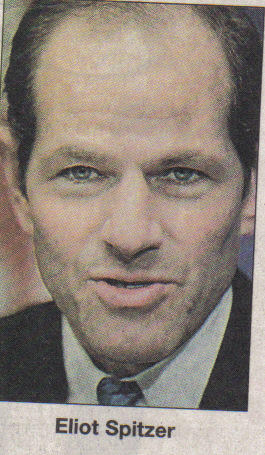
ALBANY, N.Y. (AP) — America Online Inc., the world's largest Internet service provider, will pay $1.25 million in penalties and costs and reform some of its customer service practices to settle an investigation by Attorney General Eliot Spitzer's office.
Around 300 consumers had filed complaints with Spitzer's office accusing AOL, a wholly owned subsidiary of Time Warner Inc., of ignoring demands to cancel service and stop billing.
The company, with 21 million subscribers nationally, rewarded employees who were able to retain subscribers who called to cancel their Internet service.
For years, AOL had minimum retention or "save" percentages customer service personnel were
expected to meet, investigators said. The employees could earn tens of thousands of dollars in bonuses if they were able to dissuade half of their callers from ending service. That led many employees to make it difficult for consumers to cancel service or simply ignore such requests, Spitzer spokesman Brad Maione said.
As part of the settlement, Dulles, Va.-based AOL agreed to eliminate any requirements that its customer service representatives maintain a minimum number of "saves" in order to earn a bonus, a policy in place at Eliot Spitzer "various times since 2000" and record all service cancellation requests. It will verify the cancellation through a third-party monitor, investigators said.
"This agreement helps ensure that AOL will strive to keep its customers through quality service, not stealth retention programs," Spitzer said in a statement.
Googie Branches Out into Text with Voice Chat
MOUNTAIN VIEW, Calif. —
Further expanding beyond its roots in Internet search, Googie Inc. plans to launch a long-rumored program Wednesday that provides both text instant messaging and computer-to-computer voice chat.
The new program, Googie Talk, will compete against similar free services offered for several years by America Online Inc., Microsoft Corp. and Yahoo Inc. All are vying to increase their presence on PCs to boost online ad revenue and name recognition.
The launch was due to come two days after Googie unveiled another free program that aggregates information on a computer desktop. It also comes less than a week after the company announced plans to raise $4 billion in a secondary stock offering.
Rumor has it that google will soon be serving ads based on the voice recognition technology that can determine the keyword theme of your verbal conversation.
MOUNTAIN VIEW, Calif. —
Further expanding beyond its roots in Internet search, Googie Inc. plans to launch a long-rumored program Wednesday that provides both text instant messaging and computer-to-computer voice chat.
The new program, Googie Talk, will compete against similar free services offered for several years by America Online Inc., Microsoft Corp. and Yahoo Inc. All are vying to increase their presence on PCs to boost online ad revenue and name recognition.
The launch was due to come two days after Googie unveiled another free program that aggregates information on a computer desktop. It also comes less than a week after the company announced plans to raise $4 billion in a secondary stock offering.
Rumor has it that google will soon be serving ads based on the voice recognition technology that can determine the keyword theme of your verbal conversation.
Wednesday, August 24, 2005
MSN Fears Google - Gates Admits Fear
MSN Fears Google - Gates Admits Fear The article reprinted here first appeared in Fortune Magazine May 2005. Many of our Friends at Fortune Magazine and The Fortune Group and Time Inc. agree with senior management at Peak Positions.
That the Fortune cover story of why google scares Gates and Microsoft is the most important story ever on the topic of search engine optimization and is yet another validation of the importance and the future of implications of search.
Here's a recap of the Fortune Magazine story:
Microsoft was already months into A massive project aimed at taking down Google when the truth began to dawn on Bill Gates. It was December 2003. He was poking around on the Google company website and came across a help-wanted page with descriptions of all the open jobs at Google. Why, he wondered, were the qualifications for so many of them identical to Microsoft job specs?
Google was a web search business, yet here on the screen were postings for engineers with backgrounds that had nothing to do with search and everything to do with Microsoft's core business—people trained in things like operating-system design, compiler optimization, and distributed-systems architecture. Gates wondered whether Microsoft might be facing much more than a war in search. An e-mail Gates sent to a handful of Microsoft execs that day said, in effect, "We have to watch these guys. It looks like they are building something to compete with us." He sure got that right.
Today Google isn't just a hugely successful search engine; it has morphed into a software company and is emerging as a major threat to Microsoft's dominance. You can use Google software with any Internet browser to search the web and your desktop for just about anything; send and store up to two gigabytes of e-mail via Gmail (Hotmail, Microsoft's rival free e-mail service, offers 250 megabytes, a fraction of that); manage, edit, and send digital photographs using Google's Picasa software, easily the best PC photo software out there; and, through Google's Blogger, create, post online, and print formatted documents—all without applications from Microsoft.
While Google was launching those products—all of them free—Microsoft has been trying in vain to catch up in search. It has spent about $150 million on its search project, code-named Underdog. But Google and lately Yahoo keep leaping ahead with innovations like local-area search complete with maps and satellite photos, ways to search inside a video file, and search designed for cellphones.
Simply put, Google has become a new kind of foe, and that's what has Gates so riled. It has combined software innovation with a brand-new Internet business model—and it wounds Gates' pride that he didn't get there first. Since Google doesn't sell its search products (it makes its money from the ads that accompany its search results), Microsoft can't muscle it out of the marketplace the way it did rivals like Netscape.
But what really bothers Gates is that Google is gaining the ability to attack the very core of Microsoft's franchise—control over what users do first when they turn on their computers.
Google co-founders Sergey Brin and Larry Page and CEO Eric Schmidt all say that any talk about supplanting Microsoft is ludicrous. But the idea that Google will one day marginalize Microsoft's operating system and bypass Windows applications is already starting to become reality. The most paranoid people at Microsoft even think "Google Office" is inevitable. Google is taking over operating system features too, like desktop search. There are fewer uses for the start button in Windows now that Google's desktop search can locate any program, document, photo, music file, or e-mail on a computer.
All of which helps explain why inside Microsoft, the battle with Google has become far more than a fight over search: It's a certifiable grudge match for king of the hill in high tech. "Google is interesting not just because of web search, but because they're going to try to take that and use it to get into other parts of software," says Gates as he leans forward in his chair, his body coiled as if he could spring to his feet at any second. "If all there was was search, you really shouldn't care so much about it. It's because they are a software company," he says. "In that sense," he adds later, "they are more like us than anyone else we have ever competed with." Though CEO Steve Ballmer has been boss for five years, Gates, who is chairman and chief software architect, is leading the charge against Google. Forced to watch Google's stock soar the way Microsoft's used to, and Brin and Page enjoy their roles as tech's new rock stars, Gates brings to the fight a ferocity that nobody has seen since the Netscape war a decade ago. Their popularity gets under his skin. "There's companies that are just so cool that you just can't even deal with it," he says sarcastically, suggesting that Google is nothing more than the latest fad, adding, "At least they know to wear black." Just how big is Microsoft's Google problem? First, a reality check: Microsoft, with nearly $40 billion in revenues, is ten times the size of Google. It's sitting on $34 billion in cash, generating $1 billion in new cash a month, and, thanks to its core Windows, Office, and server products, growing at 15% a year, with operating margins above 30%.
Most companies would love to have such numbers. But Microsoft isn't exactly in fighting trim. Its ambitious new operating system, code-named Longhorn, is more than a year late, even after having been scaled back. Linux, the free operating system that Gates once scoffed at, is fighting Microsoft for share in both the server and desktop markets, forcing the company to do the unthinkable: offer customer discounts.
Last year Microsoft had to spend $1 billion to rewrite thousands of lines of code to make its programs less susceptible to viruses. Its Xbox gaming console is winning raves from players but has yet to make serious money. Meanwhile, Apple has stolen the show in online music with its hugely popular iPod and iTunes Music Store. Plus, the recently released Firefox browser, which can be downloaded free, has forced Gates to reconstitute an Internet Explorer development team. Indeed, four years have passed since Microsoft released a piece of software that generated the kind of buzz Google seems to generate every month. Dozens of current and former Microsofties say that Google's success is causing a corporate identity crisis.
Gates basically created the notion that success in software is a function of the IQ of your team, and for years Microsoft has prided itself on having the smartest employees on the planet. Now many of those overachievers feel as though they've gotten their first B. Google, not Microsoft, is the hot place to work for young engineers. Every month it seems as if Google hires away one of Microsoft's top developers. Before Google's IPO last fall, Microsoft executives dismissed this brain drain as a function of greed. But when the exodus continued after the IPO—especially when Marc Lucovsky, one of the chief architects of Windows, bolted for Google—it was clear that Microsoft had a bigger problem on its hands.
As of March, roughly 100 Microsofties had left for its search nemesis. Google has even had the nerve to set up an office five miles down the road from Microsoft's Redmond, Wash., headquarters. Its opening last November was supposed to be an invitation-only affair, but word spread and by 7 p.m. the place was swarming with dozens of uninvited Microsofties—casually, and sometimes not so casually, looking for work. The Google migration has gotten so bad, says a former Microsoft employee, that when he told his bosses and colleagues he was leaving earlier this year, "the first question out of their mouths was 'You're not going to Google, are you?' " (He was not.)
Perhaps worst of all, Google is building programs that people at Microsoft prefer to their own. Microsofties have always been voracious samplers of competitors' products; many used the Netscape browser for years until Microsoft's Internet Explorer was good enough. But today, stop almost anyone on campus and ask which e-mail or photo or blogging program he uses, and the answer will invariably be Google's. No wonder Bill Gates is mad.
To understand why microsoft is having so much trouble catching Google, it helps to hear the story of Chris Payne. He had been watching Google closely for months by the time he got Gates' ear in February 2003. A newly minted vice president charged with overseeing a grab bag of web products for MSN, Microsoft's web portal, Payne stepped to a podium in the conference room in building 36 at the Redmond campus. Peering at his audience—Gates, Ballmer, and about two dozen other Microsoft brass—he launched into the most important pitch of his career. He asked them to approve a massive push into the search business—a Google killer. Payne, 37, was nervous but pumped. Although Ballmer was present, everyone knew no big technology project got a green light without Gates' say-so—and the chairman never said yes until he had subjected the idea to a withering barrage of questions.
Zapping through PowerPoint slides, Payne spoke for two hours, showing in painstaking detail how MSN was making a monumental mistake outsourcing its search function to third parties. In those days Inktomi, a small firm that had agreed to sell itself to Yahoo in December 2002, provided MSN's search results. Overture, a brainchild of Idealab's Bill Gross, supplied the ads to go alongside them. In hindsight, outsourcing search looks dumb, but back then, search was widely viewed as a money loser. Payne explained how Google was developing a great search engine, and how its minimalist design and consistently relevant results—better than those delivered by MSN's cluttered site—were attracting legions of Internet users. Worse, Google had unlocked the secret of online advertising; its automated system noted a user's search request and then delivered discrete matching ads alongside the results. That enabled the Internet upstart to generate gobs of cash.
The impact on MSN was obvious. "I'm seeing revenue in the category go up, and I'm seeing our market share go down," Payne said later. Payne told Gates & Co. that he would need more than $100 million and 18 months to build his search engine; that he wanted the authority to pull the cream of Microsoft's brainiacs into the effort. And Gates? He asked almost no questions, interrupting mostly to suggest people in Microsoft who might help. "It was reasonably obvious to me that we were going to have to depend on ourselves, not our partners, for search," says Gates now. So when Payne finished, Gates signed off on one of the largest commitments for a new business in Microsoft history: Project Underdog was born. Payne could hardly contain himself. "I was very, like, God!" he says, pumping his fist. "I had done all this work, and then I'm like, 'He said yes!' Honestly, it was awesome."
It was the last easy win for Payne. Last November he released Microsoft's search engine, followed in December by a desktop-search tool (two months behind Google) and in March by a search-related advertising business. Microsoft supported the launches with a $150 million ad campaign and scores of other promotions. But the effort has generated little buzz so far, and Microsoft's global market share, at about 13% of search requests, remains puny. Yet Payne seems impervious. A gregarious Kentuckian with a devilish Jim Carrey smile, he talks in wide-eyed bursts. He seems to be in motion even when he's at rest. Since taking charge of the search effort, he has become well known within the company not just for energy and charisma but also for toughness. Gates may have given him a pass during that initial presentation, but Payne has been at the receiving end of plenty of vicious tongue-lashings since then, during his monthly meetings with Gates and in the weekly e-mails he receives from his boss. Payne joined Microsoft right out of Dartmouth in 1990, eventually ending up as a marketer and strategic planner for the company's database-software business.
His first break came in 1995 when he was transferred to the then-fledgling MSN division. He was one of the original three employees on MSN Investor, playing a critical part in making it one of the best financial websites. But he didn't stick around to reap the rewards. He jumped to Amazon in 1999, only to discover that working there was more about retailing and merchandising than he had thought it would be—he missed building and selling software. By early 2002 he was back at MSN, running its home page and search, among other things. Over the course of that year, he saw Google's threat and began formulating the plan for Underdog.
The project's beginnings were auspicious. With Gates' backing, Payne recruited top talent throughout the organization, like Ken Moss, whom he brought in as chief engineer. Moss had been instrumental in the early 1990s in creating Excel, Microsoft's spreadsheet program. The fledgling search unit quickly grew to roughly 500 engineers and marketers. Nevertheless, it successfully cultivated a startup—even renegade—mentality. Payne's managers bragged to underlings that they had the clout to poach anyone inside Microsoft. And the focus was on winning—in the halls near Payne's office, the walls were covered with performance reports on the group's servers, comments from customers on how Microsoft could improve, and media clippings about Google. For six months the team even bought its own servers. Gaining clearance to run and monitor the project on the corporate server farm would have been too time-consuming, Payne's team felt—not to mention the strain an ambitious search offering would put on the systems. (Google is widely estimated to run 250,000 servers to support its search.) The technology they eventually unveiled used a heavily modified version of the Windows server operating system. All its other components were of their own design, run with a lot of software they had written themselves. Confidence ran high. A senior Microsoft executive said the top brass thought the fight against Google "was going to be Netscape all over again."
Microsoft has a long, dramatic history of being a fast follower, rarely first in a market but ultimately providing the most accessible and practical solution, then outmarketing competitors. The company hasn't always played by the rules, but when it has gone after a market, it has done so quickly and aggressively. Current and former executives of companies like Apple, WordPerfect, Lotus, Novell, and of course Netscape can attest to that. Like Google, Netscape threatened to sideline Microsoft's operating system, in its case with the web browser that founder Marc Andreessen unveiled in 1994.
The reason was that the browser, which cost each user $39.95, would enable applications like word processors and spreadsheets to reside on centralized Internet servers rather than on the hard drives of users' desktops. That in turn would lessen their need for Windows or Office, sapping Microsoft's business. But Gates rallied Microsoft to develop its own browser, which it then bundled free with Windows. Netscape's market share collapsed, and the upstart was forced to sell to AOL (like FORTUNE's publisher, a unit of Time Warner) three years later.
Trying to build a Google killer, however, has turned out to be truly humbling for Microsoft. The effort has taken longer, cost more money, and exposed more big-company problems at Microsoft than anyone imagined. As Payne predicted, targeted online advertising has indeed become a gold mine. Still in its infancy, it's one of the hottest sectors in high tech, a $5-billion-a-year market growing at some 40% annually. Yet no matter what Payne and his crew do, Google and Yahoo seem to do better. "I remember when [Payne's team] showed off their first prototype in early 2004—people laughed because it was so much like Google," says a former Microsoft executive. "We had copied them. That's not how you lead." A headache for Payne is that Microsoft isn't as nimble as smaller, younger rivals like Google and Yahoo. For example, at Google, engineers are responsible for the software that they write—period. They don't hand it off to a "system operations" team to deal with bugs. When something goes awry, the team that wrote the software and knows it best is responsible for fixing it. The bureaucracy and even Gates himself have gotten in Payne's way. Underdog has been slowed by turf battles within MSN and among the company's six other business units. Microsoft executives' compensation is based on the success of their own organizations, which means, says a former exec, that every interaction Payne's team has with, say, the Windows business unit comes with strings attached.
Payne and his team have tried to speed development by buying their way into the search game, but something has always thwarted that approach. In spring 2003, Payne pitched Gates on buying Overture, a move that would have given Microsoft search engine technology out of AltaVista as well as an advertising business that was generating huge profits. But Gates shot the plan down, convinced that Microsoft could do a better job for less money on its own. Instead, Yahoo bought Overture, a move that, together with its earlier purchase of Inktomi, enabled it to catapult itself successfully into the search game in a year.
In fall 2003, Microsoft briefly considered buying Google, only to realize that even if Brin, Page, and their board could have been persuaded to sell—which seemed unlikely—Microsoft would have been left to explain to the world why it was now running a search engine built entirely on Linux instead of Windows. Even when it did buy a company—Lookout—in June 2004 (Lookout had mastered fast Outlook e-mail search), it didn't move quickly enough to expand the software to search the whole desktop.
The price for being slow-footed became abundantly clear last fall: Google beat Microsoft to market with desktop-search software by two months. The news ripped through Microsoft with titanic force. Everyone from Gates on down scrambled into meetings to assess how good Google's product was. Not especially, they decided. Even so, it dealt a blow to their pride. "Here Microsoft was spending $600 million a year in R&D for MSN, $1 billion a year for Office, and $1 billion a year for Windows, and Google gets desktop search out before us? It was a real wake-up call," says an exec. "It was the first time many people in the corporation understood that Google was more than just a search engine. People said, 'If they can do desktop search, what prevents them from doing a version of Excel, PowerPoint, or Word, or buying Star Office [from Sun Microsystems]?' " What does Google make of Microsoft's growing animosity and paranoia?
Although neither the co-founders nor CEO Schmidt would comment for this story, Schmidt told an audience of Internet pioneers at UCLA last fall, "One of the criticisms that the media makes is to compare Google to previous-generation companies. Google is trying to solve the next problem, not the last problem." Privately, Google's executives understand exactly the impact they are having on Gates and his team. They project a carefree image in part because it makes business sense. One blunder by Netscape was that it let Andreessen tell the world how he intended to put Microsoft out of business. Count on Google not to repeat that mistake.
Remember, many of the most influential people at Google are hardened Microsoft warriors. Schmidt battled Gates as CTO of Sun Microsystems and CEO of Novell in the 1990s. Omid Kordestani, Google's head of ad sales, was a top executive at Netscape. Three of Google's directors, Ram Shriram, John Doerr, and Michael Moritz, have been on the front lines of Silicon Valley's war with Microsoft over the years. "Microsoft can literally spend a billion dollars on this if they choose. We take them very seriously," says a Google executive. One reason Google has been rolling out so many new or improved products is that Schmidt understands that innovation is the only sure edge Google has.
The moment Google allows itself to slow, Microsoft could overwhelm it. For anyone who has been watching Gates over the years, the idea that an upstart like Google could so flummox him and his fierce company takes getting used to. But Google is a rival unlike any he has faced in a long time. In previous battles, Microsoft always had a powerful trump card: It controlled the Windows operating system. That meant that when consumers bought a PC, Microsoft had a powerful say in what products and services they saw first. It had pricing power and distribution power over competitors. Because of that, its applications didn't have to be superior to those of the competition—just roughly equal. Windows wasn't better than the Macintosh; Word didn't improve on WordPerfect, or Excel on Lotus. Even Explorer was only as good as Netscape. Microsoft's genius was integrating them seamlessly to make them easier for customers to default to, and then using its marketing, distribution, and pricing clout. It won by attacking competitors' business models, not their technology. Microsoft's array of weapons has so far proved next to useless against Google. For one thing, any attempt to bundle search with its products will probably be scrutinized by antitrust regulators. Meanwhile, you no longer need a PC to use Google—it works fine from a Treo, a BlackBerry, a cellphone, a television, an Apple, or a Linux computer—any device with some kind of keyboard and Internet access.
Nor can Microsoft undercut the price of Google software as it did with Netscape: Google is already free. There's no quick and easy way to lure away Google's online advertisers either. They pay based on the price of a keyword in a search and on how many times users click on the ad, but Google doesn't control that—it's set by auction. Says a former Microsoft executive: "Microsoft can play its old game to compete with Linux and Apple. It has to play Google's game to compete with Google." Gates and Payne don't agree at all. To them, beating Google is the same as beating any of Microsoft's previous challengers. It's still about writing software that is easier to use, and the easiest-to-use software is always the kind that's integrated with what people already have—like Windows or MSN.
Gates says that when Microsoft is done integrating search into future versions of Windows and Office, the world will look back at the way we are now "Googling" for stuff on the Internet and laugh. "The idea that you type in these words [in the search box] that aren't sentences and you don't get any answers—you just get back all these things you have to click on—that is so antiquated," he says, later adding, "We need to take search way beyond how people think of it today and just have it be naturally available, based on the task they want to do." For example, if you wanted to look up a factoid while you were writing a document, you might search for it without ever leaving Word.
Perhaps Gates is right—again. After all, Google may be hugely profitable and a Wall Street darling, but it is also a young company, largely controlled by its founders and dealing with the unavoidable pains of torrid growth. Oddsmakers would say the likelihood of its stumbling is high, and no one is better at outlasting the competition than Gates. Certainly the search game is still in its infancy.
Only a fraction of the content available online is actually searchable.
For instance, even subscribers can't search current and archived issues of the Wall Street Journal0 or most other publications with a search engine; you have to go to the publication's site. This suggests that the search engine that can get the world to list premium content on its platform will have a leg up on the competition. Microsoft has plenty of money to buy the rights to such content; it also owns powerful digital-rights-management software, which helps copyright holders control who uses their products and how often. Those should be advantages in negotiations with companies worried about losing control of copyrighted text, music, and video on the Net. Another advantage for Gates & Co. is that search engines are still technologically primitive. They can't understand context, for example; if you type "chip," they can't tell whether you are looking for a snack food or high-tech equipment.
As a result all three big search engines are scrambling to find ways to make search more personalized. The thinking is that the more a search engine knows about who is searching, the more accurate the results will be. Each company has the foundations of such a product in its desktop-search software, which can tell what you have on your hard drive. Perhaps Microsoft, because it understands Windows better than any other company, will be able to offer faster, more accurate searches. All the same, Microsoft is taking longer to catch Google than anyone could have imagined—and it will take longer still. Unless it can deliver search that is plainly better, most users won't bother to switch, says Piper Jaffray analyst Safa Rashtchy. He adds, "Google is a huge brand. From where I sit, it's their game to lose." The competition could well test Gates' patience as never before. In spring 2003 he told one of his executives, "These Google guys, they want to be billionaires and rock stars and go to conferences and all that. Let's see if they still want to run the business in two or three years." Well, two years have passed, and so far, they sure do.
To read the orginal article go to Fortune.com http://www.fortune.com/fortune/technology/articles/0,15114,1050065-6,00.html
to vote or comment on this article visit:
http://www.peakpositions.com/search-engine-optimization-seo-forum/post-26.html
MSN Fears Google - Gates Admits Fear The article reprinted here first appeared in Fortune Magazine May 2005. Many of our Friends at Fortune Magazine and The Fortune Group and Time Inc. agree with senior management at Peak Positions.
That the Fortune cover story of why google scares Gates and Microsoft is the most important story ever on the topic of search engine optimization and is yet another validation of the importance and the future of implications of search.
Here's a recap of the Fortune Magazine story:
Microsoft was already months into A massive project aimed at taking down Google when the truth began to dawn on Bill Gates. It was December 2003. He was poking around on the Google company website and came across a help-wanted page with descriptions of all the open jobs at Google. Why, he wondered, were the qualifications for so many of them identical to Microsoft job specs?
Google was a web search business, yet here on the screen were postings for engineers with backgrounds that had nothing to do with search and everything to do with Microsoft's core business—people trained in things like operating-system design, compiler optimization, and distributed-systems architecture. Gates wondered whether Microsoft might be facing much more than a war in search. An e-mail Gates sent to a handful of Microsoft execs that day said, in effect, "We have to watch these guys. It looks like they are building something to compete with us." He sure got that right.
Today Google isn't just a hugely successful search engine; it has morphed into a software company and is emerging as a major threat to Microsoft's dominance. You can use Google software with any Internet browser to search the web and your desktop for just about anything; send and store up to two gigabytes of e-mail via Gmail (Hotmail, Microsoft's rival free e-mail service, offers 250 megabytes, a fraction of that); manage, edit, and send digital photographs using Google's Picasa software, easily the best PC photo software out there; and, through Google's Blogger, create, post online, and print formatted documents—all without applications from Microsoft.
While Google was launching those products—all of them free—Microsoft has been trying in vain to catch up in search. It has spent about $150 million on its search project, code-named Underdog. But Google and lately Yahoo keep leaping ahead with innovations like local-area search complete with maps and satellite photos, ways to search inside a video file, and search designed for cellphones.
Simply put, Google has become a new kind of foe, and that's what has Gates so riled. It has combined software innovation with a brand-new Internet business model—and it wounds Gates' pride that he didn't get there first. Since Google doesn't sell its search products (it makes its money from the ads that accompany its search results), Microsoft can't muscle it out of the marketplace the way it did rivals like Netscape.
But what really bothers Gates is that Google is gaining the ability to attack the very core of Microsoft's franchise—control over what users do first when they turn on their computers.
Google co-founders Sergey Brin and Larry Page and CEO Eric Schmidt all say that any talk about supplanting Microsoft is ludicrous. But the idea that Google will one day marginalize Microsoft's operating system and bypass Windows applications is already starting to become reality. The most paranoid people at Microsoft even think "Google Office" is inevitable. Google is taking over operating system features too, like desktop search. There are fewer uses for the start button in Windows now that Google's desktop search can locate any program, document, photo, music file, or e-mail on a computer.
All of which helps explain why inside Microsoft, the battle with Google has become far more than a fight over search: It's a certifiable grudge match for king of the hill in high tech. "Google is interesting not just because of web search, but because they're going to try to take that and use it to get into other parts of software," says Gates as he leans forward in his chair, his body coiled as if he could spring to his feet at any second. "If all there was was search, you really shouldn't care so much about it. It's because they are a software company," he says. "In that sense," he adds later, "they are more like us than anyone else we have ever competed with." Though CEO Steve Ballmer has been boss for five years, Gates, who is chairman and chief software architect, is leading the charge against Google. Forced to watch Google's stock soar the way Microsoft's used to, and Brin and Page enjoy their roles as tech's new rock stars, Gates brings to the fight a ferocity that nobody has seen since the Netscape war a decade ago. Their popularity gets under his skin. "There's companies that are just so cool that you just can't even deal with it," he says sarcastically, suggesting that Google is nothing more than the latest fad, adding, "At least they know to wear black." Just how big is Microsoft's Google problem? First, a reality check: Microsoft, with nearly $40 billion in revenues, is ten times the size of Google. It's sitting on $34 billion in cash, generating $1 billion in new cash a month, and, thanks to its core Windows, Office, and server products, growing at 15% a year, with operating margins above 30%.
Most companies would love to have such numbers. But Microsoft isn't exactly in fighting trim. Its ambitious new operating system, code-named Longhorn, is more than a year late, even after having been scaled back. Linux, the free operating system that Gates once scoffed at, is fighting Microsoft for share in both the server and desktop markets, forcing the company to do the unthinkable: offer customer discounts.
Last year Microsoft had to spend $1 billion to rewrite thousands of lines of code to make its programs less susceptible to viruses. Its Xbox gaming console is winning raves from players but has yet to make serious money. Meanwhile, Apple has stolen the show in online music with its hugely popular iPod and iTunes Music Store. Plus, the recently released Firefox browser, which can be downloaded free, has forced Gates to reconstitute an Internet Explorer development team. Indeed, four years have passed since Microsoft released a piece of software that generated the kind of buzz Google seems to generate every month. Dozens of current and former Microsofties say that Google's success is causing a corporate identity crisis.
Gates basically created the notion that success in software is a function of the IQ of your team, and for years Microsoft has prided itself on having the smartest employees on the planet. Now many of those overachievers feel as though they've gotten their first B. Google, not Microsoft, is the hot place to work for young engineers. Every month it seems as if Google hires away one of Microsoft's top developers. Before Google's IPO last fall, Microsoft executives dismissed this brain drain as a function of greed. But when the exodus continued after the IPO—especially when Marc Lucovsky, one of the chief architects of Windows, bolted for Google—it was clear that Microsoft had a bigger problem on its hands.
As of March, roughly 100 Microsofties had left for its search nemesis. Google has even had the nerve to set up an office five miles down the road from Microsoft's Redmond, Wash., headquarters. Its opening last November was supposed to be an invitation-only affair, but word spread and by 7 p.m. the place was swarming with dozens of uninvited Microsofties—casually, and sometimes not so casually, looking for work. The Google migration has gotten so bad, says a former Microsoft employee, that when he told his bosses and colleagues he was leaving earlier this year, "the first question out of their mouths was 'You're not going to Google, are you?' " (He was not.)
Perhaps worst of all, Google is building programs that people at Microsoft prefer to their own. Microsofties have always been voracious samplers of competitors' products; many used the Netscape browser for years until Microsoft's Internet Explorer was good enough. But today, stop almost anyone on campus and ask which e-mail or photo or blogging program he uses, and the answer will invariably be Google's. No wonder Bill Gates is mad.
To understand why microsoft is having so much trouble catching Google, it helps to hear the story of Chris Payne. He had been watching Google closely for months by the time he got Gates' ear in February 2003. A newly minted vice president charged with overseeing a grab bag of web products for MSN, Microsoft's web portal, Payne stepped to a podium in the conference room in building 36 at the Redmond campus. Peering at his audience—Gates, Ballmer, and about two dozen other Microsoft brass—he launched into the most important pitch of his career. He asked them to approve a massive push into the search business—a Google killer. Payne, 37, was nervous but pumped. Although Ballmer was present, everyone knew no big technology project got a green light without Gates' say-so—and the chairman never said yes until he had subjected the idea to a withering barrage of questions.
Zapping through PowerPoint slides, Payne spoke for two hours, showing in painstaking detail how MSN was making a monumental mistake outsourcing its search function to third parties. In those days Inktomi, a small firm that had agreed to sell itself to Yahoo in December 2002, provided MSN's search results. Overture, a brainchild of Idealab's Bill Gross, supplied the ads to go alongside them. In hindsight, outsourcing search looks dumb, but back then, search was widely viewed as a money loser. Payne explained how Google was developing a great search engine, and how its minimalist design and consistently relevant results—better than those delivered by MSN's cluttered site—were attracting legions of Internet users. Worse, Google had unlocked the secret of online advertising; its automated system noted a user's search request and then delivered discrete matching ads alongside the results. That enabled the Internet upstart to generate gobs of cash.
The impact on MSN was obvious. "I'm seeing revenue in the category go up, and I'm seeing our market share go down," Payne said later. Payne told Gates & Co. that he would need more than $100 million and 18 months to build his search engine; that he wanted the authority to pull the cream of Microsoft's brainiacs into the effort. And Gates? He asked almost no questions, interrupting mostly to suggest people in Microsoft who might help. "It was reasonably obvious to me that we were going to have to depend on ourselves, not our partners, for search," says Gates now. So when Payne finished, Gates signed off on one of the largest commitments for a new business in Microsoft history: Project Underdog was born. Payne could hardly contain himself. "I was very, like, God!" he says, pumping his fist. "I had done all this work, and then I'm like, 'He said yes!' Honestly, it was awesome."
It was the last easy win for Payne. Last November he released Microsoft's search engine, followed in December by a desktop-search tool (two months behind Google) and in March by a search-related advertising business. Microsoft supported the launches with a $150 million ad campaign and scores of other promotions. But the effort has generated little buzz so far, and Microsoft's global market share, at about 13% of search requests, remains puny. Yet Payne seems impervious. A gregarious Kentuckian with a devilish Jim Carrey smile, he talks in wide-eyed bursts. He seems to be in motion even when he's at rest. Since taking charge of the search effort, he has become well known within the company not just for energy and charisma but also for toughness. Gates may have given him a pass during that initial presentation, but Payne has been at the receiving end of plenty of vicious tongue-lashings since then, during his monthly meetings with Gates and in the weekly e-mails he receives from his boss. Payne joined Microsoft right out of Dartmouth in 1990, eventually ending up as a marketer and strategic planner for the company's database-software business.
His first break came in 1995 when he was transferred to the then-fledgling MSN division. He was one of the original three employees on MSN Investor, playing a critical part in making it one of the best financial websites. But he didn't stick around to reap the rewards. He jumped to Amazon in 1999, only to discover that working there was more about retailing and merchandising than he had thought it would be—he missed building and selling software. By early 2002 he was back at MSN, running its home page and search, among other things. Over the course of that year, he saw Google's threat and began formulating the plan for Underdog.
The project's beginnings were auspicious. With Gates' backing, Payne recruited top talent throughout the organization, like Ken Moss, whom he brought in as chief engineer. Moss had been instrumental in the early 1990s in creating Excel, Microsoft's spreadsheet program. The fledgling search unit quickly grew to roughly 500 engineers and marketers. Nevertheless, it successfully cultivated a startup—even renegade—mentality. Payne's managers bragged to underlings that they had the clout to poach anyone inside Microsoft. And the focus was on winning—in the halls near Payne's office, the walls were covered with performance reports on the group's servers, comments from customers on how Microsoft could improve, and media clippings about Google. For six months the team even bought its own servers. Gaining clearance to run and monitor the project on the corporate server farm would have been too time-consuming, Payne's team felt—not to mention the strain an ambitious search offering would put on the systems. (Google is widely estimated to run 250,000 servers to support its search.) The technology they eventually unveiled used a heavily modified version of the Windows server operating system. All its other components were of their own design, run with a lot of software they had written themselves. Confidence ran high. A senior Microsoft executive said the top brass thought the fight against Google "was going to be Netscape all over again."
Microsoft has a long, dramatic history of being a fast follower, rarely first in a market but ultimately providing the most accessible and practical solution, then outmarketing competitors. The company hasn't always played by the rules, but when it has gone after a market, it has done so quickly and aggressively. Current and former executives of companies like Apple, WordPerfect, Lotus, Novell, and of course Netscape can attest to that. Like Google, Netscape threatened to sideline Microsoft's operating system, in its case with the web browser that founder Marc Andreessen unveiled in 1994.
The reason was that the browser, which cost each user $39.95, would enable applications like word processors and spreadsheets to reside on centralized Internet servers rather than on the hard drives of users' desktops. That in turn would lessen their need for Windows or Office, sapping Microsoft's business. But Gates rallied Microsoft to develop its own browser, which it then bundled free with Windows. Netscape's market share collapsed, and the upstart was forced to sell to AOL (like FORTUNE's publisher, a unit of Time Warner) three years later.
Trying to build a Google killer, however, has turned out to be truly humbling for Microsoft. The effort has taken longer, cost more money, and exposed more big-company problems at Microsoft than anyone imagined. As Payne predicted, targeted online advertising has indeed become a gold mine. Still in its infancy, it's one of the hottest sectors in high tech, a $5-billion-a-year market growing at some 40% annually. Yet no matter what Payne and his crew do, Google and Yahoo seem to do better. "I remember when [Payne's team] showed off their first prototype in early 2004—people laughed because it was so much like Google," says a former Microsoft executive. "We had copied them. That's not how you lead." A headache for Payne is that Microsoft isn't as nimble as smaller, younger rivals like Google and Yahoo. For example, at Google, engineers are responsible for the software that they write—period. They don't hand it off to a "system operations" team to deal with bugs. When something goes awry, the team that wrote the software and knows it best is responsible for fixing it. The bureaucracy and even Gates himself have gotten in Payne's way. Underdog has been slowed by turf battles within MSN and among the company's six other business units. Microsoft executives' compensation is based on the success of their own organizations, which means, says a former exec, that every interaction Payne's team has with, say, the Windows business unit comes with strings attached.
Payne and his team have tried to speed development by buying their way into the search game, but something has always thwarted that approach. In spring 2003, Payne pitched Gates on buying Overture, a move that would have given Microsoft search engine technology out of AltaVista as well as an advertising business that was generating huge profits. But Gates shot the plan down, convinced that Microsoft could do a better job for less money on its own. Instead, Yahoo bought Overture, a move that, together with its earlier purchase of Inktomi, enabled it to catapult itself successfully into the search game in a year.
In fall 2003, Microsoft briefly considered buying Google, only to realize that even if Brin, Page, and their board could have been persuaded to sell—which seemed unlikely—Microsoft would have been left to explain to the world why it was now running a search engine built entirely on Linux instead of Windows. Even when it did buy a company—Lookout—in June 2004 (Lookout had mastered fast Outlook e-mail search), it didn't move quickly enough to expand the software to search the whole desktop.
The price for being slow-footed became abundantly clear last fall: Google beat Microsoft to market with desktop-search software by two months. The news ripped through Microsoft with titanic force. Everyone from Gates on down scrambled into meetings to assess how good Google's product was. Not especially, they decided. Even so, it dealt a blow to their pride. "Here Microsoft was spending $600 million a year in R&D for MSN, $1 billion a year for Office, and $1 billion a year for Windows, and Google gets desktop search out before us? It was a real wake-up call," says an exec. "It was the first time many people in the corporation understood that Google was more than just a search engine. People said, 'If they can do desktop search, what prevents them from doing a version of Excel, PowerPoint, or Word, or buying Star Office [from Sun Microsystems]?' " What does Google make of Microsoft's growing animosity and paranoia?
Although neither the co-founders nor CEO Schmidt would comment for this story, Schmidt told an audience of Internet pioneers at UCLA last fall, "One of the criticisms that the media makes is to compare Google to previous-generation companies. Google is trying to solve the next problem, not the last problem." Privately, Google's executives understand exactly the impact they are having on Gates and his team. They project a carefree image in part because it makes business sense. One blunder by Netscape was that it let Andreessen tell the world how he intended to put Microsoft out of business. Count on Google not to repeat that mistake.
Remember, many of the most influential people at Google are hardened Microsoft warriors. Schmidt battled Gates as CTO of Sun Microsystems and CEO of Novell in the 1990s. Omid Kordestani, Google's head of ad sales, was a top executive at Netscape. Three of Google's directors, Ram Shriram, John Doerr, and Michael Moritz, have been on the front lines of Silicon Valley's war with Microsoft over the years. "Microsoft can literally spend a billion dollars on this if they choose. We take them very seriously," says a Google executive. One reason Google has been rolling out so many new or improved products is that Schmidt understands that innovation is the only sure edge Google has.
The moment Google allows itself to slow, Microsoft could overwhelm it. For anyone who has been watching Gates over the years, the idea that an upstart like Google could so flummox him and his fierce company takes getting used to. But Google is a rival unlike any he has faced in a long time. In previous battles, Microsoft always had a powerful trump card: It controlled the Windows operating system. That meant that when consumers bought a PC, Microsoft had a powerful say in what products and services they saw first. It had pricing power and distribution power over competitors. Because of that, its applications didn't have to be superior to those of the competition—just roughly equal. Windows wasn't better than the Macintosh; Word didn't improve on WordPerfect, or Excel on Lotus. Even Explorer was only as good as Netscape. Microsoft's genius was integrating them seamlessly to make them easier for customers to default to, and then using its marketing, distribution, and pricing clout. It won by attacking competitors' business models, not their technology. Microsoft's array of weapons has so far proved next to useless against Google. For one thing, any attempt to bundle search with its products will probably be scrutinized by antitrust regulators. Meanwhile, you no longer need a PC to use Google—it works fine from a Treo, a BlackBerry, a cellphone, a television, an Apple, or a Linux computer—any device with some kind of keyboard and Internet access.
Nor can Microsoft undercut the price of Google software as it did with Netscape: Google is already free. There's no quick and easy way to lure away Google's online advertisers either. They pay based on the price of a keyword in a search and on how many times users click on the ad, but Google doesn't control that—it's set by auction. Says a former Microsoft executive: "Microsoft can play its old game to compete with Linux and Apple. It has to play Google's game to compete with Google." Gates and Payne don't agree at all. To them, beating Google is the same as beating any of Microsoft's previous challengers. It's still about writing software that is easier to use, and the easiest-to-use software is always the kind that's integrated with what people already have—like Windows or MSN.
Gates says that when Microsoft is done integrating search into future versions of Windows and Office, the world will look back at the way we are now "Googling" for stuff on the Internet and laugh. "The idea that you type in these words [in the search box] that aren't sentences and you don't get any answers—you just get back all these things you have to click on—that is so antiquated," he says, later adding, "We need to take search way beyond how people think of it today and just have it be naturally available, based on the task they want to do." For example, if you wanted to look up a factoid while you were writing a document, you might search for it without ever leaving Word.
Perhaps Gates is right—again. After all, Google may be hugely profitable and a Wall Street darling, but it is also a young company, largely controlled by its founders and dealing with the unavoidable pains of torrid growth. Oddsmakers would say the likelihood of its stumbling is high, and no one is better at outlasting the competition than Gates. Certainly the search game is still in its infancy.
Only a fraction of the content available online is actually searchable.
For instance, even subscribers can't search current and archived issues of the Wall Street Journal0 or most other publications with a search engine; you have to go to the publication's site. This suggests that the search engine that can get the world to list premium content on its platform will have a leg up on the competition. Microsoft has plenty of money to buy the rights to such content; it also owns powerful digital-rights-management software, which helps copyright holders control who uses their products and how often. Those should be advantages in negotiations with companies worried about losing control of copyrighted text, music, and video on the Net. Another advantage for Gates & Co. is that search engines are still technologically primitive. They can't understand context, for example; if you type "chip," they can't tell whether you are looking for a snack food or high-tech equipment.
As a result all three big search engines are scrambling to find ways to make search more personalized. The thinking is that the more a search engine knows about who is searching, the more accurate the results will be. Each company has the foundations of such a product in its desktop-search software, which can tell what you have on your hard drive. Perhaps Microsoft, because it understands Windows better than any other company, will be able to offer faster, more accurate searches. All the same, Microsoft is taking longer to catch Google than anyone could have imagined—and it will take longer still. Unless it can deliver search that is plainly better, most users won't bother to switch, says Piper Jaffray analyst Safa Rashtchy. He adds, "Google is a huge brand. From where I sit, it's their game to lose." The competition could well test Gates' patience as never before. In spring 2003 he told one of his executives, "These Google guys, they want to be billionaires and rock stars and go to conferences and all that. Let's see if they still want to run the business in two or three years." Well, two years have passed, and so far, they sure do.
To read the orginal article go to Fortune.com http://www.fortune.com/fortune/technology/articles/0,15114,1050065-6,00.html
to vote or comment on this article visit:
http://www.peakpositions.com/search-engine-optimization-seo-forum/post-26.html
Viacom Jumps Into The Paid Search Listings Game with Yahoo!
Broadcast behemoth Viacom finally decided to address the internet's second most popular activity: Keyword Search. Many in the search engine optimization industry figured that Viacom would one day come crawling into the world of search once they began to see Google's revenues and had to start answering to shareholders and the board as to why their media covergance plans excluded keyword search marketing.
Yahoo search advertisers will now receive further exposure on the Viacom Internet network both in the sponsored and organic search results of the CBS-Viacom websites including: BET.com, CBSNews.com, CMT.com, MTV.com, NickJr.com, Showtime Online, and VH1.com.
The number of piad listings and keyword sponsors varies by Viacom property.
CBSNews.com will emulate Google and Yahoo by listing three sponsored search results advertisers at the top of their results page, and also run three more Yahoo sponsored keyword ads vertically in the right hand margin.
About Viacom
Viacom is a vast empire of broadcast mediums that greatly influences public opinion with ownership control in multiple forums of Network TV, Television production and distribution, Radio, Film, Publishing, Outdoor Billboards, Amusement Parks, and more.
It has been virtually impossible for any significant government intervention, FCC regulation or meaningful attempt to take up the media monopoly issue to date. Consumers are beginning to realize that nearly all American media outlets are now in the control of a small number of giant conglomerates.
Viacom's $40.6 billion purchase of CBS a couple years back still fails to make the merged company the largest media monopoly in America. That title is nearly a tie between Time Warner and Walt Disney, although most financial experts are claiming Disney the title holder, as the coffee stained, shred-marked, accounting records at AOL/Time Warner are still under SEC investigation and accurate final numbers for AOL/Time Warner have been impossible to decipher.
The merged CBS Viacom company became the largest operator of television and radio stations in the United States, combining Infinity Broadcasting and Group W, two of the biggest radio chains, both owned by CBS, with TV stations owned by CBS and Viacom's Paramount subsidiary. CBS Viacom was allowed to join forces and take sole control of TV stations in 18 of the 20 largest markets, own two TV stations in the same city in six of America's largest television markets, and now enjoys reach of 41 percent of the total national broadcasting market.
This 41% total market reach figure exceeds FCC audience reach limits, however, Viacom has simply issued petitions to the Federal Communications Commission to waive any existing regulations or restrictions that prevent one media company from owning multiple stations and reaching more than 35 percent of the entire broadcast market. The political action committee members, golf courses, and luxury resorts in the surburban Washington-Virginia-Maryland corridor had record bookings this summer in an apparent effort to help the FCC and the leading broadcast companies work out any differences they might have concerning the flexible media monolopy by-laws.
In further review of the extensive reach that CBS Viacom now singularly controls consider that when combining the highest-rated television network, CBS, with Paramount, the movie studio that produced the highest-grossing movie of all time, Titanic, and dozens of highly rated television programs, such as the comedy hit Frasier, the CBS Viacom merger also created perhaps the most powerful company in entertainment production and distribution. Viacom has ownership control of Spelling Productions (another large television production house) and well as Viacom Productions.
Viacom was already the largest operator in the cable TV broadcasting industry prior to the acquistion of CBS. Viacom owns popular cable properties that include: MTV, Nickelodeon, Showtime, VH-1, Comedy Central, and now through the CBS merger picked up the TNN country network. CBS Viacom is the largest American owner of outdoor billboards, owns Blockbuster Video, the naion's largest video-rental chain, book publisher Simon & Schuster, and now also owns five leading amusement parks.
Wait Viacom owns much more:
Viacom owns 50 percent of the UPN, America's sixth most popular TV network, but according to the latest FCC resort stays, Viacom might have to sell UPN in order to maintain ownership control of all of their other media properties. A most fascinating aside is that Viacom also is involved in the boat manufacturing and sales distribution business now as they share ownership of the UPN network with boat-maker Chris Craft Industries. This could explain the rumors that have been flying all summer that key FCC and government players in the broadcast regulation circles have recently discovered the thrills of boat ownership.
Sources say merger mania that tore through the broadcast industry for most of the late 80's and 90's has further complicated the broadcast monopoly picture. Consider that both Viacom and CBS were already involved in a most complex series of rush mergers, hostile takeovers, and backdoor broadcast acquisitions during the last 15 years or so. It was during this time-frame that the US media and publishing industries ownership shifted into the hands of less than a half dozen giant media corporations.
Many media consultants are now pondering if keyword search is the next target of the media elite. stay tuned as keyword search the most effective form of Internet Advertising continues to draw attention...
Broadcast behemoth Viacom finally decided to address the internet's second most popular activity: Keyword Search. Many in the search engine optimization industry figured that Viacom would one day come crawling into the world of search once they began to see Google's revenues and had to start answering to shareholders and the board as to why their media covergance plans excluded keyword search marketing.
Yahoo search advertisers will now receive further exposure on the Viacom Internet network both in the sponsored and organic search results of the CBS-Viacom websites including: BET.com, CBSNews.com, CMT.com, MTV.com, NickJr.com, Showtime Online, and VH1.com.
The number of piad listings and keyword sponsors varies by Viacom property.
CBSNews.com will emulate Google and Yahoo by listing three sponsored search results advertisers at the top of their results page, and also run three more Yahoo sponsored keyword ads vertically in the right hand margin.
About Viacom
Viacom is a vast empire of broadcast mediums that greatly influences public opinion with ownership control in multiple forums of Network TV, Television production and distribution, Radio, Film, Publishing, Outdoor Billboards, Amusement Parks, and more.
It has been virtually impossible for any significant government intervention, FCC regulation or meaningful attempt to take up the media monopoly issue to date. Consumers are beginning to realize that nearly all American media outlets are now in the control of a small number of giant conglomerates.
Viacom's $40.6 billion purchase of CBS a couple years back still fails to make the merged company the largest media monopoly in America. That title is nearly a tie between Time Warner and Walt Disney, although most financial experts are claiming Disney the title holder, as the coffee stained, shred-marked, accounting records at AOL/Time Warner are still under SEC investigation and accurate final numbers for AOL/Time Warner have been impossible to decipher.
The merged CBS Viacom company became the largest operator of television and radio stations in the United States, combining Infinity Broadcasting and Group W, two of the biggest radio chains, both owned by CBS, with TV stations owned by CBS and Viacom's Paramount subsidiary. CBS Viacom was allowed to join forces and take sole control of TV stations in 18 of the 20 largest markets, own two TV stations in the same city in six of America's largest television markets, and now enjoys reach of 41 percent of the total national broadcasting market.
This 41% total market reach figure exceeds FCC audience reach limits, however, Viacom has simply issued petitions to the Federal Communications Commission to waive any existing regulations or restrictions that prevent one media company from owning multiple stations and reaching more than 35 percent of the entire broadcast market. The political action committee members, golf courses, and luxury resorts in the surburban Washington-Virginia-Maryland corridor had record bookings this summer in an apparent effort to help the FCC and the leading broadcast companies work out any differences they might have concerning the flexible media monolopy by-laws.
In further review of the extensive reach that CBS Viacom now singularly controls consider that when combining the highest-rated television network, CBS, with Paramount, the movie studio that produced the highest-grossing movie of all time, Titanic, and dozens of highly rated television programs, such as the comedy hit Frasier, the CBS Viacom merger also created perhaps the most powerful company in entertainment production and distribution. Viacom has ownership control of Spelling Productions (another large television production house) and well as Viacom Productions.
Viacom was already the largest operator in the cable TV broadcasting industry prior to the acquistion of CBS. Viacom owns popular cable properties that include: MTV, Nickelodeon, Showtime, VH-1, Comedy Central, and now through the CBS merger picked up the TNN country network. CBS Viacom is the largest American owner of outdoor billboards, owns Blockbuster Video, the naion's largest video-rental chain, book publisher Simon & Schuster, and now also owns five leading amusement parks.
Wait Viacom owns much more:
Viacom owns 50 percent of the UPN, America's sixth most popular TV network, but according to the latest FCC resort stays, Viacom might have to sell UPN in order to maintain ownership control of all of their other media properties. A most fascinating aside is that Viacom also is involved in the boat manufacturing and sales distribution business now as they share ownership of the UPN network with boat-maker Chris Craft Industries. This could explain the rumors that have been flying all summer that key FCC and government players in the broadcast regulation circles have recently discovered the thrills of boat ownership.
Sources say merger mania that tore through the broadcast industry for most of the late 80's and 90's has further complicated the broadcast monopoly picture. Consider that both Viacom and CBS were already involved in a most complex series of rush mergers, hostile takeovers, and backdoor broadcast acquisitions during the last 15 years or so. It was during this time-frame that the US media and publishing industries ownership shifted into the hands of less than a half dozen giant media corporations.
Many media consultants are now pondering if keyword search is the next target of the media elite. stay tuned as keyword search the most effective form of Internet Advertising continues to draw attention...
Monday, August 22, 2005
AOL Employee Gets Jail Time For Spamming
AOL Spammer Sentenced to 15 Months
Spam does not pay... a former America Online engineer who stole the usernames and more than 90 million email addresses of registered AOL account holders was sentenced earlier this month to 15 months in prison.
Jason Smathers used the stolen AOL account data to send more than 7 billion spam e-mails before he sold the entire AOL account list to another spammer for $28,000 in cash.
Smathers who is 25 years old agreed to a plea bargain with the government to help identify fellow spammers and, in return, received a much shorter sentence, in the most recent black eye development for AOL. America Online earning announcement of in early 2004 still holds the record the biggest corporate loss ever in business history.
As one of the first people to be prosecuted under the new CAN Spam Legislation, Smathers was facing up to 10 years in federal prison before his coped a plea and sang like a canary.
AOL had no comment about their security policies and lack of in-house enforecement. AOL is still planning on raising their member fees in the coming months, despite the recent onslaught of AOL subscriber cancellations.
AOL Spammer Sentenced to 15 Months
Spam does not pay... a former America Online engineer who stole the usernames and more than 90 million email addresses of registered AOL account holders was sentenced earlier this month to 15 months in prison.
Jason Smathers used the stolen AOL account data to send more than 7 billion spam e-mails before he sold the entire AOL account list to another spammer for $28,000 in cash.
Smathers who is 25 years old agreed to a plea bargain with the government to help identify fellow spammers and, in return, received a much shorter sentence, in the most recent black eye development for AOL. America Online earning announcement of in early 2004 still holds the record the biggest corporate loss ever in business history.
As one of the first people to be prosecuted under the new CAN Spam Legislation, Smathers was facing up to 10 years in federal prison before his coped a plea and sang like a canary.
AOL had no comment about their security policies and lack of in-house enforecement. AOL is still planning on raising their member fees in the coming months, despite the recent onslaught of AOL subscriber cancellations.
A2iA Corporation has unveiled the first-ever automated data capture and keyword spotting software for freeform cursive handwriting, making it possible to quickly scan through the content contained within large volumes of unstructured handwritten letters and loosely structured fields within forms.
Using A2iA’s Intelligent Word Recognition (IWR) technology, combined with the company’s broad range of document analysis technologies, A2iA DocumentReader enables a computer to mimic a human speed-reader.
It locates, segments and processes the information contained in the paper that businesses use and archive every day – cursive handwritten information previously excluded from traditional forms processing and records management applications.
Applications include spotting keywords to route incoming mail – as well as knowledge management applications, where large batches of documents containing cursive handwriting become searchable for the first time. Full-page handwritten letters can be analyzed by locating the paragraphs composing the main body content and segments the paragraphs into lines and the lines into words. It then converts the handwritten words into electronic data, matching the words against language-specific and industry-specific vocabularies of between 10,000 and 30,000 words, to produce a rough transcription.
Companies now have the ability to index in electronic text format and together with other data entered or captured electronically – the information contained in documents that are typically read, archived and retrieved manually in their native format or stored in image archives. The captured data can fuel customer relationship management and knowledge management applications. Other potential applications include collecting handwritten intelligence from doctor’s notes, prescriptions, accident witness statements, police reports, and litigation support, to name a few. Automated data capture and keyword spotting software are another great business resource.
Using A2iA’s Intelligent Word Recognition (IWR) technology, combined with the company’s broad range of document analysis technologies, A2iA DocumentReader enables a computer to mimic a human speed-reader.
It locates, segments and processes the information contained in the paper that businesses use and archive every day – cursive handwritten information previously excluded from traditional forms processing and records management applications.
Applications include spotting keywords to route incoming mail – as well as knowledge management applications, where large batches of documents containing cursive handwriting become searchable for the first time. Full-page handwritten letters can be analyzed by locating the paragraphs composing the main body content and segments the paragraphs into lines and the lines into words. It then converts the handwritten words into electronic data, matching the words against language-specific and industry-specific vocabularies of between 10,000 and 30,000 words, to produce a rough transcription.
Companies now have the ability to index in electronic text format and together with other data entered or captured electronically – the information contained in documents that are typically read, archived and retrieved manually in their native format or stored in image archives. The captured data can fuel customer relationship management and knowledge management applications. Other potential applications include collecting handwritten intelligence from doctor’s notes, prescriptions, accident witness statements, police reports, and litigation support, to name a few. Automated data capture and keyword spotting software are another great business resource.
Friday, August 19, 2005
Google Begins to Sprinkle Sponsored Results into the Organic Listings.
We here at Peak Positions hope this beta test is short-lived and does not become a permanent service about to be rolled out at Google. It would be horribly misleading to Google keyword searchers worldwide to compromise the organic search results by blending in sponsored links.
Is this just another indication that google is bound and determined to increase their PPC click through percentages to help compensate for the favored organic listings ?
The Google Organic results click through percentags are 5 and 6 to 1 vs. the paid sponsored advertising links and google must feel that they need to reverse this trend for revenue sake.
What Google is neglecting to consider is objectivity, the factor that has made Google.
As a public company, serving shareholders could now clouding management minds at Google.
Besides couldn't Google solve cash demands quickly by releasing more stock shares whenever they need another billion.
Why would Google take this potentially harmful stratgey and risk keyword search market share?
This beta test has many wondering - Does Google intend to serve users or advertisers ?
We here at Peak Positions hope this beta test is short-lived and does not become a permanent service about to be rolled out at Google. It would be horribly misleading to Google keyword searchers worldwide to compromise the organic search results by blending in sponsored links.
Is this just another indication that google is bound and determined to increase their PPC click through percentages to help compensate for the favored organic listings ?
The Google Organic results click through percentags are 5 and 6 to 1 vs. the paid sponsored advertising links and google must feel that they need to reverse this trend for revenue sake.
What Google is neglecting to consider is objectivity, the factor that has made Google.
As a public company, serving shareholders could now clouding management minds at Google.
Besides couldn't Google solve cash demands quickly by releasing more stock shares whenever they need another billion.
Why would Google take this potentially harmful stratgey and risk keyword search market share?
This beta test has many wondering - Does Google intend to serve users or advertisers ?
Google Tests "Commercial" Results In Organic Listings
Google Organic Results Compromised
Google is testing interspersing alternate listings that appear to be commercial in nature into its natural, or organic, search results. A recent search for "on demand," for example, returned an area delineated off from natural results, occupying the above-the-fold sixth through eighth positions in the organic results area of the page. Within the clearly demarcated but unlabeled space were three listings for Comcast services.
Mike Levin, VP of Connors Communications Interactive Group, called the listings "very commercial-looking results." He claims his company has examined 50 keywords and -phrases which, when queried, delivered similar results in the same demarcated position on the page.
"We're finding results that may be an experiment in a new system of determining relevance," Levin said, "So they are taking positions 6,7 and 8 they're drawing horizontal lines and they are doing something else in that spot. Which on its own has tremendous implications for the organic search optimization field."
A Google spokesperson assured ClickZ News the results are not paid listings, saying the demarcated results are a search relevancy experiment. Kevin Lee, executive chairman and co-founder of Did-It, says the results don't appear to be paid listing to expert eyes. He notes both the cache and the live page both show page titles consistent with the Google's representation of organic results. He also notes the URL formations looked like organic redirects.
Levin claims the re-directs indicate the results are being tracked, but not with all the code that's used to track Ad Words placements. "So it is an experiment in AdWords relevancy that changes the current page rank approach," Levin hypothesizes. Both Levin and Lee point out the move could have a potentially large impact on organic search optimization tactics.
This Article First Appeared on ClickZ
Google Organic Results Compromised
Google is testing interspersing alternate listings that appear to be commercial in nature into its natural, or organic, search results. A recent search for "on demand," for example, returned an area delineated off from natural results, occupying the above-the-fold sixth through eighth positions in the organic results area of the page. Within the clearly demarcated but unlabeled space were three listings for Comcast services.
Mike Levin, VP of Connors Communications Interactive Group, called the listings "very commercial-looking results." He claims his company has examined 50 keywords and -phrases which, when queried, delivered similar results in the same demarcated position on the page.
"We're finding results that may be an experiment in a new system of determining relevance," Levin said, "So they are taking positions 6,7 and 8 they're drawing horizontal lines and they are doing something else in that spot. Which on its own has tremendous implications for the organic search optimization field."
A Google spokesperson assured ClickZ News the results are not paid listings, saying the demarcated results are a search relevancy experiment. Kevin Lee, executive chairman and co-founder of Did-It, says the results don't appear to be paid listing to expert eyes. He notes both the cache and the live page both show page titles consistent with the Google's representation of organic results. He also notes the URL formations looked like organic redirects.
Levin claims the re-directs indicate the results are being tracked, but not with all the code that's used to track Ad Words placements. "So it is an experiment in AdWords relevancy that changes the current page rank approach," Levin hypothesizes. Both Levin and Lee point out the move could have a potentially large impact on organic search optimization tactics.
This Article First Appeared on ClickZ
Thursday, August 18, 2005
Found this recent Search Engine Watch Organic Search Engine Optimization Post
Most Fascinating
SEO Inc and Pulled from Google.
SEO Inc Client Sites Pulled From Google
Deceptive Links Program Causing Google Problems
for SEO Inc and Client Websites
Recently, SEO Inc apparently fell out of the top rankings for the term "search engine optimization" at Google. Many felt it was a non-story then. That feeling changed when the company issued a cease-and-desist notice against Google Blogoscoped, implying that Philipp Lenssen there may have trade libeled them.
More details and a copy of the letter from Philipp here: SEO Inc Sent Me a Cease & Desist.
Wow. What did he say? John Battelle has a key passage : It’s kind of ironic that SEOInc.com, a search engine optimization company which for a while was on the Google number 1 spot for the highly competitive query "search engine optimization", is now nowhere to be found in the Google results.
This is likely due to the recent PageRank update and even more algorithm tweaks implemented by Google. Enter “SEOinc” into Google.com, and SEOInc.com is nowhere in the top 10; and the SEOInc.com PageRank has dropped to “none”.
Only by entering “site:seoinc.com” into Google will you see the site is still indexed in some way.
And while a low or non-existent Google ranking is bad enough for sites outside the SEO industry, it hits all companies in the SEO business twice as hard as the SEOInc company and many of its clients were pulled from Google or are not being found with search engines anymore, they’ve also lost their biggest proof that SEO services are actually worth paying for.
Another black mark for SEO marketers and SEMPO members. SEOInc regularly sponsors the SES strategies conferences and is a SEMPO Circle Member. Wow SEMPO what an active organization, these rogue self-absored pretentious SEO companies companies are able to buy Circle memberships versus EARNING the distinction with quality work.
SEMPO, the SES Strategies Conferences, Marketing Sherpa, and others presenting themselves as the 'voice of the SEO industry" "the overning body of SEO" the "SEO Best Practices Seal of Approval", etc. ALL remain silent as their many members who provide sub-standard search engine optimization work, not able to achieve any top keyword rankings for accounts but even worse, providing so-called website optimization services that actually got client websites pulled from the search engines.
Hardly, quality SEO, and what type of industry standards do we really have in search engine optimization ? NONE.
Of course, the fact that the SEO Inc. site has seen the Google death penalty hints that they’ve overoptimized using “black hat” search engine optimization (such as linkfarms, for example).
Who is Philipp to say that SEO Inc lost the biggest proof that their services were worthwhile?
Actually, SEO Inc. made this suggestion. Until recently, it had these claims on its web site, which Philipp's article led off with before receiving a cease and desist from SEO Inc.
here's some a profound text example from the SEO Inc. website:
“Search Engine Optimization Inc. uses our proven Search Engine Placement techniques to rank more sites in more top positions than anyone in the business. Our cutting-edge strategies are currently used by companies including AT&T Broadband, IGN, Sierra Trading Post, and Microsoft. (...)
The title of Certified Advanced Search Engine Marketing Strategist from the Academy of Web Specialists is your assurance that SEO Inc Search Engine Optimization incorporates highly effective, ethical and proven methods of gaining you top positioning.” Is this endorsement similar to purchasing a medical degree online from a Bangeldash medical school?
Those are now gone, though in a new development, the company appears to have recently become a member of the W3C. From its home page: Search Engine Optimization Inc is the FIRST and Only search engine marketing firm to become a member of the (W3C) World Wide Web Consortium.
DOES W3C KNOW THAT SEO INC. IS NOW CLAIMING TO BE A MEMBER ???
Editor's note: Despite being pulled from Google for deceptive and manipulative practices SEO Inc. was still allowed to sponsor the recent SES Strategies conference in San Jose complete with scantily clad carnival show girls to help futher serve the polished SEO industry reputation.
Want to discuss or learn more? Check out these forum discussions:
SEO Inc. banned from Google?, WebmasterWorld
SEOInc ... they have forums!, SEO Chat
SEOInc Sending out Cease & Desists, Threadwatch
SEOINC.com Penalized in Google, Search Engine Watch Forums
Most Fascinating
SEO Inc and Pulled from Google.
SEO Inc Client Sites Pulled From Google
Deceptive Links Program Causing Google Problems
for SEO Inc and Client Websites
Recently, SEO Inc apparently fell out of the top rankings for the term "search engine optimization" at Google. Many felt it was a non-story then. That feeling changed when the company issued a cease-and-desist notice against Google Blogoscoped, implying that Philipp Lenssen there may have trade libeled them.
More details and a copy of the letter from Philipp here: SEO Inc Sent Me a Cease & Desist.
Wow. What did he say? John Battelle has a key passage : It’s kind of ironic that SEOInc.com, a search engine optimization company which for a while was on the Google number 1 spot for the highly competitive query "search engine optimization", is now nowhere to be found in the Google results.
This is likely due to the recent PageRank update and even more algorithm tweaks implemented by Google. Enter “SEOinc” into Google.com, and SEOInc.com is nowhere in the top 10; and the SEOInc.com PageRank has dropped to “none”.
Only by entering “site:seoinc.com” into Google will you see the site is still indexed in some way.
And while a low or non-existent Google ranking is bad enough for sites outside the SEO industry, it hits all companies in the SEO business twice as hard as the SEOInc company and many of its clients were pulled from Google or are not being found with search engines anymore, they’ve also lost their biggest proof that SEO services are actually worth paying for.
Another black mark for SEO marketers and SEMPO members. SEOInc regularly sponsors the SES strategies conferences and is a SEMPO Circle Member. Wow SEMPO what an active organization, these rogue self-absored pretentious SEO companies companies are able to buy Circle memberships versus EARNING the distinction with quality work.
SEMPO, the SES Strategies Conferences, Marketing Sherpa, and others presenting themselves as the 'voice of the SEO industry" "the overning body of SEO" the "SEO Best Practices Seal of Approval", etc. ALL remain silent as their many members who provide sub-standard search engine optimization work, not able to achieve any top keyword rankings for accounts but even worse, providing so-called website optimization services that actually got client websites pulled from the search engines.
Hardly, quality SEO, and what type of industry standards do we really have in search engine optimization ? NONE.
Of course, the fact that the SEO Inc. site has seen the Google death penalty hints that they’ve overoptimized using “black hat” search engine optimization (such as linkfarms, for example).
Who is Philipp to say that SEO Inc lost the biggest proof that their services were worthwhile?
Actually, SEO Inc. made this suggestion. Until recently, it had these claims on its web site, which Philipp's article led off with before receiving a cease and desist from SEO Inc.
here's some a profound text example from the SEO Inc. website:
“Search Engine Optimization Inc. uses our proven Search Engine Placement techniques to rank more sites in more top positions than anyone in the business. Our cutting-edge strategies are currently used by companies including AT&T Broadband, IGN, Sierra Trading Post, and Microsoft. (...)
The title of Certified Advanced Search Engine Marketing Strategist from the Academy of Web Specialists is your assurance that SEO Inc Search Engine Optimization incorporates highly effective, ethical and proven methods of gaining you top positioning.” Is this endorsement similar to purchasing a medical degree online from a Bangeldash medical school?
Those are now gone, though in a new development, the company appears to have recently become a member of the W3C. From its home page: Search Engine Optimization Inc is the FIRST and Only search engine marketing firm to become a member of the (W3C) World Wide Web Consortium.
DOES W3C KNOW THAT SEO INC. IS NOW CLAIMING TO BE A MEMBER ???
Editor's note: Despite being pulled from Google for deceptive and manipulative practices SEO Inc. was still allowed to sponsor the recent SES Strategies conference in San Jose complete with scantily clad carnival show girls to help futher serve the polished SEO industry reputation.
Want to discuss or learn more? Check out these forum discussions:
SEO Inc. banned from Google?, WebmasterWorld
SEOInc ... they have forums!, SEO Chat
SEOInc Sending out Cease & Desists, Threadwatch
SEOINC.com Penalized in Google, Search Engine Watch Forums
Wednesday, August 17, 2005
Google AdWords Lawsuit - Geico Trademark Infringement Case
Federal Court Makes Ruling in First of Hundreds of Google AdWords Trademark Infringement Lawsuits.
Sponsored Search Continues to Infringe on Copyrights
Federal District Court Judge Leonie Brinkema earlier this month dismissed most of Geico's trademark infringement lawsuit against Google AdWords. The judge ruled that she and the court at this time could not establish how Geico's trademarked name was being impacted when Google keyword searchers searched for Geico or Geico insurance. The judge ruled at this time that the federal court needed to dismiss the case and move on as they are unable to make a fair and accurate ruling without more information about the act of searching on the Internet.
It is this misunderstanding and lack of knowledge regarding keyword search that boggles any marketers mind as keyword search the second most popular activity online after email retreival has become the most effective form of online advertising and is now a $4 billion dollar industry.
Does our court system lack understanding of the Internet ? Apparently.
Name any other media outlet that allows a competitor the opportunity to invest as little as $30 to open a Google AdWords or Yahoo Search Marketing Pay Per Click account and immediately begin advertising (and misleading consumers) on established trademarked names. In many cases these rogue advertisers are even allowed to disparage established trademarks with agressive advertising messages that focus strictly on tarnishing established trademarks that compete for market share.
Imagine this scenario, one night you turn on American Idol on ABC only to witness Kia run a (:30) second ad that rips on the Ford brand name. Is this possible ? not with network TV.
Let's review available mediums and Trademark Infringement Advertising Opportunities
Available Trademark Infringement Advertising Opportunities by Media:
Is trademark infringement advertising available in TV ? no.
Is trademark infringement advertising available in newspapers ? no.
Is trademark infringement advertising available in magazines ? no.
Is trademark infringement advertising available in the Yellow Pages ? no.
Is trademark infringement advertising available in the Search Engines ? yes.
Trademark Infringement advertising is being used every day in search marketing, a medium that now offers (10) times the reach of TV, Newspapers, Magazines, and the Yellow Pages.
Even more importantly, keyword search offers no waste and allows competitors to infringe trademark brands where it hurts the most -- with in-market consumers.
How long can the Google and Yahoo continue to take a "hands-off" approach. One day a knowledgeable federal judge is going to determine that the seach engines establish much stronger trademark protections and that new sponsored search marketing policies must be created and enforced that work to prevent sponsored search trademark infringements.
Geico was correct when they announced that any keyword sponsors on the word Geico, a trademark that Geico owns, enforces, and has paid millions to establish and protect, must be approved by their company, before the sponsored advertising message is allowed to appear before millions of in-market keyword searchers.
The judge did rule that sponsored search ads that included the word "Geico" in the headline or text of the message caused brand confusion, and indeed violated Geico's established trademark.
The judge could not rule that Google was responsible for the sponsored ads (?) primarily because she and the court had no idea how to calculate monetary damages. Google has stated repeatedly that they prevent advertisers from using other companies names in their advertising messages, however they remain silent over the fact that their AdWords keyword suggestion tools actually encourage advertiers to sponsor ads on popular trademark names by keyword category.
How long will the courts allow Google and Overture to continue to encourage trademark infringements with the promotion of trademarks as potential keyword advertising buys?
Had this judge been presented with the keyword suggestion tools that display the most popular keyword phrases by category and often times include established company and brand names as available keywords for sponsorship ?
What if network television reps, or newspaper reps, or magazine salespeople began encouraging clients to use creative advertising content that attacks competitors established trademarks ?
Google attorney Michael Kwun said that the company is better able to block trademark infringing ads at this time. "When our AdWords monitoring systems were less mature, we didn't catch as many of these problematic ads as we might have," he said. "Today, our technology is much more sophisticated."
If that, in fact, is the case, Google will need to prove it many times in the coming months as hundreds of AdWords trademark infringement cases have been filed and are active at this time. Also does Google's new AdWords ad message monitoring system go one step further and actually police the keyword suggestion tool tied to the AdWords program ?
How long before the court rolls up its sleeves, studies the topic in-depth, and examines the use of trademarks as keyword triggers in search engine marketing ?
Once the court approaches Search Marketing Enforcement how long will it take for the judges and courts to turn their attention to an even larger Sponsored Search issue: PAY PER CLICK FRAUD.
Federal Court Makes Ruling in First of Hundreds of Google AdWords Trademark Infringement Lawsuits.
Sponsored Search Continues to Infringe on Copyrights
Federal District Court Judge Leonie Brinkema earlier this month dismissed most of Geico's trademark infringement lawsuit against Google AdWords. The judge ruled that she and the court at this time could not establish how Geico's trademarked name was being impacted when Google keyword searchers searched for Geico or Geico insurance. The judge ruled at this time that the federal court needed to dismiss the case and move on as they are unable to make a fair and accurate ruling without more information about the act of searching on the Internet.
It is this misunderstanding and lack of knowledge regarding keyword search that boggles any marketers mind as keyword search the second most popular activity online after email retreival has become the most effective form of online advertising and is now a $4 billion dollar industry.
Does our court system lack understanding of the Internet ? Apparently.
Name any other media outlet that allows a competitor the opportunity to invest as little as $30 to open a Google AdWords or Yahoo Search Marketing Pay Per Click account and immediately begin advertising (and misleading consumers) on established trademarked names. In many cases these rogue advertisers are even allowed to disparage established trademarks with agressive advertising messages that focus strictly on tarnishing established trademarks that compete for market share.
Imagine this scenario, one night you turn on American Idol on ABC only to witness Kia run a (:30) second ad that rips on the Ford brand name. Is this possible ? not with network TV.
Let's review available mediums and Trademark Infringement Advertising Opportunities
Available Trademark Infringement Advertising Opportunities by Media:
Is trademark infringement advertising available in TV ? no.
Is trademark infringement advertising available in newspapers ? no.
Is trademark infringement advertising available in magazines ? no.
Is trademark infringement advertising available in the Yellow Pages ? no.
Is trademark infringement advertising available in the Search Engines ? yes.
Trademark Infringement advertising is being used every day in search marketing, a medium that now offers (10) times the reach of TV, Newspapers, Magazines, and the Yellow Pages.
Even more importantly, keyword search offers no waste and allows competitors to infringe trademark brands where it hurts the most -- with in-market consumers.
How long can the Google and Yahoo continue to take a "hands-off" approach. One day a knowledgeable federal judge is going to determine that the seach engines establish much stronger trademark protections and that new sponsored search marketing policies must be created and enforced that work to prevent sponsored search trademark infringements.
Geico was correct when they announced that any keyword sponsors on the word Geico, a trademark that Geico owns, enforces, and has paid millions to establish and protect, must be approved by their company, before the sponsored advertising message is allowed to appear before millions of in-market keyword searchers.
The judge did rule that sponsored search ads that included the word "Geico" in the headline or text of the message caused brand confusion, and indeed violated Geico's established trademark.
The judge could not rule that Google was responsible for the sponsored ads (?) primarily because she and the court had no idea how to calculate monetary damages. Google has stated repeatedly that they prevent advertisers from using other companies names in their advertising messages, however they remain silent over the fact that their AdWords keyword suggestion tools actually encourage advertiers to sponsor ads on popular trademark names by keyword category.
How long will the courts allow Google and Overture to continue to encourage trademark infringements with the promotion of trademarks as potential keyword advertising buys?
Had this judge been presented with the keyword suggestion tools that display the most popular keyword phrases by category and often times include established company and brand names as available keywords for sponsorship ?
What if network television reps, or newspaper reps, or magazine salespeople began encouraging clients to use creative advertising content that attacks competitors established trademarks ?
Google attorney Michael Kwun said that the company is better able to block trademark infringing ads at this time. "When our AdWords monitoring systems were less mature, we didn't catch as many of these problematic ads as we might have," he said. "Today, our technology is much more sophisticated."
If that, in fact, is the case, Google will need to prove it many times in the coming months as hundreds of AdWords trademark infringement cases have been filed and are active at this time. Also does Google's new AdWords ad message monitoring system go one step further and actually police the keyword suggestion tool tied to the AdWords program ?
How long before the court rolls up its sleeves, studies the topic in-depth, and examines the use of trademarks as keyword triggers in search engine marketing ?
Once the court approaches Search Marketing Enforcement how long will it take for the judges and courts to turn their attention to an even larger Sponsored Search issue: PAY PER CLICK FRAUD.
Tuesday, August 09, 2005
Google sued over of excessive AdWords Advertising Fees
Google Inc. (GOOG) is being sued over claims that it overcharged AdWords advertisers.
The class-action suit, filed in August 2005 in a Santa Clara, California courthouse accuses Google of charging in excess of advertisers' "daily budgets," under which Google allows an advertiser to set caps on daily spending levels.
Lawyers for the Google AdWords lawsuit would not comment. The new AdWords lawsuit seeks monetary damages and is filed on behalf of CLRB Hanson Industries LLC in Minnesota and other Google AdWords Sponsored Search advertisers.
Google said the allegations have no merit..."The claims are without merit and we will defend against it vigorously," said Google spokesman Steve Langdon. The AdWords lawsuit claims Google "engaged in conduct which injured members of the general public, including the plaintiffs" and said it was "impossible ... to determine the exact amount of the injury without a detailed review of Google's books and records."
It also accuses Google, based in Mountain View, California, of disputing complaints from advertisers regarding the company's pricing practices and for not reimbursing what the suit called "unlawful" charges. Google, the biggest player in the global Internet advertising market, gets the vast majority of its revenue from Web search advertising. This new Google AdWords lawsuit makes no mention of the hundreds of active AdWords lawsuits concerning Trademark infringements and the lack of editorial controls involved with Google sponsored search.
Google Inc. (GOOG) is being sued over claims that it overcharged AdWords advertisers.
The class-action suit, filed in August 2005 in a Santa Clara, California courthouse accuses Google of charging in excess of advertisers' "daily budgets," under which Google allows an advertiser to set caps on daily spending levels.
Lawyers for the Google AdWords lawsuit would not comment. The new AdWords lawsuit seeks monetary damages and is filed on behalf of CLRB Hanson Industries LLC in Minnesota and other Google AdWords Sponsored Search advertisers.
Google said the allegations have no merit..."The claims are without merit and we will defend against it vigorously," said Google spokesman Steve Langdon. The AdWords lawsuit claims Google "engaged in conduct which injured members of the general public, including the plaintiffs" and said it was "impossible ... to determine the exact amount of the injury without a detailed review of Google's books and records."
It also accuses Google, based in Mountain View, California, of disputing complaints from advertisers regarding the company's pricing practices and for not reimbursing what the suit called "unlawful" charges. Google, the biggest player in the global Internet advertising market, gets the vast majority of its revenue from Web search advertising. This new Google AdWords lawsuit makes no mention of the hundreds of active AdWords lawsuits concerning Trademark infringements and the lack of editorial controls involved with Google sponsored search.
Monday, August 08, 2005
Google search engineeers and founders both admit PageRank is Obsolete.
Earlier this month several key google search engineers and founders Larry Page and Sergey Brin released statements concerning the Google PageRank system. All parties made the same statement: PageRank is Obsolete.
This is the first in a two part story that hopefully will help quash the "PageRank Jockeys" that are crowding the entire search landscape and riding that Google Toolbar every day. Before you make the turn for the homestretch by paying for Google PR backlinks (aka 'blacklist worthy' Free For All Link Farm inclusion), first consider this most important Google PageRank fact :
PAGE RANK DOES NOT DETERMINE KEYWORD RANKINGS.
And now here are the Players at Google to confirm the facts relating to the rampant Google PageRank Myths. Top engineers at Google recently validated that Google PageRank is out of date and broken. Here it what google engineers had to say regarding PageRank:
"I'd say that there's way too much emphasis being placed on what that PR number actually is.
"If people are trying to look at what we're doing and their idea is based on PageRank indicators they will not be very effective in figuring out what we're doing at all."
"PageRank is just so old."
"PageRank is broken and we do not have time to repair it or make PageRank updates."
Here's what the Google founders had to say about PageRank earlier this year:
"We have left PageRank and have moved onto much more important database issues."
If the quotes above have not answered your PageRank questions and you still feel PageRank is Google's "silver bullet" please visit: http://www.google.com/search?sourceid=navclient&ie=UTF-8&rls=GGLD,GGLD:2004-45,GGLD:en&q=buy+google+pr+links
This recent admission by Google themselves that PageRank is dead falls directly in line with what we here at Peak Positions have been telling clients since 2002. PageRank is out of date. It is only a single factor in the Google system and its importance has been minimized in recent years as it has not been updated by Google in several months.
Here is a PageRank post from the http://www.peakpositions.com website that we first published a couple of years back.
Let's examine the original intention of Google PageRank: PageRank was created to externally indicate the popularity of any given url. PageRank relies on the uniquely democratic nature of the web by using its vast link structure as an indicator of an individual page's value.
PageRank and Casting Votes: Google also analyzes the pages that cast the votes. Votes cast by pages that are themselves "important" weigh more heavily and help to make other web pages more important. How Google works is it factors these important, high-quality pages linked and places a higher PageRank and thus if all things are equal between URLs then Google uses its PageRank calculations and the DMOZ.org/Google directory pages as it orders or tabulates keyword search results. In other words, PageRank does not determine actual keyword position on the Google search result pages. As a matter of fact, Google PageRank in many cases equates to nothing more than a top-line indication of a web pages importance. Google's technology uses the collective intelligence of the web to determine a page's importance. Google does not use editors or its own employees to judge a page's importance. Google relies 100% on the Googlebot robot crawler.
Important footnote, high-quality sites receive a higher PageRank, which Google remembers each time it delivers a keyword search results page. Of course, important pages mean nothing to you if they don't match your keyword query. So, Google combines PageRank with sophisticated semantic text-matching techniques to find pages that are both important and content relevant to the keyword query.
Google goes far beyond the number of times a keyword term appears on a page and examines all aspects of the page's content (and the content of the pages linking to it) to determine if a url is the best content match for the actual keyword query. PageRank has very little to do with which site appears on any keyword query. That's why organic search engine optimization must always focus on relevant content the most critical factor as to the order of links on any SERP, including Google.
Further PageRank information is published here :
http://www.peakpositions.com/how-google-works-google-keyword-search-system.html
Page Rank Does Not Determine Keyword Placement
Rather than focus on PageRank, return to your website server logs for user data and upon full review, visit your best pages, remove any useless cookies or sticky user tracking devices, examine code validation and W3C HTML code compliance issues, and publish new relevant content that takes the site deeper on the topics your website users are most interested in. All sites need to serve users first by publishing as much quality content as possible at every available opportunity.
Earlier this month several key google search engineers and founders Larry Page and Sergey Brin released statements concerning the Google PageRank system. All parties made the same statement: PageRank is Obsolete.
This is the first in a two part story that hopefully will help quash the "PageRank Jockeys" that are crowding the entire search landscape and riding that Google Toolbar every day. Before you make the turn for the homestretch by paying for Google PR backlinks (aka 'blacklist worthy' Free For All Link Farm inclusion), first consider this most important Google PageRank fact :
PAGE RANK DOES NOT DETERMINE KEYWORD RANKINGS.
And now here are the Players at Google to confirm the facts relating to the rampant Google PageRank Myths. Top engineers at Google recently validated that Google PageRank is out of date and broken. Here it what google engineers had to say regarding PageRank:
"I'd say that there's way too much emphasis being placed on what that PR number actually is.
"If people are trying to look at what we're doing and their idea is based on PageRank indicators they will not be very effective in figuring out what we're doing at all."
"PageRank is just so old."
"PageRank is broken and we do not have time to repair it or make PageRank updates."
Here's what the Google founders had to say about PageRank earlier this year:
"We have left PageRank and have moved onto much more important database issues."
If the quotes above have not answered your PageRank questions and you still feel PageRank is Google's "silver bullet" please visit: http://www.google.com/search?sourceid=navclient&ie=UTF-8&rls=GGLD,GGLD:2004-45,GGLD:en&q=buy+google+pr+links
This recent admission by Google themselves that PageRank is dead falls directly in line with what we here at Peak Positions have been telling clients since 2002. PageRank is out of date. It is only a single factor in the Google system and its importance has been minimized in recent years as it has not been updated by Google in several months.
Here is a PageRank post from the http://www.peakpositions.com website that we first published a couple of years back.
Let's examine the original intention of Google PageRank: PageRank was created to externally indicate the popularity of any given url. PageRank relies on the uniquely democratic nature of the web by using its vast link structure as an indicator of an individual page's value.
PageRank and Casting Votes: Google also analyzes the pages that cast the votes. Votes cast by pages that are themselves "important" weigh more heavily and help to make other web pages more important. How Google works is it factors these important, high-quality pages linked and places a higher PageRank and thus if all things are equal between URLs then Google uses its PageRank calculations and the DMOZ.org/Google directory pages as it orders or tabulates keyword search results. In other words, PageRank does not determine actual keyword position on the Google search result pages. As a matter of fact, Google PageRank in many cases equates to nothing more than a top-line indication of a web pages importance. Google's technology uses the collective intelligence of the web to determine a page's importance. Google does not use editors or its own employees to judge a page's importance. Google relies 100% on the Googlebot robot crawler.
Important footnote, high-quality sites receive a higher PageRank, which Google remembers each time it delivers a keyword search results page. Of course, important pages mean nothing to you if they don't match your keyword query. So, Google combines PageRank with sophisticated semantic text-matching techniques to find pages that are both important and content relevant to the keyword query.
Google goes far beyond the number of times a keyword term appears on a page and examines all aspects of the page's content (and the content of the pages linking to it) to determine if a url is the best content match for the actual keyword query. PageRank has very little to do with which site appears on any keyword query. That's why organic search engine optimization must always focus on relevant content the most critical factor as to the order of links on any SERP, including Google.
Further PageRank information is published here :
http://www.peakpositions.com/how-google-works-google-keyword-search-system.html
Page Rank Does Not Determine Keyword Placement
Rather than focus on PageRank, return to your website server logs for user data and upon full review, visit your best pages, remove any useless cookies or sticky user tracking devices, examine code validation and W3C HTML code compliance issues, and publish new relevant content that takes the site deeper on the topics your website users are most interested in. All sites need to serve users first by publishing as much quality content as possible at every available opportunity.
Subscribe to:
Posts (Atom)