Story first appeared on The New York Times -
When Marissa Mayer took over as chief executive at Yahoo last summer, she confronted a Silicon Valley campus that was very different from the one she had left at Google.
Parking lots and entire floors of cubicles were nearly empty because some employees were working as little as possible and leaving early.
Then there were the 200 or so people who had work-at-home arrangements. Although they collected Yahoo paychecks, some did little work for the company and a few had even begun their own start-ups on the side.
These were among the factors that led Ms. Mayer to announce last week that she was abolishing Yahoo’s work-from-home policy, saying that to create a new culture of innovation and collaboration at the company, employees had to report to work.
The announcement ignited a national debate over workplace flexibility — and within Yahoo has inspired much water cooler conversation and some concern.
But former and current Yahoo employees said that Ms. Mayer made the decision not as a referendum on working remotely, but to address problems particular to Yahoo. They painted a picture of a company where employees were aimless and morale was low, and a bloated bureaucracy had taken Yahoo out of competition with its more nimble rivals.
“In the tech world it was such a bummer to say you worked for Yahoo,” said a former senior employee who, like many Yahoo insiders, would speak only anonymously to preserve professional relationships. The employee added, “I’ve heard she wants to make Yahoo young and cool.”
Restoring Yahoo’s cool — from revitalizing behind-the-times products to reversing deteriorating morale and culture — is hard to do if people are not there, Ms. Mayer concluded. That view was reflected in Yahoo’s only statement on the work-at-home policy change: “This isn’t a broad industry view on working from home. This is about what is right for Yahoo, right now.”
Yahoo declined to comment further.
On Monday, another ailing company, Best Buy, announced that it, too, would no longer permit employees to work remotely, reversing one of the most permissive flexible workplace policies in the business world.
Inside Yahoo, there has been mixed reaction to the policy change. Some employees said that they were able to be highly productive by working remotely, and that it helped them concentrate on work instead of the chaos inside Yahoo.
Brandon Holley, former editor of Shine, Yahoo’s women’s site, said she built the site and signed on big-name advertisers while she and most of her team worked from homes across the country.
“It grew very rapidly,” said Ms. Holley, who is now editor of Lucky, Condé Nast’s shopping magazine. “A lot of that had to do with the lack of distraction in a very distracted company.”
The change to the work-at-home policy initially angered some employees who had such arrangements, and worried others who occasionally stayed home to care for a sick child or receive a delivery. Reports that Ms. Mayer built a nursery for her young son next to her office made parents working at Yahoo even angrier.
This week, the policy continued to be the topic of much discussion at the company, as people wondered aloud whether they would lose that flexibility, said employees who spoke anonymously because they were not authorized to speak to the media.
But for the most part, those employees said, those concerns have been eased by managers who assured them that the real targets of Yahoo’s memo were the approximately 200 employees who work from home full time.
One manager said he told his employees, “Be here when you can. Use your best judgment. But if you have to stay home for the cable guy or because your kid is sick, do it.”
Many of Yahoo’s problems are visible to people outside the company. It missed the two biggest trends on the Internet — social networking and mobile. Its home page and e-mail services had become relics used by people who had never bothered to change their habits. It ceded its crown as the biggest seller of display ads to Facebook and Google. Its stock price was plummeting.
Inside the company, though, there were deeper cultural issues invisible from the outside. For Ms. Mayer’s ambitious plans to turn around the company to work, employees briefed on her strategy said, she believed Yahoo needed “all hands on deck.”
Jackie Reses, Yahoo’s director of human resources and the author of the new policy, is an extreme example of this philosophy. She commutes to Yahoo’s campus in Sunnyvale, Calif., from her home in New York, where she lives with her children.
“Morale was terrible because the company was thought to be dying,” said a former manager at Yahoo, who would speak only anonymously to preserve business relationships. “When you have those root issues, an employee work force that is not terribly motivated, it built bad habits over years.”
Yahoo has withstood many changes over the years, starting with a turnover of six chief executives in five years, each with his or her own deputies and missions for the company. This led to confusion among the work force about the company’s goals and frustration that projects would be pulled midstream by a new chief executive.
The company had hired many managers to oversee new tech products, but the extra levels of management slowed product development, former employees said.
“Where Yahoo competes, with companies like Facebook churning out a new release every single day, there was a lot of bloat slowing down product decisions,” the former manager said.
The new policy is the first unpopular big move Ms. Mayer has made. Yahoo insiders said they did not expect the employee and media outcry that followed.
Employees said that unlike previous chief executives, who focused outside Yahoo, she has prioritized fixing the company internally and motivating employees.
She introduced free food in the cafeterias, swapped employees’ BlackBerrys for iPhones and Android phones and started a Friday all-employee meeting where executives take questions and speak candidly.
A recent internal employee survey found that 95 percent of employees were optimistic about the company’s future, a 32 percent bump from the previous survey, Ms. Mayer said in a call with analysts in January.
Résumés have begun arriving from employees at competitors like Facebook and Google, which rarely happened in the past, according to one person briefed on Yahoo hiring.
Since Ms. Mayer made food free, there are now crowds in the cafeterias, lingering to talk about new ideas, employees say — exactly what she wants to encourage by requiring people to work in the office.
“I understand why Marissa Mayer would want to call everybody back into work,” Ms. Holley said. “It’s kind of a necessary step.”

SEO Blog. Organic SEO Blog. Search Marketing News. SEO Done Right examines search engine optimization, the most effective form of internet marketing. Breaking SEO news and emerging developments at Google, Yahoo, and Bing. Leading Organic SEO Consultants Peak Positions debunk the many myths, hype, and spin related to SEO and search marketing.
Showing posts with label Android. Show all posts
Showing posts with label Android. Show all posts
Wednesday, March 06, 2013
Monday, January 14, 2013
Google Gains From Creating Apps for the Opposition
originally appeared in The New York Times:
For many people, smartphone shopping comes down to a choice of Apple’s iPhone or one powered by Google’s Android software.
But now consumers can get an iPhone and fill it with Google.
Google has become one of the most prolific and popular developers of apps for the iPhone, in effect helping its competitor make more appealing products — even as relations between the companies have deteriorated.
While some of its Internet services were built into the iPhone from the start, Google has stepped up its presence in the last eight months, pumping out major new iPhone apps or improving old ones. It also has expanded efforts to hire developers to make more such apps.
A maps app Google released in December has been the most downloaded program for the iPhone for much of the last month. The company has cranked out a YouTube app, an iPhone version of its Chrome Web browser and better software for gaining access to its Gmail service. Two dozen iPhone apps from Google are available on Apple’s App Store, with variations for the iPad.
Google’s strategy may look self-defeating at first. But analysts and technology executives say it is simply acknowledging the obvious: that there is an enormous market of avid iPhone users it wants to reach, an audience that is a target for ads and that can yield a bonanza of data that will allow Google to improve the online products that produce much of its profits.
Google’s support for the iPhone also looks like a win for Apple, which, after all, makes money when it sells an iPhone that is used to gain access to Google services.
But potential risks lie in Google’s growing presence on Apple’s devices, especially when it comes to apps that replace basic functions like Web browsing, maps and e-mail.
IPhone users who spend much of their time in Google apps could deprive Apple of valuable data it needs to improve its own online services like maps. And those apps could help Google build a deeper connection with users that makes them more likely to switch entirely to Android smartphones later.
“The best way to recruit users to those devices is to get them using the services,” said Chris Silva, a mobile analyst at Altimeter Group, a tech industry research business. “Find them where they are, get them using the services and ramp them up so when they have devices equivalent to the iPhone, they are already in the market.”
Stephen Stetelman, a real estate agent in Hattiesburg, Miss., is a prime example of an iPhone user whose loyalties are divided between Apple and Google. The first thing Mr. Stetelman, 25, said he did when he got a new iPhone two weeks ago was to download all of Google’s major apps, including Gmail, Chrome and Google Maps — all of which he said he considered better than the comparable Apple apps that came with the phone.
“It’s a little ironic,” Mr. Stetelman said. “But I think honestly the grace of Apple is in their design and in their hardware. As far as online services and applications and stuff, I think Google is still top of the line.”
People like Mr. Stetelman make executives at Apple nervous. Early in the iPhone era, Steven P. Jobs, the company’s former chief executive, who died in October 2011, did not want Apple to approve any apps for the device that replaced its core functions, one former senior Apple employee said.
Apple executives have long believed that they would need to build up many of the same services that Google offers to compete long-term in the mobile market, according to this person, who did not want to be named to avoid jeopardizing relationships.
Eventually, under scrutiny from federal regulators, Apple softened its stance and began allowing apps for the iPhone, like Web browsers, that competed with important built-in apps.
Natalie Kerris, a spokeswoman for Apple, declined to comment for this article.
Apple has moved to reduce the presence of Google services in apps that come installed on its phones. Last year it removed the YouTube app — one that Apple created for the earliest iPhones so they would have access to YouTube videos. It also stopped using Google data to power its mapping application.
Instead, Apple began using its own maps service, which has been widely criticized for mistakes, including misplaced landmarks and inaccurate addresses. Timothy D. Cook, Apple’s chief executive, issued a rare apology last September for its maps product and later shook up the company’s management ranks, in part because of the problems.
Apple’s decision to stop including Google’s services on its devices forced Google to quickly ramp up its own software development for Apple’s mobile operating system, iOS.
While Google had engineers devoted to iOS projects, it had to hire outsiders to help quickly design a Google Maps app for the iPhone.
That app appears to be a huge hit. Widely praised by technology reviewers, Google Maps for the iPhone was downloaded more than 10 million times in the 48 hours after its release last December, Jeff Huber, a Google senior vice president, said in an online post at the time.
Other Google apps are among the most commonly used on the iPhone. Last November there were 11.8 million unique users of a new Google-created YouTube app for the iPhone in the United States, and 6.4 million users of its Google Search app, placing them both in the top 20 list of iPhone apps with the biggest audience, according to Nielsen.
In October, Google updated its search application for the iPhone with voice capabilities that more closely resembled those of Siri, the often-maligned virtual assistant included in the iPhone.
Google also bolstered its efforts last year to hire more iOS developers, many of whom might be unlikely to consider working for the company because of its focus on promoting the Android operating system on mobile devices.
Last July, Google bought Sparrow, a Paris-based start-up that made a popular app for using Gmail on the iPhone, and moved some of its engineers to Silicon Valley.
Last December, it began posting Web ads to recruit iOS developers, providing a link to a Q.&A. on the subject with the headline, “Wait, Google has iOS mobile apps teams?”
Chris Hulbert, a freelance programmer who spent three months working for Google in Australia last year, wrote a blog post in which he compared working on iOS apps there to “working behind enemy lines.”
Google said it had not changed its strategy on Apple devices, but rather was continuing to build apps for all devices.
“Our goal is to make a simple, easy-to-use Google experience available to as many people as possible,” said Christopher Katsaros, a Google spokesman. “We’ve developed apps for iOS for some time now, and we’re delighted to see the recent enthusiasm for them.”
Unlike Apple, Google makes its money not from selling phones but from selling ads that appear on those phones. So it cares less about which phone a consumer uses and more about whether that consumer uses Google apps — and shares data with Google and sees Google ads.
When a consumer uses Chrome on the desktop at work, for instance, then opens the same tabs and continues using Chrome on phones elsewhere, Google knows much more about that consumer’s behavior, including the consumer’s location and the searches. The company’s hunger for such data has, of course, raised privacy concerns.
Chetan Sharma, an independent mobile analyst, says Google’s focus on iOS should concern Apple. “It just pushes Apple to up their game in software,” he said. “They’re kind of behind.”

Thursday, May 24, 2012
Google App Store Censored in China
Story first appeared in Bloomberg Businessweek.
Google Inc.'s Android operating system runs two-thirds of the smartphones sold in China yet the company’s online app store, Google Play, isn’t open for business there because of censorship concerns. That’s creating an opportunity for China Mobile Ltd.
The world’s biggest phone company by subscribers opened its Mobile Market store for Android apps in 2009, and it now has 158 million registered users. Customers have downloaded more than 630 million apps, making Mobile Market the world’s largest carrier-operated app store.
The success of Mobile Market comes at a welcome juncture for the wireless giant, fueling revenue growth as its core business matures. China Mobile competes with Apple Inc.’s App Store in a nation where Analysys International said mobile applications and services are set to jump 80 percent to 220 billion yuan ($35 billion) this year as cheaper smartphones make surfing the Web more affordable.
Without having to compete with the official Google store, China Mobile has an opportunity that operators in other countries don’t have. China Mobile’s relationship with subscribers leaves it well- placed to take advantage.
The carrier’s data services business, including Mobile Market, jumped 15 percent last year to 139.3 billion yuan, compared with an 8.8 percent growth in total sales.
Facebook, Twitter
China Mobile shares fell 0.8 percent to HK$81.90 in Hong Kong trading today, trimming the gains this year to 7.9 percent.
Shipments of smartphones in China are projected to jump 52 percent this year to 137 million units, overtaking the U.S. for the first time as the world’s biggest market, according to a March estimate from market researcher IDC.
Phones running Android accounted for 68 percent of sales in the fourth quarter, while Apple’s iPhone made up 5.7 percent, according to Beijing-based Analysys International. Apple’s online store generated about $2.9 billion in global app sales last year, compared with about $618 million for Google, Kent estimated.
All Web content in China is censored, and that control extends to online stores selling apps, games and e-books. Both Mobile Market and Apple’s Chinese-language store, which takes payment in local currency, abide by government censorship restrictions and don’t offer apps to access the blocked websites of Facebook Inc., Twitter Inc. and YouTube Inc.
Google Censorship
Google said in January 2010 it was no longer willing to self-censor content for Chinese services, so it shuttered its local search page and redirected users to a Hong Kong site. A Tokyo-based spokesman for Google, declined to comment on why Google Play was unavailable in China. The store has more than 450,000 apps and games, the company said in March.
China Mobile’s store has 68,663 apps, compared with 560,957 for Apple. Mobile Market’s offerings include Instagram Inc.’s photo-sharing and editing software, and Rovio Entertainment Oy’s Angry Birds, Angry Birds Seasons and Angry Birds Space.
China Mobile’s sales from applications and information services grew 12 percent to 48.4 billion yuan last year, accounting for 9.2 percent of total sales and overtaking text messages as the company’s biggest source of data revenue.
Drive Traffic
That total includes 22 billion yuan from mobile music, 1.5 billion yuan from mobile e-mail services, 627 million yuan from e-books and 571 million yuan from mobile videos, according to the company’s annual report.
Mobile Market has become the world’s largest Chinese- language application software platform.
Sales from the Mobile Market last year were about 23 million yuan, though the traffic generated by app downloads among China Mobile’s 667.2 million mobile-phone subscribers is more important to the carrier.
China Mobile is forecast to post its third straight year of sales growth after reporting revenue gains of at least 10 percent from the time of its 1997 Hong Kong listing through 2009. Sales growth may slow to 7 percent this year, according to the average of 31 analyst estimates compiled by Bloomberg.
Unicom, Telecom
China Mobile isn’t the only local company looking to fill the Google gap for Android apps. Analysys International tracks 13 major app stores in China, including from carriers China Unicom (Hong Kong) Ltd. and China Telecom Corp., and device makers including Lenovo Group Ltd.
One thing that may help China Mobile generate sales is that it offers the highest percentage of paid apps versus free apps among all stores in China. Mobile Market charges for 91 percent of its apps, while China Unicom charges for 77 percent and Apple’s for 48 percent.
Many games in China Mobile’s shop are offered in local currency prices that range from the equivalent of 50 cents to $1.50.
Google Inc.'s Android operating system runs two-thirds of the smartphones sold in China yet the company’s online app store, Google Play, isn’t open for business there because of censorship concerns. That’s creating an opportunity for China Mobile Ltd.
The world’s biggest phone company by subscribers opened its Mobile Market store for Android apps in 2009, and it now has 158 million registered users. Customers have downloaded more than 630 million apps, making Mobile Market the world’s largest carrier-operated app store.
The success of Mobile Market comes at a welcome juncture for the wireless giant, fueling revenue growth as its core business matures. China Mobile competes with Apple Inc.’s App Store in a nation where Analysys International said mobile applications and services are set to jump 80 percent to 220 billion yuan ($35 billion) this year as cheaper smartphones make surfing the Web more affordable.
Without having to compete with the official Google store, China Mobile has an opportunity that operators in other countries don’t have. China Mobile’s relationship with subscribers leaves it well- placed to take advantage.
The carrier’s data services business, including Mobile Market, jumped 15 percent last year to 139.3 billion yuan, compared with an 8.8 percent growth in total sales.
Facebook, Twitter
China Mobile shares fell 0.8 percent to HK$81.90 in Hong Kong trading today, trimming the gains this year to 7.9 percent.
Shipments of smartphones in China are projected to jump 52 percent this year to 137 million units, overtaking the U.S. for the first time as the world’s biggest market, according to a March estimate from market researcher IDC.
Phones running Android accounted for 68 percent of sales in the fourth quarter, while Apple’s iPhone made up 5.7 percent, according to Beijing-based Analysys International. Apple’s online store generated about $2.9 billion in global app sales last year, compared with about $618 million for Google, Kent estimated.
All Web content in China is censored, and that control extends to online stores selling apps, games and e-books. Both Mobile Market and Apple’s Chinese-language store, which takes payment in local currency, abide by government censorship restrictions and don’t offer apps to access the blocked websites of Facebook Inc., Twitter Inc. and YouTube Inc.
Google Censorship
Google said in January 2010 it was no longer willing to self-censor content for Chinese services, so it shuttered its local search page and redirected users to a Hong Kong site. A Tokyo-based spokesman for Google, declined to comment on why Google Play was unavailable in China. The store has more than 450,000 apps and games, the company said in March.
China Mobile’s store has 68,663 apps, compared with 560,957 for Apple. Mobile Market’s offerings include Instagram Inc.’s photo-sharing and editing software, and Rovio Entertainment Oy’s Angry Birds, Angry Birds Seasons and Angry Birds Space.
China Mobile’s sales from applications and information services grew 12 percent to 48.4 billion yuan last year, accounting for 9.2 percent of total sales and overtaking text messages as the company’s biggest source of data revenue.
Drive Traffic
That total includes 22 billion yuan from mobile music, 1.5 billion yuan from mobile e-mail services, 627 million yuan from e-books and 571 million yuan from mobile videos, according to the company’s annual report.
Mobile Market has become the world’s largest Chinese- language application software platform.
Sales from the Mobile Market last year were about 23 million yuan, though the traffic generated by app downloads among China Mobile’s 667.2 million mobile-phone subscribers is more important to the carrier.
China Mobile is forecast to post its third straight year of sales growth after reporting revenue gains of at least 10 percent from the time of its 1997 Hong Kong listing through 2009. Sales growth may slow to 7 percent this year, according to the average of 31 analyst estimates compiled by Bloomberg.
Unicom, Telecom
China Mobile isn’t the only local company looking to fill the Google gap for Android apps. Analysys International tracks 13 major app stores in China, including from carriers China Unicom (Hong Kong) Ltd. and China Telecom Corp., and device makers including Lenovo Group Ltd.
One thing that may help China Mobile generate sales is that it offers the highest percentage of paid apps versus free apps among all stores in China. Mobile Market charges for 91 percent of its apps, while China Unicom charges for 77 percent and Apple’s for 48 percent.
Many games in China Mobile’s shop are offered in local currency prices that range from the equivalent of 50 cents to $1.50.
For more information on website optimization or for the latest SEO News, visit the SEO Done Right
blog.
For more national and worldwide Business News, visit the Peak News
Room blog.
For more local and state of Michigan Business News, visit
the Michigan Business News blog.
For more Health News, visit the
Healthcare and Medical News blog.
For more Electronics
News, visit the Electronics America blog.
For more Real Estate News,
visit the Commercial and Residential Real Estate blog.
For more Law News,
visit the Nation of Law blog.
For more Advertising
News, visit the Advertising, Marketing and Media blog.
For more Environmental News,
visit the Environmental Responsibility News blog.
Friday, January 06, 2012
Google Sued for Andriod
First appeared in The Guardian
British Telecom is claiming billions of dollars of damages from Google in a lawsuit filed in the US which says that the Android mobile operating system infringes a number of the telecoms company's key patents.
The lawsuit, filed in the state of Delaware in the US, relates to six patents which BT says are infringed by the Google Maps, Google Music, location-based advertising and Android Market products on Android.
If successful, the suit could mean that Google or mobile handset makers will have to pay BT royalties on each Android handset in use and which they produce.
That could be expensive: Android is presently the most successful smartphone platform in the world, with its handsets making more than 40% of sales, equating to more than 40m produced every quarter. Google recently said that more than 500,000 Android devices are activated every day.
BT's move – which could also be repeated in Europe – means that Google is now fending off lawsuits against Android from six large publicly-traded companies, according to Florian Müller, an independent expert who follows the twists and turns of international patent litigation. BT joins Apple. Oracle, Microsoft, eBay and Gemalto, a digital security company.
A BT spokesman told the Guardian: "BT can confirm that it has commenced legal proceedings against Google by filing a claim with the US District Court of Delaware for patent infringement.
"The patents in question relate to technologies which underpin location-based services, navigation and guidance information and personalised access to services and content. BT's constant investment in innovation has seen it develop a large portfolio of patents which are valuable corporate assets."
A Google spokesman said: "We believe these claims are without merit, and we will defend vigorously against them."
In the filing, BT cites a number of US patents which were applied for and, apart from one, awarded in the 1990s which it says Android is infringing. BT has a long history in the mobile business, having been one of the original providers of mobile phone services with the Cellnet joint venture in the UK in the 1980s.
Müller says: "Android already had more than enough intellectual problems anyway. Now Google faces one more large organisation that believes its rights are infringed. BT probably wants to continue to be able to do business with all mobile device makers and therefore decided to sue Google itself."
Google is fending off multiple lawsuits relating to Android, while a number of handset makers including HTC and Samsung have yielded to patent claims by Microsoft against Android and are paying a per-handset fee for every one they make.
Many of the alleged infringements made by Android would also seem to apply to Apple's iPhone and iPad mobile devices – such as the "Busuioc Patent", which detects whether a mobile device is connected to a cellular or Wi-Fi network and allows streaming dependent on that.
Apple's iTunes Match service, launched in the US earlier this year and last Friday in the UK, also detects what sort of connection the device has before allowing file uploads or downloads. It is not known whether Apple has licensed use of the systems from BT, or whether BT has decided they do not infringe its patents, or whether litigation is pending.
BT points in the lawsuit to its large patent portfolio, from research at its Adastral Park centre near Ipswich, and that it has a portfolio of more than 10,000 patents.
The new lawsuit marks a return to attempts by BT to monetise its patent portfolio over web use.
In 2000 it asserted a patent claim in the US against Prodigy, one of the biggest internet service providers, claiming a patent on the hyperlink – the method by which people follow links between pages on the web. But embarrassingly for BT the claim was rejected when a judge said that no jury could find that the patent was infringed.
Monday, June 06, 2011
Android, Apple face growing cyberattacks
USA Today
by Byron Acohido
June 5, 2011
Cyberattacks that commonly had targeted computers are zapping smartphones and tablets, prompting security experts to urge Google and Apple to do more to slow their spread.
"The drive to push new tech products out the door has always trumped security, and now that mind-set has moved to the mobile platforms," says John Pironti, an adviser at ISACA, a group for information systems professionals.
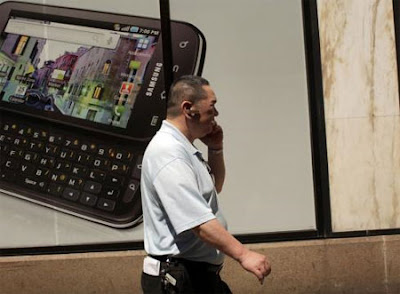
After a recent attack, Google last week removed 25 corrupted applications from its Android Market, but not before up to 125,000 Android users downloaded the bad apps, says Kevin Mahaffey, chief technical officer of Lookout Mobile Security.
On each Android phone with these apps, the attacker can connect to a remote server when a voice call is received, then download other malicious programs to the phone, Mahaffey says.
Mikko Hypponen, chief researcher at Finnish anti-virus firm F-Secure, says he has monitored "several dozen cases targeting Android over the past 12 months."
Apple's App Store for iPhones and iPads has been only lightly probed by hackers — showing a difference in its security approach, experts say.
Google has made it easy for any developer to post an app in Android Market and relies on users to supply feedback about security problems.
"Their market is very open and lightly vetted, if at all," says Kurt Baumgartner, senior researcher at Kaspersky Lab. "When there are enough complaints … Google has the ability to pull the apps, which it has sparingly done."
"If Google allows it into their app store, then they should take some responsibility for the integrity and security of the code," says ISACA's Pironti, who is also president of IP Architects.
Google should also step up efforts to streamline its cumbersome process for pushing out Android security patches, says Mahaffey. "Many Android handsets are not patched against the latest security flaws." Google spokesman Randall Sarafa declined to comment.
Apple, by comparison, keeps tight control over its App Store. "Apple performs its work quietly and without discussion," says Baumgartner. "But malicious apps have appeared and are pulled as well, so their process of vetting is not perfect."
Another Apple shortcoming: To get security patches, iPhone users must sync handsets to iTunes on a Mac or PC.
"It's only a matter of time before iPhones and iPads become more of a target," predicts Pironti.
Apple also declined to comment.
by Byron Acohido
June 5, 2011
Cyberattacks that commonly had targeted computers are zapping smartphones and tablets, prompting security experts to urge Google and Apple to do more to slow their spread.
"The drive to push new tech products out the door has always trumped security, and now that mind-set has moved to the mobile platforms," says John Pironti, an adviser at ISACA, a group for information systems professionals.
After a recent attack, Google last week removed 25 corrupted applications from its Android Market, but not before up to 125,000 Android users downloaded the bad apps, says Kevin Mahaffey, chief technical officer of Lookout Mobile Security.
On each Android phone with these apps, the attacker can connect to a remote server when a voice call is received, then download other malicious programs to the phone, Mahaffey says.
Mikko Hypponen, chief researcher at Finnish anti-virus firm F-Secure, says he has monitored "several dozen cases targeting Android over the past 12 months."
Apple's App Store for iPhones and iPads has been only lightly probed by hackers — showing a difference in its security approach, experts say.
Google has made it easy for any developer to post an app in Android Market and relies on users to supply feedback about security problems.
"Their market is very open and lightly vetted, if at all," says Kurt Baumgartner, senior researcher at Kaspersky Lab. "When there are enough complaints … Google has the ability to pull the apps, which it has sparingly done."
"If Google allows it into their app store, then they should take some responsibility for the integrity and security of the code," says ISACA's Pironti, who is also president of IP Architects.
Google should also step up efforts to streamline its cumbersome process for pushing out Android security patches, says Mahaffey. "Many Android handsets are not patched against the latest security flaws." Google spokesman Randall Sarafa declined to comment.
Apple, by comparison, keeps tight control over its App Store. "Apple performs its work quietly and without discussion," says Baumgartner. "But malicious apps have appeared and are pulled as well, so their process of vetting is not perfect."
Another Apple shortcoming: To get security patches, iPhone users must sync handsets to iTunes on a Mac or PC.
"It's only a matter of time before iPhones and iPads become more of a target," predicts Pironti.
Apple also declined to comment.
Friday, August 13, 2010
Oracle Sues Google, Claiming Patent Infringement
Associated Press

Oracle Corp. said Thursday it has filed a patent and copyright-infringement lawsuit against Google Inc.
Oracle said in a statement that Google's Android system for mobile phones infringes on its patented Java technology.
Google spokesman Andrew Pederson said the company can't comment because it has not yet reviewed the lawsuit.
Oracle, which makes database software and other technology, acquired the Java computer programming language and related technology when it bought Sun Microsystems. That deal that closed in January.
Java can be used as a platform for building applications for computers, websites and smart phones and other mobile devices.
In its complaint, filed with the U.S. District Court for the Northern District of California, Oracle said Google's Android operating system software consists of Java applications and other technology. As such, it infringes on one or more parts of seven different patents - something Google should know, Oracle argues, because it has hired former Sun Java engineers in recent years.
Oracle also said Google's Android also infringes on Oracle's copyrights in Java.
Oracle is seeking an injunction to stop Google from further building and distributing Android, plus higher monetary damages for willful and deliberate infringement.
Google says about 200,000 Android-powered phones are being sold each day.
Oracle said in a statement that Google's Android system for mobile phones infringes on its patented Java technology.
Google spokesman Andrew Pederson said the company can't comment because it has not yet reviewed the lawsuit.
Oracle, which makes database software and other technology, acquired the Java computer programming language and related technology when it bought Sun Microsystems. That deal that closed in January.
Java can be used as a platform for building applications for computers, websites and smart phones and other mobile devices.
In its complaint, filed with the U.S. District Court for the Northern District of California, Oracle said Google's Android operating system software consists of Java applications and other technology. As such, it infringes on one or more parts of seven different patents - something Google should know, Oracle argues, because it has hired former Sun Java engineers in recent years.
Oracle also said Google's Android also infringes on Oracle's copyrights in Java.
Oracle is seeking an injunction to stop Google from further building and distributing Android, plus higher monetary damages for willful and deliberate infringement.
Google says about 200,000 Android-powered phones are being sold each day.
Monday, August 09, 2010
Baidu Seeks Android Deal, China Listing
The Wall Street Journal

Baidu founder and CEO Robin Li at the company's Beijing headquarters.
BEIJING—Chinese Internet search giant Baidu Inc. is gearing for a battle on rival Google Inc.'s own turf: Phones that use Google's Android operating system.
The Beijing-based company is in talks with mobile handset makers that use the Android software about embedding a Baidu search box on their phones that are destined for the Chinese market, the company's Chief Executive Robin Li said in an interview.
Targeting Android phones deepens Baidu's competition with Google in China, as both companies look to expand in the small but fast-growing mobile search market there. Android phones made up a tiny 0.4% of the 7.25 million smartphones sold in China during the last three months of 2009, according to Beijing-based technology research firm Analysys International. Still, Baidu wants to capture as much of this budding market as early as possible.
The company is in similar talks with makers of other mobile operating systems and handsets that run their software, Mr. Li said. Baidu's goal: To have "a search box very prominently on the phone's screen." Though he declined to name any companies, he said, "We are talking to quite a few big names."
Last month, the Symbian Foundation, which manages the Symbian operating system heavily used on phones made by Nokia Corp., announced it would set up a joint lab along with Baidu to help integrate Baidu search functions onto Symbian. According to Analysys, Symbian-powered phones made up 72.1% of the smartphones sold in China during the fourth quarter of last year.
Mr. Li also said in the interview the U.S.-traded company is considering a mainland Chinese listing even as it considers acquisitions outside its home market. But he offered few details about either push.
Though virtually unknown outside of its home country, Baidu is the overwhelmingly dominant search engine in China and the company further strengthened its leading position over Google in China after Google shut down its China search service in March and began directing Chinese search users to its Hong Kong site. Baidu's share of China's search market grew six percentage points in the second quarter to 70%, according to Analysys. Google's share fell by about the same amount to 24%.
Mr. Li said Thursday in an earnings conference call that mobile search accounts for just a small percentage of Baidu's traffic, but the company has seen "effective growth" in mobile search traffic in the last few years.
A Google spokeswoman declined to comment.
Nasdaq-listed Baidu is also in contact with regulators about listing on a mainland Chinese stock market, but has no definite schedule for a listing, Mr. Li said.
"The technicalities haven't been thought through carefully yet. But the general direction is that…we would like to get listed," partly because most of Baidu's traffic and revenue comes from China, he said.
A listing in China would give Asian investors more access to the company's stock and bring in funds that could fuel expansion by Baidu, whose only overseas search site so far is in Japan.
The timeline for the Chinese listing depends on the company's need for additional capital, market momentum and China's regulatory environment. Me. Li added it is too early too say how much Baidu would aim to raise in a listing or what it would do with the funds.
He also added Baidu would consider acquiring Internet sector companies outside China, declining to give details.
"We'll be open-minded. I think there are quite a few interesting companies outside of China," Mr. Li said.
Web search will remain Baidu's core revenue growth driver for the next five to 15 years, but other content pages and international search operations could become big parts of Baidu's business in several years as well, Mr. Li said.
"Right now, our focus is still on search and I think that there are many years down the road that we will enjoy very high growth."
"Once we decide to launch new services in other countries we will launch multiple languages, not just one," he said.
Baidu is evaluating which countries or regions to focus on for expansion abroad, but it will likely avoid the U.S. "for the time being" since the market already has strong search players, he said.
Though Baidu said its current international revenue is negligible, Mr. Li hopes that will change in the future.
"Maybe five to 10 years down the road, the international revenue will also become a very significant part of our business."
Tuesday, May 11, 2010
Google 'Goggles' Translates Text in Images

Information Week

At the Web 2.0 Expo on Thursday, conference co-chair and publisher Tim O'Reilly observed, "If you invent for the world that exists now, you're behind the curve."
As an example of this maxim -- attributed by O'Reilly to technologist Ray Kurzweil and strikingly similar to hockey great Wayne Gretsky's advice "to skate where the puck's going, not where it's been" -- O'Reilly pointed to Google's substantial investment in translation technology.
Google, in other words, is inventing the technological infrastructure of the future, where the U.S. and English play a smaller role and other countries and languages have become more active online.
ICANN's announcement on Wednesday that for the first time on the Internet, non-Latin alphabet characters are being used for top-level Internet domains offers evidence of this trend.
So it is that Google is continuing to invest in ways to bridge gaps of language and culture. On Thursday, the company announced the availability of a new feature in Google Goggles to translate text captured in an image.
Previously, Google Goggles allowed users of Android mobile phones to take pictures of certain things -- landmarks, contact information, books, artwork, places, wine labels, and product logos -- and to submit the resulting images as visual queries. Ideally, Google's image recognition technology would then deliver search results identifying the objects.
Google has now extended the range of things its system can recognize to include text in five languages. The company demonstrated a prototype of this technology that could only recognize German in February at the Mobile World Congress in Barcelona.
"Today Goggles can read English, French, Italian, German and Spanish and can translate to many more languages," said Google engineers Alessandro Bissacco and Avi Flamholz in a blog post. "We are hard at work extending our recognition capabilities to other Latin-based languages. Our goal is to eventually read non-Latin languages (such as Chinese, Hindi and Arabic) as well."
Google Goggles v1.1 is available on devices running Android 1.6 and higher. To download it, scan the QR code on Google's blog post or visit Google's Android Market and search for "google goggles."
As an example of this maxim -- attributed by O'Reilly to technologist Ray Kurzweil and strikingly similar to hockey great Wayne Gretsky's advice "to skate where the puck's going, not where it's been" -- O'Reilly pointed to Google's substantial investment in translation technology.
Google, in other words, is inventing the technological infrastructure of the future, where the U.S. and English play a smaller role and other countries and languages have become more active online.
ICANN's announcement on Wednesday that for the first time on the Internet, non-Latin alphabet characters are being used for top-level Internet domains offers evidence of this trend.
So it is that Google is continuing to invest in ways to bridge gaps of language and culture. On Thursday, the company announced the availability of a new feature in Google Goggles to translate text captured in an image.
Previously, Google Goggles allowed users of Android mobile phones to take pictures of certain things -- landmarks, contact information, books, artwork, places, wine labels, and product logos -- and to submit the resulting images as visual queries. Ideally, Google's image recognition technology would then deliver search results identifying the objects.
Google has now extended the range of things its system can recognize to include text in five languages. The company demonstrated a prototype of this technology that could only recognize German in February at the Mobile World Congress in Barcelona.
"Today Goggles can read English, French, Italian, German and Spanish and can translate to many more languages," said Google engineers Alessandro Bissacco and Avi Flamholz in a blog post. "We are hard at work extending our recognition capabilities to other Latin-based languages. Our goal is to eventually read non-Latin languages (such as Chinese, Hindi and Arabic) as well."
Google Goggles v1.1 is available on devices running Android 1.6 and higher. To download it, scan the QR code on Google's blog post or visit Google's Android Market and search for "google goggles."
Tuesday, February 16, 2010
Aiming for a Comeback: Microsoft Plays Show and Tell With Phone Software

USA Today

NEW YORK — Microsoft is expected to announce a major revamp of its phone software Monday, in an attempt to regain momentum in a crucial market where it has been overshadowed.
CEO Steve Ballmer will be speaking at Mobile World Congress in Barcelona, Spain, the world's largest cellphone trade show, and analysts expect him to reveal Windows Mobile 7. The software could be in phones by late this year.
The new software comes as Microsoft, dominant when smart phones were young, has taken a back seat to Research in Motion's BlackBerrys among corporate users and Apple.'s iPhone among consumers.
"They seem to have lost the world's attention in smart phones," said Dan Hays, who specializes in telecommunications at management consulting firm PRTM.
The new software is expected to be more consumer-focused than previous versions, with a simplified user interface, which could be borrowed in part from Microsoft's well-reviewed — but low-selling — Zune HD media player.
"If that thing had a phone in it ... that would be a pretty darn good device," said Charles Golvin, analyst with Forrester Research.
"But my own judgment is that this is kind of their last chance," Golvin said. "If Windows Mobile doesn't get it right this time around, they're probably toast."
Microsoft is famous, Golvin said, for sticking to its projects, version after version. But developments in smart phones are coming so fast that tenacity alone won't help. RIM and Apple are already squeezing Microsoft out, and in the last year, Google Inc. has emerged as a major player with its Android software.
Microsoft has said it would not comment in advance of Monday's event.
Windows phones accounted for 9% of smart phones sold worldwide last year, according to research firm In-Stat. That was down from 13.2% in 2008.
Much is at stake in the battle for smart phone dominance. Phones steer their users to potentially lucrative Web services and ads. Software developers write their applications first for the largest base of phones, making those phones even more attractive.
As it's trying to regain its footing, Microsoft also finds itself in the odd position of charging for something that others give away. Both Android and Symbian, used on Nokia's smart phones, are free for any manufacturer to use and modify as they see fit. Both Google and Nokia hope this will spur adoption and steer phone users to their services.
Having to compete against a free product hasn't hurt Microsoft on PCs, where free Linux software has made few inroads against Windows. But phones are a different game, because they're less dependent on being compatible with other Microsoft products such as Office software, or with peripherals like printers that may connect only with Windows.
However, the cost of the software makes up a relatively small part of the cost of a phone, said In-Stat analyst Allen Nogee, and manufacturers are likely willing to swallow the cost if the benefits are worth it.
Ballmer went to Barcelona a year ago to show off the previous software update, Windows Mobile 6.5. The first phones landed in October, to little acclaim.
"Microsoft always tries to make a big splash at Mobile World Congress," Hays said, "and they never do."
CEO Steve Ballmer will be speaking at Mobile World Congress in Barcelona, Spain, the world's largest cellphone trade show, and analysts expect him to reveal Windows Mobile 7. The software could be in phones by late this year.
The new software comes as Microsoft, dominant when smart phones were young, has taken a back seat to Research in Motion's BlackBerrys among corporate users and Apple.'s iPhone among consumers.
"They seem to have lost the world's attention in smart phones," said Dan Hays, who specializes in telecommunications at management consulting firm PRTM.
The new software is expected to be more consumer-focused than previous versions, with a simplified user interface, which could be borrowed in part from Microsoft's well-reviewed — but low-selling — Zune HD media player.
"If that thing had a phone in it ... that would be a pretty darn good device," said Charles Golvin, analyst with Forrester Research.
"But my own judgment is that this is kind of their last chance," Golvin said. "If Windows Mobile doesn't get it right this time around, they're probably toast."
Microsoft is famous, Golvin said, for sticking to its projects, version after version. But developments in smart phones are coming so fast that tenacity alone won't help. RIM and Apple are already squeezing Microsoft out, and in the last year, Google Inc. has emerged as a major player with its Android software.
Microsoft has said it would not comment in advance of Monday's event.
Windows phones accounted for 9% of smart phones sold worldwide last year, according to research firm In-Stat. That was down from 13.2% in 2008.
Much is at stake in the battle for smart phone dominance. Phones steer their users to potentially lucrative Web services and ads. Software developers write their applications first for the largest base of phones, making those phones even more attractive.
As it's trying to regain its footing, Microsoft also finds itself in the odd position of charging for something that others give away. Both Android and Symbian, used on Nokia's smart phones, are free for any manufacturer to use and modify as they see fit. Both Google and Nokia hope this will spur adoption and steer phone users to their services.
Having to compete against a free product hasn't hurt Microsoft on PCs, where free Linux software has made few inroads against Windows. But phones are a different game, because they're less dependent on being compatible with other Microsoft products such as Office software, or with peripherals like printers that may connect only with Windows.
However, the cost of the software makes up a relatively small part of the cost of a phone, said In-Stat analyst Allen Nogee, and manufacturers are likely willing to swallow the cost if the benefits are worth it.
Ballmer went to Barcelona a year ago to show off the previous software update, Windows Mobile 6.5. The first phones landed in October, to little acclaim.
"Microsoft always tries to make a big splash at Mobile World Congress," Hays said, "and they never do."
Monday, May 04, 2009
Android Data Corp. Files Suit Against Google Over Name
Story from Bloomberg
 Google Inc., which unveiled its Android operating system for mobile phones last year, was sued by a man claiming his business already holds a trademark for the use of that name in connection with e-commerce.
Erich Specht of Palatine, Ill., and his Android Data Corp., sued Mountain View, Calif.-based Google, claiming he obtained U.S. trademark rights to Android in 2002 and that when Google applied for a similar right, the U.S. Patent and Trademark Office in 2008 rejected it.
"Google's actions and its business partners that will use its software will undoubtedly lead to deception, confusion and mistake among the consuming public," said Specht's complaint, which seeks a court order barring their use of the name. Specht, in his complaint filed April 28 in federal court in Chicago, also seeks at least $2 million in damages.
Google's Android software has been used in phones sold by T-Mobile USA Inc., a unit of Bonn, Germany-based Deutsche Telekom AG, and South Korea's Samsung Electronics Co. L.G. Electronics Inc., also of South Korea, and Schaumburg, Ill.- based Motorola Inc. have said they'll introduce Android phones this year.
Each of those companies are identified in Specht's complaint as members of Google's Open Handset Alliance, which is a defendant in the case.
"We believe these claims to be without merit, Andrew Pederson, a Google spokesman," said Friday.
Android Data's software enables remote administration of Web sites, according to Specht's complaint.
Story from Bloomberg
 Google Inc., which unveiled its Android operating system for mobile phones last year, was sued by a man claiming his business already holds a trademark for the use of that name in connection with e-commerce.
Erich Specht of Palatine, Ill., and his Android Data Corp., sued Mountain View, Calif.-based Google, claiming he obtained U.S. trademark rights to Android in 2002 and that when Google applied for a similar right, the U.S. Patent and Trademark Office in 2008 rejected it.
"Google's actions and its business partners that will use its software will undoubtedly lead to deception, confusion and mistake among the consuming public," said Specht's complaint, which seeks a court order barring their use of the name. Specht, in his complaint filed April 28 in federal court in Chicago, also seeks at least $2 million in damages.
Google's Android software has been used in phones sold by T-Mobile USA Inc., a unit of Bonn, Germany-based Deutsche Telekom AG, and South Korea's Samsung Electronics Co. L.G. Electronics Inc., also of South Korea, and Schaumburg, Ill.- based Motorola Inc. have said they'll introduce Android phones this year.
Each of those companies are identified in Specht's complaint as members of Google's Open Handset Alliance, which is a defendant in the case.
"We believe these claims to be without merit, Andrew Pederson, a Google spokesman," said Friday.
Android Data's software enables remote administration of Web sites, according to Specht's complaint.
Subscribe to:
Posts (Atom)