By The Wall Street Journal
Media Firms, Advertisers Study Nielsen Alternative
A dozen major media companies, advertisers and ad agencies are banding together to find new ways of measuring television-viewing habits, a move that could create fresh competition for Nielsen Co.
Dubbed the Coalition for Innovative Media Measurement, the consortium plans to explore ways of using TV set-top boxes from cable and satellite companies and other tools to measure TV watching, according to people familiar with the matter. The effort aims to measure audiences across TV, the Web and mobile devices, the people said.
Media companies involved in the consortium include General Electric Co.'s NBC Universal, News Corp., Time Warner Inc., Viacom Inc., CBS Corp., Discovery Communications Inc. and Walt Disney Co., according to people familiar with the matter. News Corp. owns The Wall Street Journal.
The consortium's plan could be a shot across the bow of Nielsen, which has seen an increase in the number of challengers to its dominant position in the business of gauging the audiences commanded by TV shows. The coalition will explore options that include working with those competitors, creating a new competitor or even working with Nielsen as a data provider, some people familiar with the matter said.
The effort is still preliminary and wouldn't immediately create a replacement for Nielsen, people familiar with the matter said.
"We are not responding to something that's not yet announced," said Karen Gyimesi, a Nielsen spokeswoman.
Nielsen uses a panel of U.S. households to estimate how many people watch TV shows. Networks and advertisers then use the Nielsen data to set advertising rates. Nielsen charges both networks and advertisers for access to the data.
TV-network owners and ad agencies have long chafed at Nielsen's tight control over quantifying TV viewing. In the late 1990s, TV networks teamed up with advertising agencies and planned to spend tens of millions of dollars to launch a rival to Nielsen, dubbed Smart. That effort fizzled in part because of the high cost.
But network executives have continued to complain that Nielsen doesn't measure their audiences accurately. In May, Nielsen fanned those worries when it told networks that some people in Nielsen households hadn't been following instructions to push buttons that register who in a household is actually watching TV, possibly depressing its viewer estimates.
The new coalition is also an effort to address the growing use of the Web and mobile devices to watch TV, say people familiar with the matter. Nielsen and other firms track some of that activity, but network executives have argued that a lack of standardization has hindered their ability to make money on new ways their shows are being seen.
The plans were reported earlier by the Financial Times.
Advertisers in the group include Procter & Gamble Co., Unilever, Dell and AT&T Inc., people familiar with the matter said. Advertising firms including WPP PLC's GroupM and Publicis Groupe SA's Starcom Mediavest are also participating in the group, those people said.
NBC Universal has been one of central proponents of the coalition, say some people familiar with the matter. Jeff Zucker, the company's chief executive, reached out to major advertisers such Unilever and ad buying giants such as Starcom Mediavest earlier this year about a forming some sort of alliance to find a new ways to measure viewership across different media, some of these people say.
Last year, in a bid to promote its broadcasts of the Beijing Olympics, the company also cobbled together a group of measurement companies to tally the event's audience across various media, including video-on-demand, TV, cell phones and the Web.
"Management said to me we have to figure out a way to go beyond Nielsen to measure this stuff," Alan Wurtzel, NBC Universal's president of research and media development, said at the time.
The agreement to create the coalition itself has yet to be finalized, according to some people familiar with the matter. The companies had been set to announce it in early August, and a press release announcing the effort has been readied, these people said. But that plan has been delayed, in part as lawyers review the project for possible anti-trust or collusion concerns because so many competitors are involved, according to two people familiar with the matter.
Other people cited the difficulty in coordinating such a large number of participants as a reason for the delay.
Over the past few years, Nielsen's grip on the media-measurement business has loosened somewhat. Companies such as WPP's TNS Media Intelligence and TiVo Inc. have started offering advertisers and network more granular data on TV viewing by using data from cable set-top boxes. Some of the services can estimate how many people are watching in different parts of a commercial break.
Nielsen has responded by with its own new services. Last year, the company began offering a new service that uses information from cable set-top boxes in approximately 330,000 households in Los Angeles. It gets the data from cable operator Charter Communications Inc.
Nielsen is also using a test-bed of households to refine techniques for extending its TV ratings to cover at least some TV shows that are watched on the Web, executives said in an interview last month. The technology is separate from its existing services to measure traffic to Web sites and for online video.

SEO Blog. Organic SEO Blog. Search Marketing News. SEO Done Right examines search engine optimization, the most effective form of internet marketing. Breaking SEO news and emerging developments at Google, Yahoo, and Bing. Leading Organic SEO Consultants Peak Positions debunk the many myths, hype, and spin related to SEO and search marketing.
Showing posts with label Dell. Show all posts
Showing posts with label Dell. Show all posts
Thursday, August 14, 2008
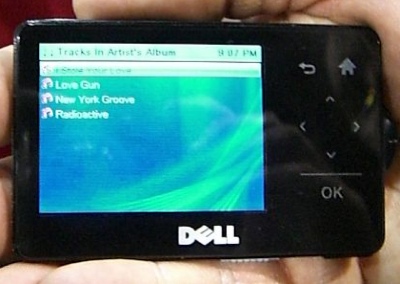 Dell Tests Player to Renew iPod Battle
Music Device Is Key To Broader Strategy
Dell Inc. failed once to move into Apple Inc.'s digital-music turf. Now, it is plotting another foray.
In recent months, Dell has been testing a digital music player that could go on sale as early as September, said several Dell officials. Launching the player -- along with an online download service and related software -- would be part of a strategy that Dell Chief Executive Michael Dell hopes will move the company into a broader range of consumer markets than it has served before.
Dell first entered the music market in 2003 with a line of MP3 players that let users buy music from a variety of Web sites. But sales were disappointing. When Dell stopped making music players in 2006, its U.S. market share remained below 3%, estimated analyst Rick Doherty of Envisioneering Group, who follows the MP3 player market.
This time, if the company goes ahead with the music player, the strategy is different, said Michael Tatelman, Dell's vice president of consumer sales. Instead of simply selling a piece of hardware tied to someone else's music service, as it did in 2003, Dell is working on software for a range of portable PCs that will let users download and organize music and movies from various online sources.
The music player Dell has been testing -- the product's name couldn't be learned -- features a small navigation screen and basic button controls to scroll through music play lists. It would connect to online music services via a Wi-Fi Internet connection, and Dell executives said they would likely price the model currently being tested at less than $100.
The executives said the device has gotten a favorable reception from testers. Software would connect the device to an online subscription service that Dell expects to launch later this year. Through licensing agreements with online music providers, Dell's new service will let consumers download songs and move them between devices like PCs and cellphones.
While the device Dell is testing is focused on playing music, Dell's new service also would allow movies to be downloaded and displayed on PCs, for example. Pricing for the new service hasn't been determined.
Mr. Tatelman declined to detail how Dell expects the strategy to generate profit.
Rob Enderle, an industry analyst whom Dell hired to consult on the new entertainment strategy, said he is still discussing with Dell whether profits would come mainly from the subscription service or from devices tied to it. Mr. Tatelman said he will decide "in a few weeks" how to proceed with the music player, and that he may decide not to sell it at all. Other people familiar with the matter said they expect the product to be on the market by fall.
Dell would face stiff odds. Its new foray would put it into an Apple-led market that has defied assaults. Companies like Microsoft Corp. and Sony Corp. have tried -- and failed -- to make a dent in the market dominated by Apple's iPod players and iTunes store. Apple had 71% of the U.S. MP3 player market in the first quarter of 2008, according to industry analyst NPD Group. Apple's closest rival was SanDisk Corp., with 11%. Microsoft, which introduced its Zune music player in 2006, had just 4% of the market.
And Dell's track record isn't strong in expanding into other markets beyond PCs. In 2003, it started selling Dell-branded televisions; it abandoned its big-screen TV business last year after disappointing sales. Dell last year also discontinued its hand-held mobile device, called the Axim, which was introduced in 2002; again, sales were disappointing.
Mr. Tatelman said past efforts tried to make money by selling devices cheaper than competitors. The new entertainment strategy, he said, is different. Dell isn't trying to compete head-on with Apple's iPod, he said.
"This isn't about a new MP3 player," he said. Now, rather than simply trying to sell cheaper hardware than competitors, Dell is trying to integrate its products with software and services.
Dell has been working on a new consumer strategy since early last year, when Mr. Dell returned as CEO after a three-year hiatus. During that time, Dell lost PC market share as industry growth shifted away from Dell's base of commercial sales and toward consumer purchases of notebook PCs. To boost sales in that market, Dell last year started selling computers in retail stores, and has been trying to make its products more appealing to consumers by improving their external design and making them more entertainment-focused.
The new plan could strengthen Dell's consumer brand, said Mr. Enderle, the consultant to Dell. But it "carries a lot of risk, because one, this is an area where Dell didn't do well in the past; and two, there's a lot of companies out there that aren't doing well in it," said Mr. Enderle. To succeed, he said, Dell will have to invest in something it isn't accustomed to paying for: "an Apple level of marketing."
To that end, Dell is tapping ex-Apple expertise to make its foray. Its device is based on software developed at Zing, a company Dell acquired last year and which is headed by an Apple veteran. Mr. Tatelman said Zing software can be used to retrieve and organize online music, movies and photos, and will come pre-installed on a series of new Dell notebook computers and other devices. The Zing service will let users access their content from locations other than their own computer.
Zing, he said, will be used as a basis for an entire line of new consumer PCs and other products. That lineup, Mr. Tatelman said, will give customers access to whatever source of music or movie content they want, "rather than being dictated by a device and a single service."
The hope among Dell executives is that by integrating their PCs with entertainment software -- and streamlining the external design of their computers -- they will attract the type of consumer who would typically buy an Apple computer, but might be put off by restrictions that often apply to sharing music purchased from Apple the iTunes store.
Whereas Apple sells music itself, Dell is aiming to provide products that offer easier access to a variety of sources. Mr. Tatelman said Dell's Web site will factor into the strategy. Earlier this month, the company set up a feature called "Best of Web" that links to music services Pandora Media Inc. and Rhapsody, which is jointly owned by RealNetworks Inc. and Viacom Inc.'s MTV. Dell plans to sign licensing deals with online music services so that Zing subscribers can access their content, said two Dell executives.
Mr. Doherty, the industry analyst, said Dell's strategy may work because consumers are looking for ways to organize music from disparate sources in a way that Apple's digital-music strategy doesn't always allow. There's room for "incredible growth," he said, if companies can develop "something that makes the finding and sharing of music easier."
By: Justin Scheck
Wall Street Journal; July 30, 2008

Subscribe to:
Posts (Atom)