Organic SEO Blog

231-922-9460 • Contact Us • Free SEO Site Audit

Monday, July 25, 2011

Google's lobbying bill tops $2M for 1st time in 2Q

Associated Press
by MICHAEL LIEDTKE
July 21, 2011

SAN FRANCISCO (AP) - Google Inc.'s quarterly lobbying expenses surpassed $2 million for the first time as the U.S. government conducts a wide-ranging investigation into the Internet search leader's business practices.

The company spent $2.06 million trying to make its points with lawmakers and regulators during the April-June period, a 54 percent increase from $1.34 million a year earlier, according to documents filed late Wednesday.


Google's lobbying bill tops $2M for 1st time in 2Q.


This year's second-quarter lobbying bill is by far the largest that Google has run up since opening its Washington, D.C., office in 2005 to push its agenda. The previous high came during the first three months of the year when Google's poured $1.48 million into its lobbying efforts.

In another first, Google is now spending more on lobbying than Microsoft Corp., a fierce rival and critic that has urged government regulators to rein in Google.

Microsoft, traditionally one of the technology's industry's big spenders in Washington, put $1.85 million into lobbying during the second quarter.

Google's increased focus on lobbying comes at a time it is facing the same kind of regulatory heat that Microsoft dealt with during the late 1990s.

The U.S. Justice Department ultimately filed a lawsuit alleging that Microsoft had used its dominant Windows operating system to kill competition in the then-nascent Web browser market. That sparked a legal battle that distracted Microsoft for years and forced the company to change the way it bundled its Internet Explorer browser with Windows.

The U.S. Federal Trade Commission last month launched its own inquiry into whether Google is abusing its dominance of Internet search to funnel online traffic to its own services and drive up the prices of the ads that generates most of its revenue. European regulators opened a similar investigation into Google late last year.

Google Executive Chairman Eric Schmidt is expected to defend the company's business practices in September when he is scheduled to appear before a U.S. Senate committee that focuses on antitrust law.

The state of Internet competition was among the topics that Google lobbyists addressed during the second quarter, according to a statement filed with the U.S. Senate's secretary's office. Google discussed the matter with members of Congress, the FTC and the Justice Department, the filing said.

To help make its case, Google hired Stewart Jeffries, a former antitrust counsel for the House Judiciary Committee, this year. Jeffries was among Google's registered lobbyists in the second quarter.

Other issues covered by Google's lobbyists included: regulation of online advertising and privacy; patent reform; online security; renewable energy, international free speech and censorship; and international tax reform.

The company directed its powers of political persuasion at the Commerce Department, the executive office of the President, the Federal Communications Commission, the Department of Homeland Security and the U.S Trade Representative.

Besides Jeffries, Google's team of lobbyists includes: Pablo Chavez, former chief counsel to Sen. John McCain, R-Ariz.; Harry Wingo, former counsel to the Senate Commerce Committee; Johanna Shelton, former counsel to the House Energy and Commerce Committee; Frannie Wellings, a former legislative assistant to former Sen. Byron Dorgan, D-N.D.; Katherine Oyama, former associate counsel to the office of Vice President Joe Biden; and Seth Webb, who has held a variety of positions for lawmakers and House committees.

Microsoft 4Q profit climbs, Windows revenue dips

Associated Press
by RACHEL METZ
July 21, 2011

SAN FRANCISCO (AP) - Microsoft Corp. reported record fourth-quarter revenue Thursday, helped by strong sales of its Office software suite. Investors still seem concerned about the world's largest software maker's growth prospects, however, as consumers buy fewer computers that run its Windows software.

While all of the company's other business units posted growth in the April-June period, revenue from the division that includes Microsoft's Windows operating system fell 1 percent from the same time last year - its third-straight quarter of decline.


Microsoft 4Q profit climbs, Windows revenue dips.


Besides indicating that consumers are buying fewer computers that use Windows, it may signify that more consumers are moving to tablet computers instead of upgrading their existing laptop and desktop computers. Microsoft's stock slipped in extended trading.

Total revenue for the fiscal fourth quarter rose 8 percent from last year to $17.4 billion, higher than the $17.2 billion that analysts polled by FactSet expected.

Growing Office sales helped revenue from the company's largest division climb nearly 8 percent to $5.78 billion. Microsoft said its results were also aided by higher software and server sales to businesses and the popularity of its Xbox 360 video game console and Kinect motion-sensing game control device.

However, sales in the company's Windows and Windows Live division were soft, dipping to $4.74 billion from $4.78 billion. Microsoft said it would have grown were it not for the launch of Windows 7 a year ago, which made comparisons more difficult this year.

Investors have been focused on this segment of the business amid concern that the increasing popularity of tablets like Apple Inc.'s iPad are cutting into sales of computers that use Microsoft's operating software.

And since this unit already declined in the previous two quarters, pressure had intensified on Microsoft to show growth during the three-month period that ended in June- especially since worldwide PC shipments rose in the range of 2.3 percent to 2.6 percent during the quarter, according to reports from research firms IDC and Gartner.

With Apple's report earlier this week that iPad sales nearly doubled year over year to 9.25 million, Microsoft may have an even harder time showing that it can compete as the computing world continues to move toward tablets.

The iPad's success prodded Microsoft to develop an operating system that can run on tablets, dubbed Windows 8, but that isn't expected to hit the market until next year.

Revenue from Microsoft's online services unit, which includes the company's Bing search engine, climbed 17 percent to $662 million. The division's operating loss widened, however, since the company has continued to invest in a mostly fruitless effort to undercut Google Inc.'s dominance of online search and advertising.

Redmond, Washington-based Microsoft earned $5.87 billion, or 69 cents per share during the quarter, compared with $4.52 billion, or 51 cents per share, a year ago.

Analysts polled by FactSet expected a profit of 59 cents per share.

For the full fiscal year, Microsoft earned $23.2 billion, or $2.69 per share, on $69.94 billion in revenue. This compares with net income of $18.8 billion, or $2.10 per share, on $62.5 billion in revenue a year earlier.

Microsoft shares fell 11 cents to $26.98 in extended trading. The stock finished regular trading up 4 cents at $27.09.

Google+ Reaches Affluent, and the 18-34 Age Group

mediabuyerplanner.com
July 21, 2011

In the days following the June 28 launch of Google+ as invites became more readily available, visits to the site steadily increased, particularly between July 5th and July 12th. To date, Tuesday, July 12th and Thursday, July 14th were the peak days for total visits, according to analysis from Experian Hitwise.

The highest share of visits to Google+ since launch is from those between the ages of 25-34 and those between 18 and 34 were more likely than the overall online population to visit. The audience to Google+ tends to be more affluent, over-indexing for those earning a household income of $60k and over, particularly $150k and up.


Google+ Reaches Affluent, and the 18-34 Age Group.


For the week ending July 19, 2011, the average visit time for Google+ was five minutes and fifty seconds up from four minutes and fifty two seconds the week prior. While the average visit time has increased since launch, in comparison, users spent an average of 21 minutes and fifty seven seconds on Facebook last week.

The combination of Google and Gmail accounted for over 50% of all upstream traffic to Google+ last week, with additional referrals from other Google properties like YouTube and Google Profiles. Facebook ranked 3rd among websites visited immediately before Google+, not surprising since many social network users tend to maintain multiple accounts, especially to experiment with new social networks.

Wednesday, July 20, 2011

Yahoo 2Q revenue drop overshadows earnings gain

Associated Press
by MICHAEL LIEDTKE
July 19, 2011

SAN FRANCISCO (AP) - Yahoo Inc. plodded through another disappointing performance in the second quarter, a familiar script that's wearing thin with exasperated investors.

The results released Tuesday are likely to intensify the pressure that had already been mounting on Yahoo CEO Carol Bartz as she enters the final 17 months of her four-year contract.


Yahoo 2Q revenue drop overshadows earnings gain.


In a sign of discontent, Yahoo shares sagged after the numbers came out, deepening a steep drop in Yahoo's market value that has been driven during the past two months by uncertainty over a key investment in Chinese Internet company Alibaba Group.

The second quarter yielded a "mix of good, encouraging and, at the same time, unsatisfactory" developments, Bartz told analysts in a Tuesday conference call.

Bartz said the biggest problem stemmed from a shakeout in Yahoo's advertising sales force that contributed to a revenue downturn in the U.S. during June.

"We didn't have enough sales people in front of the big clients," she said.

The trouble is spilling over into the current quarter, prompting Yahoo to offer a revenue forecast for the July-September period that fell below analyst estimates.

Yahoo shares shed 31 cents, or more than 2 percent, to $14.28 in Tuesday's extended trading. The stock has plunged by more than 20 percent since Yahoo disclosed in May that Alibaba had spun off an online payment service called Alipay. That move has cast doubt about the value of Yahoo's 43 percent stake in Alibaba.

In Tuesday's conference call, Bartz reiterated her confidence that Alibaba will fairly compensate Yahoo for the Alipay spinoff. She didn't provide a timetable for reaching a resolution.

Bartz, 62, was hired in January 2009 to engineer a turnaround after Yahoo had fallen further behind Internet search leader Google Inc. under its two previous CEOs, its co-founder Jerry Yang and former movie studio boss Terry Semel.

The change in command hasn't paid off yet, although Yahoo is making more money under Bartz because of layoffs, service closures and other cost-cutting moves since her arrival.

Google, though, has gotten even stronger in the past two years while Facebook, the owner of the Web's most popular hangout, has emerged as a formidable threat that's attracting more of the major marketing campaigns that once went to Yahoo.

Even a much-ballyhooed Internet search partnership with Microsoft Corp. has gotten off to a rough start. The alliance so far hasn't produced as much revenue as Bartz hoped, although she said the shortfall wasn't as bad in the spring as it was during the first three months of the year. Enough progress has been made to encourage Yahoo to proceed with its plans to adopt Microsoft's technology for selling search advertising in other countries outside North America later this year.

Yahoo earned $237 million, or 18 cents per share, during the three months ending in June. That's an 11 percent increase from $213 million, or 15 cents per share, at the same time last year.

The earnings matched the projections among analysts surveyed by FactSet.

But Yahoo's revenue sank at a time when advertisers are pouring more money into the Internet.

Revenue totaled $1.23 billion, a 23 percent decline from $1.6 billion at the same time last year.

That comparison is misleading because Yahoo had to change the way it booked revenue to account for the Microsoft partnership. Among other things, the deal requires Yahoo to give Microsoft $12 of every $100 in ad revenue flowing from searches on Yahoo's website.

Yahoo's net revenue - the amount the company keeps after paying advertising commissions- provides a more telling indication of how the company is faring.

Net revenue totaled $1.08 billion, down 5 percent from last year. The drop looks even worse compared with what's going on at Google, where revenue surged by 36 percent in the second quarter.

As a privately held company, Facebook doesn't release its financial results but research firms tracking the Internet ad market say it's gaining a bigger piece of marketing budgets. By the end of this year, eMarketer expects Facebook to overtake Yahoo in the U.S. market for online display advertising - a term used to describe commercial messages that include video, pictures and other graphics.

If not for the effects of the Microsoft search deal and the closure or sale of some services since last year, Yahoo said its net revenue would have been 1 percent higher than last year.

No matter how the figures were sliced, Yahoo's net revenue for the second quarter fell about $20 million below analyst forecasts.

The mid-range of Yahoo's third-quarter revenue outlook is $50 million below what analysts hoped.

Monday, July 18, 2011

Facebook bans Google+ ad

cnet News
by Chris Matyszcyk
July 16, 2011

Ingenuity is surely something to be admired. Commercial ingenuity is something to be revered.

Sometimes, though, it seems that certain tech companies only revere their own ingenuity. That seems to be the case with Facebook, which, as reported by TechCrunch's Erick Schonfeld, has removed a piece of fine commercial ingenuity from its site.


Facebook bans Google+ ad.


App developer Michael Lee Johnson, conscious of the need to be big on Google+ or be nobody, wondered what the best way to levitate his Google+ circles might be. He hit upon a fine idea: he placed an ad on Facebook. It was a simple thing that was headlined: "Add Michael to Google+."

The copy read: "If you're lucky enough to have a Google+ account, add Michael Lee Johnson, Internet Geek, App Developer, Technological Virtuoso."

If those words weren't enough to persuade Facebook users that Johnson was a must for their Google+, he added a fine picture of himself wearing a jaunty cap.

You're not guessing what happened with the ad, are you? You know what happened, don't you? Facebook didn't, according to Johnson, merely erase this heinous horse of Troy from its pages. It reportedly banned all his other campaigns too.

The message he received read as follows: "Your account has been disabled. All of your adverts have been stopped and should not be run again on the site under any circumstances. Generally, we disable an account if too many of its adverts violate our Terms of Use or Advertising guidelines. Unfortunately we cannot provide you with the specific violations that have been deemed abusive. Please review our Terms of Use and Advertising guidelines if you have any further questions."

Because my life's purpose is to be helpful, I scanned Facebook's Terms of Use and Advertising just to see what specific clause might have been besmirched by Johnson's chutzpah.

Perhaps it was Clause 11 in the "Special Provisions Applicable to Advertisers" section: "You will not issue any press release or make public statements about your relationship with Facebook without written permission." Johnson had shamefully declared on Google+ that he was placing the ad.

Perhaps it was Clause 4d of Facebook's Advertising Guidelines: "Ads cannot insult, harass, or threaten a user." He was, some might say, harrassing and insulting Facebook loyalists by his mere suggestion that there might be another place to socially network.

Or perhaps Facebook, its nose feeling tweaked, merely decided to reach for 6a of the same Advertising Guidelines: "We may refuse ads at any time for any reason, including our determination that they promote competing products or services or negatively affect our business or relationship with our users."

Still, ejecting all of Johnson's campaigns seems a touch cruel. Perhaps Johnson will consider an action against Facebook for emotional distress and, well, damage to his reputation.

This he will have to place, so Facebook's Statement of Rights and Responsibilities tells me, in a court in Santa Clara County. For now, Johnson's only public statements have been: "LOL." Oh, and "Facebook. You Suck."

1,460 people currently have Johnson in their Google+ circles. I cannot find Google+'s No. 1 personality, Facebook CEO Mark Zuckerberg, among them.

Google: The Beginning

Wall Street Journal
by DOUGLAS EDWARDS
July 16, 2011

An insider recounts the early days: the bizarre job interview, April Fools' pranks that enraged users, roller hockey, platters of sushi—and the uneasy leap to the mainstream.

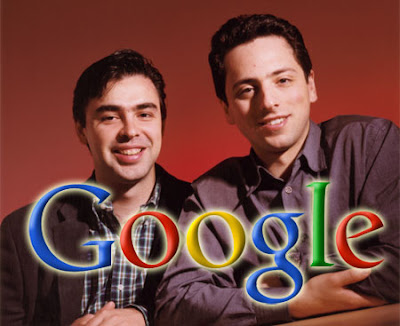
In November 1999, Douglas Edwards became fledgling Google's first "brand manager," making him employee No. 59. In this excerpt from his new book, "I'm Feeling Lucky," Mr. Edwards gives an inside view of the company's early days, starting with his job interview with co-founder Sergey Brin, then 26 years old.

Cindy McCaffrey, director of public relations, brought me back to the conference room to wait for Sergey. I wasn't nervous. Sergey was about the age of my favorite T-shirt (I was 41) and a Russian by birth. I had lived in Russia. I spoke some Russian. I had Russian friends.


Google: The Beginning.


I felt unusually confident that the interview would go well. Perhaps I would become his mentor and we would toast each other's health with fine Siberian vodka. Sergey showed up wearing roller-hockey gear: gym shorts, a T-shirt and in-line skates. He had obviously been playing hard. I had known better than to wear a tie, but he took office casual to a new level.

Sergey pored over my résumé and began peppering me with questions. "What promotion did you do that was most effective?" "What metrics did you use to measure it?" "What types of viral marketing did you do?"

"How much do you think a company our size should spend on marketing?" Sergey asked me. Based on his earlier questions, it was easy to guess what he wanted to hear from me. "I don't think at this stage you should spend much at all," I said. "You can do a lot with viral marketing and small budgets."

He nodded his agreement, then asked about my six months in Siberia, casually switching to Russian to see how much I had picked up. Finally, he leaned forward and fired his best shot, what he came to call "the hard question."

"I'm going to give you five minutes," he told me. "When I come back, I want you to explain to me something complicated that I don't already know." He then rolled out of the room toward the snack area. I looked at Cindy. "He's very curious about everything," she told me. "You can talk about a hobby, something technical, whatever you want. Just make sure it's something you really understand well."

I reached for a piece of scrap paper as my mind raced. What complicated thing did I know well enough to describe to Sergey? I decided to go with the general theory of marketing, which was fresh in my mind, because I'd only learned it recently.

One of my dirty little secrets was a complete lack of academic preparation for the business world. Fortunately, my boss at the San Jose Mercury News, where I was working as a brand manager, had a Harvard MBA and a desire to drive some business theory into my thick skull. She had given me a bunch of her old textbooks, along with strong hints that I should spend time reading them. I began regurgitating everything that I could remember onto the paper in front of me: The five P's (or was it six?), the four M's, barriers to entry, differentiation on quality or price.

By the time Sergey came back, I had enough to talk for 10 minutes and was confident I could fill any holes with the three Bs (Buckets of Baffling Bulls—). I went to the whiteboard and began drawing circles and squares and lots of arrows. I was nervous, but not very. Sergey bounced on a ball and asked questions that required me to make up things on the spot.

"What's more important: product differentiation or promotion?"

"How does the strategy change if the price is zero?"

He seemed to be paying attention, and I began enjoying myself. We were developing a special rapport! Clearly, he wanted to hear what I had to say and valued my opinions. Later I found out that Sergey did this with everyone he interviewed. An hour wasted with an unqualified candidate wasn't a total loss if Sergey gained insight into something he didn't already know.

The light was fading by the time I finished, and Sergey invited me to join the staff for dinner, which was being brought into a small kitchen across from the conference room. A crowd of hungry engineers bounced from plate to plate with chopsticks picking at a large selection of sushi.

"We just hired a chef, so this is a temporary set-up," Sergey told me. "And we've got a couple of massage therapists coming in as well."

A warning light flashed in my head at that. This was the guy who didn't think there should be a marketing budget, and he had hired a chef and two massage therapists? But then I saw the platters of fatty tuna and shrimp and salmon and yellowtail. I grabbed some chopsticks and began loading my plate. Concerns about a business plan and revenue streams and organizational structure faded away.

Google met most of my requirements. It offered at least the appearance of superior Internet-related technology, some eccentric genius types, funding that should last at least a year and a fun consumer brand that I could help to develop. Two weeks later, on Nov. 29, 1999, I started work as Google's online brand manager.

You would have needed uncanny foresight or powerful pharmaceuticals to envision Google's success in 1999. Or maybe just money to burn. Kleiner Perkins and Sequoia Capital had something, because the two venture capital firms invested $12.5 million each, leading cynics in the Valley to define "Googling" as "getting funding without a business plan."

It's just as well that I hadn't realized how fragile Google truly was as I set up the meeting to discuss next steps for my marketing plan.

"The most important thing to consider," I began, "is that our own internal research shows our competitors are beginning to approach Google's level of quality. In a world where all search engines are equal, we'll need to rely on branding to differentiate us from everyone else." The room grew quiet.

I looked around nervously. Had I said something wrong? Yes. Not just wrong but heretical to engineers who believed anything could be improved through the iterative application of intelligence. Co-founder Larry Page made my apostasy clear. "If we can't win on quality," he said quietly, "we shouldn't win at all."

Sometimes a founder put forth "a good idea."

"I have a good idea," Sergey informed marketing manager Susan Wojcicki a couple of weeks after I started. "Why don't we take the marketing budget and use it to inoculate Chechen refugees against cholera. It will help our brand awareness, and we'll get more new people to use Google."

Our company was barely a year old at the time. We had no real revenue. Spending a million dollars of our investors' money on a land war in Asia would indeed be a revolutionary approach to growing market share.

Looking back a dozen years later, I kind of get Sergey's perspective. Saving lives was a better use of our budget than running ads, which just annoyed people to no effect—and were therefore evil. Why not make a big donation to a humanitarian cause and build awareness by doing good? It had all the classic elements of a Sergey solution: a wildly unconventional approach to a common problem, technology harnessed to improve the human condition, an international scope.

Sergey didn't ask my marketing colleague Shari or me what we thought of his idea. He knew that we would have ridiculed it. Instead, he turned to Susan, an early member of the inner circle. Sergey had met her family (he'd later marry her sister), and Susan understood Sergey well enough not to dismiss his outlandish suggestions out of hand.

Instead, she went to gather data, which in this case meant asking her mom, a teacher in Palo Alto. As an educator, Susan's mother carried authority with Sergey, and when she confessed to being confused about our plan to support a rebel army in Russia, it took some of the wind out of his sails.

He had a backup plan, though. "What if we gave out free Google-branded condoms to high-school students?"

Sergey asked Shari and me to investigate other charitable promotions along these lines, and we dutifully did, but it wasn't lost on us that our opinions had only been sought as an afterthought.

April was right around the corner. My first April at Google. My first Google April Fools' joke.

April Fools' Day would become a perennial black hole in my calendar, a gravity well into which my attention would be sucked from increasingly great distances in time. Sergey, on the other hand, loved April Fools'. When it came to April Fools', he dynamited decorum and put moderation to the torch.

My idea for our first prank was "ante-temporal search," a breakthrough development that anticipated user requests. The tone was heavily geekish, but Susan liked it. Sergey thought it was overdone (akin to the pope saying you're overly religious), but encouragingly, he said it had potential. An engineer pinned the name "MentalPlex" on our new mind-reading technology.

That settled, I hashed out the text for a link on the home page and a dozen error messages that would be displayed randomly if someone entered a query in the MentalPlex search box.

Someone pointed out that with our newly launched foreign-language interfaces, we could extend the joke beyond English. "One of the error messages should say that MentalPlex has detected foreign thoughts," she suggested, "and then we can translate the interface text on the results page into German."

The joke went up on Friday night. Soon Google users would see a spinning cartoon spiral on our homepage inviting them to try MentalPlex. I was relieved that we'd made the deadline. I was also terrified.

As soon as we hit Submit on the push, I started compulsively refreshing my inbox to check for feedback from users. At 8:01 the first email arrived. "Google is great!" was the header. More emails started trickling in. People were surprised. They didn't think search engines had a sense of humor. They liked it. They were: LOL. ROFL. ROFLMAO. A chorus of hosannas sounded over the next few hours.

"Turn it off. It thinks I'm German." The off-key refrain caught my ear.

"I found MentalPlex mildly amusing, but the different languages on the results page make it harder to use. The joke gets old very quickly."

Discordant voices increasingly sang about confusion and annoyance.

Unfortunately, it was a Friday night. The engineering staff were with Sergey at Zibibbo, a trendy restaurant 20 minutes away in downtown Palo Alto. No one in the office was authorized to make changes to the joke.

We were taking a pounding on email. Finally, an engineer stepped in. Now our unwanted results were in Portuguese. The engineers thought the joke was just too funny to eliminate entirely, so they simply shifted the interface to another language.

Complaints kept coming. Though the tone was less virulent, users were still unhappy that they couldn't navigate the site easily. I had worked at Google long enough not to be intimidated by an org chart. I called Sergey. It was hard to hear over the background noise of rowdy engineers in a crowded restaurant, but I could tell he was surprised when I insisted that we drop all the foreign-language results.

Sergey reluctantly agreed. It was midnight before all the foreign-language text was stripped off the site.

"A not-insignificant fraction of our users are complete idiots," groused one engineer, "if they can't figure out how to use our site, just because it's all in Portuguese." Google had clearly crossed the gap from serving the tech elite to playing in the mainstream market—an online segment that he knew to be densely populated with the clueless.

"I'm more worried that we got spooked by a little negative feedback," said another engineer. "We backed off the playfulness that's an important part of Google. We watered down our April Fools' joke to make it less invasive. I guess that's what happens as we grow up—we become a more conservative company." He did not see that as a positive development.

I've heard the speculation about Google since I've left. That it's a monopoly. That it's tracking users. That it's in cahoots with the government. That it spies on people. That it's evil.

Well, maybe it is all that. I haven't worked there in more than five years. Things change. But based on the people I knew during my time in the Plex—many of whom still put in long hours perfecting a product used by millions every day—I'd say that's highly unlikely.

Is Google secretive? No question. Arrogant? Maybe. Tone-deaf to the concerns of the very users it claims to serve? Occasionally. But evil? I don't think so.

I started my career working at ad agencies. It was fun, challenging and potentially well-paying. I quit because I didn't like the idea that I might have to sell something I didn't believe in. I worked in public broadcasting and then newspapers, where I found co-workers who sacrificed material rewards to be part of something more connected to the common good than selling someone else's products. I got that same sense at Google, but with greater intensity and urgency. And stock options.

This was no institution continuing a long tradition of public service. This was a headlong rush to reshape the world in a generation. And therein lies the company's biggest flaw in my estimation—impatience with those not quick enough to grasp the obvious truth of Google's vision.

"When were we ever wrong?" Larry once asked me.

Not often. But "not often" is not never. If Google's leaders accepted that reality, they might understand why some people are unwilling to suspend skepticism and surrender to Google's assurances that the company can be trusted.

After Google, I find myself impatient with the way the world works. Why is it so hard to schedule a recording on my DVR? Why aren't all the signal lights synched to keep traffic flowing at optimum speed? Why, if I punch in my account number when I call customer service, do I have to give it to them again when I get a live person? These are all solvable problems. Smart people, motivated to make things better, can do almost anything. I feel lucky to have seen firsthand just how true that is.

The Unlikely Making of the Google 'Doodle'

One of the convictions that I brought with me to Google was that you needed to present your company's graphic signature in a monomaniacally consistent manner; to pound it into the public consciousness with a thousand tiny taps, each one exactly the same as the one before.

So when Sergey reminded me that he wanted us to play with Google's signature home-page graphic in 1999, I put my foot down. This was not only the most prominent placement of our logo; it was the only placement of our logo. We weren't advertising on TV or on billboards or in print. The logo floating in all that white space was it.

Sergey didn't see the big deal. He had changed the logo twice during Google's infancy, adding a clip-art turkey on Thanksgiving in 1998 and putting up a Burning Man cartoon when the staff took off to explore nakedness in the Nevada desert. But now Google was a real company, I told him. Real companies don't do that.

Even as we argued, Sergey enlisted webmaster Karen White to resurrect the turkey for Thanksgiving, create a holiday snowman in December and festoon the logo with a hat and confetti for New Year's 2000.

"What about aliens?" he asked. "Let's put aliens on the home page. We'll change it every day. It will be like a comic strip that people come back to read."

I tried not to be condescending. I gave him my spiel about consistency of messaging and uniform touchpoints and assured him that it wasn't just my opinion; it was the consensus of marketing professionals world-wide. I knew I had finally convinced him when he stopped asking me about it.

I was wrong. Sergey wasn't convinced; he just didn't like repeating himself. So he turned to marketing manager Susan Wojcicki, who found illustrator Ian Marsden and put him to work. In May 2000, Ian created the first Google doodle. It featured—surprise, surprise—aliens making off with our logo.

Our users loved the randomness of the logo artwork and sent us dozens of appreciative emails. Google's brilliant strategy of humanizing an otherwise sterile interface with cute little cartoon creatures was an enormous hit.

It was so blindingly obvious that I was right, yet I was so clearly wrong. Google did that to you—it made you challenge all your assumptions and experience-based ideas until you began to wonder if up was really up, or if it might not actually be a different kind of down.

Wednesday, July 13, 2011

Google Readying Business Version of Google+ Social Network

Bloomberg
by Brian Womack
July 9, 2011

Google Inc. is readying business- focused features for the Google+ social-networking site, potentially opening up new competition with Facebook Inc.’s company pages and sites such as LinkedIn Corp.

The business tools are expected to be available later this year, said Christian Oestlien, a product manager at Mountain View, California-based Google.


Google Readying Business Version of Google+ Social Network.


“Right now we’re very much focused on optimizing for the consumer experience, but we have a great team of engineers building a similarly optimized business experience for Google+," Oestlien said on a YouTube video.

Google+ was unveiled June 28, marking a fresh attempt to compete with Facebook’s site. The service has similar features as Facebook, with streaming updates of photos, messages, comments and other content from selected groups of friends.

Google has set up a test version for businesses, Oestlien said. It will link up with existing Google services, such as its AdWords advertising system for Internet searches.

“It’ll include things like rich analytics and the ability to connect that identity to other parts of Google that businesses might use on a daily basis like AdWords,” he said.

Google has struggled to handle demand for Google+, which for now is an invitation-only service. Oestlien recommended that businesses not create Google+ accounts with the current consumer version.

Google’s shares fell $14.61, or 2.7 percent, to $531.99 yesterday in Nasdaq Stock Market trading. The stock has declined 10 percent this year.

LinkedIn Passes Myspace to Become No. 2 U.S. Social Network

Bloomberg
by Brian Womack
July 8, 2011

LinkedIn Corp., a website focused on job seekers and recruiters, surpassed Myspace to become the No. 2 social-networking service in the U.S. last month, boosted by its initial public offering in May.

The company had 33.9 million visitors in June, up 63 percent from a year earlier, while Myspace had 33.5 million, down 50 percent, according to a Reston, Virginia-based ComScore Inc. report. Facebook Inc. remained the largest social- networking site with 160.9 million U.S. visitors, up 14 percent.


LinkedIn Passes Myspace to Become No. 2 U.S. Social Network.


LinkedIn’s IPO raised its profile with investors and helped build publicity around the Mountain View, California-based company. It has posted two straight months of gains, according to ComScore. To keep expanding its user base, LinkedIn is adding features such as a personalized news feed and a visual map that explores how users are connected.

Shares of LinkedIn rose $5.62, or 6 percent, to $99.60 today on the New York Stock Exchange, setting a new high. The May 18 IPO priced the shares at $45.

Twitter was No. 4 in the U.S., with 30.6 million users. That was up 14 percent from the previous month and a 31 percent increase from a year earlier, ComScore said.

Once the biggest social network, Myspace has lost ground to Facebook in recent years. Last month, News Corp. agreed to sell the business to Specific Media Inc. for $35 million, a fraction of the $580 million News Corp. paid six years ago.

Einhorn's Greenlight Sold Yahoo Stake After Alipay Spinoff

Bloomberg
by Brian Womack
July 8, 2011

July 8 (Bloomberg) -- Greenlight Capital Inc., the hedge fund run by David Einhorn, sold its stake in Yahoo! Inc. for a "modest loss" over doubts surrounding the value of the company's investment in China-based Alibaba Group Holding Ltd.

Greenlight said in a letter dated yesterday that it didn't sign up for "the finger pointing that started going in every direction" after Yahoo disclosed that Alibaba had ceded ownership of its online-payment business to a company controlled by Alibaba Chief Executive Officer Jack Ma.


Einhorn's Greenlight Sold Yahoo Stake After Alipay Spinoff.


"The value of the Chinese assets came into doubt as the CEO of the Chinese unit hived-off a valuable subsidiary into a corporation that he personally controls," Greenlight said in the letter.

Alibaba Group, which owns e-commerce businesses in China, helps Yahoo benefit from growth in the world's largest Internet market. Yahoo, Alibaba's biggest investor, and Japan's Softbank Corp., another shareholder, have made "encouraging progress" in talks toward an agreement over compensation for the payment unit, Alipay, the companies said in a June 21 statement.

Dana Lengkeek, spokeswoman for Yahoo, declined to comment.

Greenlight said in April that it bought a stake in Yahoo, anticipating that the China unit stake may be worth as much as the company's entire market value. Yahoo "has taken some increasingly shareholder-friendly steps," Greenlight said in a letter at the time.

Yahoo shares have lost 16 percent since May 10, the last day of trading before the Alibaba spinoff of its Alipay unit was disclosed. Yahoo, based in Sunnyvale, California, fell 20 cents to 15.61 at 4 p.m. New York time on the Nasdaq Stock Market.

Xerox Stake Sold

In the letter yesterday, Greenlight also said it sold its stake in Xerox Corp. Greenlight said it bought shares last year based on anticipated earnings from the Affiliated Computer Services acquisition. The March earthquake in Japan "took the upside out of our earnings forecast," Greenlight said, spurring a sale of the shares at a "modest gain."

Bill McKee, spokesman for Xerox, declined to comment.

Facebook Introduces Skype Video Calls in Challenge to Google

Bloomberg
by Douglas MacMillan and Zachary Tracer
July 6, 2011

Facebook Inc., the world’s largest social network, is stepping up competition with Google Inc. by teaming with Skype Technologies SA to offer free video calls.

Facebook also said it has more than 750 million users, up from 500 million, in an announcement today at an event in Palo Alto, California, where it is based. Microsoft Corp., a long- time Facebook partner, is acquiring Skype in an $8.5 billion deal expected to close later this year.


Facebook Introduces Skype Video Calls in Challenge to Google.


Video chats can help Facebook fend off competition from Google, which introduced a social network with that feature last week, and offer an alternative to Apple Inc.’s FaceTime for the iPhone. Chief Executive Officer Mark Zuckerberg is using partnerships and media features to increase Facebook’s audience and avert user defections.

“You’re going to have more and more competition between Facebook and Google,” said Ben Schachter, an analyst at Macquarie Capital, in an interview on Bloomberg TV’s “Bottom Line with Mark Crumpton.” “The two companies are going to be battling it out for some time to come.”

Facebook also unveiled a multi-person chat feature that lets several people hold online conversations at the same time.

‘Cool New Scenarios’

“We’re using the best technology that’s out there for doing video chat with the best social infrastructure that’s out there in order to create some really cool new scenarios,” Zuckerberg said during a presentation at the event.

Facebook began holding talks with Skype about offering Web video calls on its social network in 2010, a person familiar with the discussions said earlier this year. An October update to Skype included voice calling between Facebook friends. Microsoft agreed to buy Skype in May.

“This is a really strategic long term deal between Skype and Facebook,” said Neil Stevens, vice president and general manager for consumer at Skype, in an interview with Bloomberg Television. “This isn’t just a one shot one deal implementation of a product. This is a long term relationship.”

Google’s new site, called Google+, includes Google’s maps and images, messages, comments and other content from selected groups of friends, as well as a video chat feature.

Microsoft, based in Redmond, Washington, invested $240 million in Facebook in 2007 and entered an agreement to sell ads on the social network.

Facebook is forging ties with other media and technology companies. It added Netflix Inc. CEO Reed Hastings to its board of directors in June and discussed incorporating more social features into the online video-streaming service. In March, Time Warner Inc.’s Warner Bros. studio announced plans to offer movie rentals on Facebook for $3.

Facebook is valued at $71 billion on SharesPost Inc., an exchange for shares of private companies.

Tuesday, July 05, 2011

Google among firms looking to buy Hulu

Associated Press
by RYAN NAKASHIMA
July 1, 2011

LOS ANGELES (AP) - Search giant Google Inc. is one of about a dozen companies involved in talks to potentially buy online video site Hulu, a person familiar with the matter said Friday. As the owner of YouTube, it would be a strategic buy for the Silicon Valley technology company, which has had a rocky relationship with Hulu's Hollywood owners.

Hulu has begun presenting its financial information to many prospective bidders, but it's too early to declare a front-runner, said the person, who spoke on condition of anonymity because the discussions are confidential.


Google among firms looking to buy Hulu


The online video service began seeking bidders early last week after an unsolicited offer prompted Hulu's board to look for other interested parties.

Hulu streams movies and TV shows from broadcasters ABC, Fox and NBC to personal computers and, for a monthly fee, to a range of Web-connected devices. The company is owned by the broadcasters' parents, The Walt Disney Co., News Corp., and Comcast Corp., along with Providence Equity Partners. In February, Hulu CEO Jason Kilar said Hulu will have 1 million paying customers by the end of the year and generate nearly $500 million in revenue, up from $263 million in 2010. He has said the company is profitable.

Google's own attempt last year at launching a service that streamed Web content onto television sets, Google TV, was met with a blockade by broadcasters that continues to this day. People using personal computers can see recent shows on Hulu for free with ads, but those trying to access them through Google TV aren't able to. Hulu does not allow viewers to watch its shows on mobile devices or through television sets unless users subscribe to Hulu Plus, an $8-a-month plan that offers access to a broader catalog of material.

Even if Google were to buy Hulu, the right to continue to stream content from its current owners isn't guaranteed. The broadcasters insist Mountain View, Calif.-based Google must reach a new agreement to license the content to be used in that way.

Google's YouTube also rents movies from studios such as Sony, Warner Bros., Universal and Lionsgate but not from Disney, Paramount and 20th Century Fox. Paramount owner Viacom Inc. is appealing a lower court's rejection of its $1 billion lawsuit in which it accuses YouTube of showing tens of thousands of pirated video clips from its shows.

Google's interest in Hulu was earlier reported by the Los Angeles Times.

A Google spokesman said the company doesn't comment on rumor and speculation. A Hulu spokeswoman declined to comment.

Go Daddy, an Internet domain registrar, is sold

Associated Press
by JORDAN ROBERTSON
July 1, 2011

SAN FRANCISCO (AP) - The parent company of GoDaddy.com, a top registrar of Internet domain names, has been sold to a group of private investment firms for $2.25 billion, a person familiar with the transaction told The Associated Press.


Go Daddy, an Internet domain registrar, is sold


Go Daddy Group Inc.'s sale to KKR, Silver Lake and Technology Crossover Ventures comes as the company expects to top $1.1 billion in revenue this year because expanding Internet use has fueled the creation of more websites and the "domains" needed to help find them. Go Daddy announced the sale late Friday. A person close to the transaction, who asked to remain anonymous because of not being authorized to speak publicly, told the AP the sale price.

A fact sheet accompanying the release indicated that Go Daddy's revenue has grown by more than 20 percent in each of the past several years.

The Go Daddy Group Inc. was founded in 1997 by Bob Parsons, who continues to serve as its CEO. The company, based in Scottsdale, Ariz., manages more than 48 million domain names, and sells other Internet-related technologies.

The Insidious Evils of 'Like' Culture

The Wall Street Journal
by NEIL STRAUSS
July 2, 2011

If you happen to be reading this article online, you'll notice that right above it, there is a button labeled "like." Please stop reading and click on "like" right now.

Thank you. I feel much better. It's good to be liked.

Don't forget to comment on, tweet, blog about and StumbleUpon this article. And be sure to "+1" it if you're on the newly launched Google+ social network. In fact, if you don't want to read the rest of this article, at least stay on the page for a few minutes before clicking elsewhere. That way, it will appear to the site analytics as if you've read the whole thing.


The Insidious Evils of 'Like' Culture


Once, there was something called a point of view. And, after much strife and conflict, it eventually became a commonly held idea in some parts of the world that people were entitled to their own points of view.

Unfortunately, this idea is becoming an anachronism. When the Internet first came into public use, it was hailed as a liberation from conformity, a floating world ruled by passion, creativity, innovation and freedom of information. When it was hijacked first by advertising and then by commerce, it seemed like it had been fully co-opted and brought into line with human greed and ambition.

But there was one other element of human nature that the Internet still needed to conquer: the need to belong. The "like" button began on the website FriendFeed in 2007, appeared on Facebook in 2009, began spreading everywhere from YouTube to Amazon to most major news sites last year, and has now been officially embraced by Google as the agreeable, supportive and more status-conscious "+1." As a result, we can now search not just for information, merchandise and kitten videos on the Internet, but for approval.

Just as stand-up comedians are trained to be funny by observing which of their lines and expressions are greeted with laughter, so too are our thoughts online molded to conform to popular opinion by these buttons. A status update that is met with no likes (or a clever tweet that isn't retweeted) becomes the equivalent of a joke met with silence. It must be rethought and rewritten. And so we don't show our true selves online, but a mask designed to conform to the opinions of those around us.

Conversely, when we're looking at someone else's content—whether a video or a news story—we are able to see first how many people liked it and, often, whether our friends liked it. And so we are encouraged not to form our own opinion but to look to others for cues on how to feel.

"Like" culture is antithetical to the concept of self-esteem, which a healthy individual should be developing from the inside out rather than from the outside in. Instead, we are shaped by our stats, which include not just "likes" but the number of comments generated in response to what we write and the number of friends or followers we have. I've seen rock stars agonize over the fact that another artist has far more Facebook "likes" and Twitter followers than they do.

Because it's so easy to medicate our need for self-worth by pandering to win followers, "likes" and view counts, social media have become the métier of choice for many people who might otherwise channel that energy into books, music or art—or even into their own Web ventures.

The same is true of the productivity of already established writers and artists. I was recently on a radio show with an author who, the interviewer said, had tweeted, on average, every 20 minutes for the past two years. Yet, despite all the time and effort spent amassing and catering to followers, as soon as a social network falls out of use, like MySpace, all that work collapses like a castle built of sand.

The psychoanalyst Erich Fromm presciently wrote over 60 years ago that man has "constructed a complicated social machine to administer the technical machine he built…. The more powerful and gigantic the forces are which he unleashes, the more powerless he feels himself as a human being. He is owned by his creations, and has lost ownership of himself."

So let's rise up against the tyranny of the "like" button. Share what makes you different from everyone else, not what makes you exactly the same. Write about what's important to you, not what you think everyone else wants to hear. Form your own opinions of something you're reading, rather than looking at the feedback for cues about what to think. And, unless you truly believe that microblogging is your art form, don't waste your time in pursuit of a quick fix of self-esteem and start focusing on your true passions.

And please, despite what I said earlier, do not +1, tweet, StumbleUpon, like or comment on this article. You'll only be making it worse.

Computer-Hacking Group Targets Apple In Latest Attack

The Wall Street Journal
by IAN SHERR
July 4, 2011

SAN FRANCISCO--A group of computer hackers on Sunday posted a document it claimed contains usernames and passwords for an Apple Inc. server, the latest in a string of brazen attacks that have compromised government and corporate websites around the world.

"AntiSec," a hacking campaign that includes hackers from both the online vigilante group Anonymous and hackers from the now-defunct Lulz Security, posted a document containing a link to a supposed Apple server along with a list of 26 administrative usernames and passwords. AntiSec is Internet shorthand for "anti-security."


Computer-Hacking Group Targets Apple In Latest Attack


The hackers said in a statement posted to Twitter that they had accessed Apple's systems due to a security flaw used in software used by the Cupertino, Calif.-based gadget maker and other companies. "But don't worry," the hackers said, "we are busy elsewhere."

A spokesman for Apple didn't immediately respond to a request for comment.

The posted information comes as part of a two-month campaign of digital heists targeting corporations including Sony Corp. and AT&T Inc., as well as government agencies such as the U.S. Senate, the Central Intelligence Agency and the Arizona Department of Public Safety.